Vegetable Burgers with Chilli Mayo

July 10th, 2011


There are some recipes that once tried, just need to be shared with others.

I love burgers, my Mum and Nick both make great beef burger patties, and I will often order chicken schnitzel burgers and beef burgers when out for dinner or lunch. I never tend to buy vegetable burgers, as I’ve had a few dry and tasteless ones in the past.

Trying these though, have changed my mind totally on the vegetable burger, and I have my sister to thank. It was easy to make (and would have been easier if I had taken my food processor around) and tasted amazing. No one could wait to have them for lunches the next day too, which meant we couldn’t try freezing them (as that would be a great dinner to take out of the freezer, just thaw and cook). I guess this means we will just have to make them again :)

The patty was a little more delicate in structure than a normal patty, and this slightly worsened for the lunch meals, although perhaps we needed to pat out some of the liquid. Nonetheless – what an amazing dinner and lunch!

I think it’s about time we made another batch – let me know if you get a chance to try them :)

Vegetable Burgers with Chilli Mayo

Recipe adapted from Best Recipes

Makes approximately 12 burger patties

1 tablespoon olive oil, approx
1 onion, diced finely + a pinch of salt
2 x 400g can chickpeas, rinsed in water, drained and patted dry, then roughly chopped or processed
1 sweet potato, peeled and grated
1 zucchini, grated
2 carrots, peeled and grated
2 teaspoons curry powder
3 teaspoons vegetable stock powder
2 eggs, lightly beaten
1 1/2 cups bread crumbs
2 tablespoons vegetable or olive oil for frying

6 tablespoons sweet chilli sauce
6 tablespoons mayonaise

12 burger buns
1 lettuce (6-12 leaves, sliced or torn)
2-3 tomatoes, sliced
2 tablespoons olive oil
3 onions, sliced + a pinch of salt
avocado, sliced, optional
sweet potato chips to serve, optional

Heat oil at medium heat in a medium saucepan, cook the diced onion, stirring occasionally until caramelised (will take about 10 minutes or more). Once caramelised, remove from heat and cool. Make caramelised onions for on top of the patty in the same saucepan with the 3 sliced onions and extra oil (will take more than 10 minutes) – Allow this to cook on low whilst making the patty mixture.

For the vegetable patty, mix the caramelised diced onions, chickpeas, sweet potato, zucchini, carrot, curry powder, vegetable stock powder, eggs and bread crumbs. Allow to stand for 10minutes, if the mixture is too moist, squeeze out excess liquid, or pat with a paper towel.

Divide the mixture into 12 equal portions, roll and then pat into patties the same size/width as the burger buns. Heat a large saucepan or frypan on medium/high heat and cook the patties in a small amount of oil until cooked through, turning once the first side is nicely browned.

Place the cooked patty on a grilled burger bun and top with chilli sauce mixed with mayonnaise, caramelised onion, lettuce, avocado and tomato. Serve with sweet potato chips or a salad.

Print This Post Print This Post

Baklava with Homemade Phyllo Pastry – Daring Bakers Challenge June 2011

June 27th, 2011

Erica of Erica’s Edibles was our host for the Daring Baker’s June challenge. Erica challenged us to be truly DARING by making homemade phyllo dough and then to use that homemade dough to make Baklava.

I remember first discovering baklava and its gorgeous sweetness. There used to be a very nice place that sold it near restaurants we used to visit often. Unfortunately (or perhaps fortunately), it isn’t as readily available where I live and work at the moment. Therefore, like most of the food I eat, I only get a chance to eat it – if I get the chance to make it (or someone else just happens to buy or bring some along).

I thought this would be an easy challenge for one of the days on the weekend in Winter. Little did I know that the weather would be beautiful – sunny and warm and much better than many of Spring and Autumn days we had. After making the lovely dough and leaving it in the fridge, out into the garden we went and spent most of the day.

This meant I had the leave the dough until a week-night to finish off. So I placed it in the freezer, and forgot to take it out the morning of when I would make my baklava. After a few problems with the dough not thawing quickly, it actually rolled out very nicely and we were able to make 10 sheets from the one quantity of dough.

The rest of the recipe was made whilst the dough was thawing and those elements were completed very easily, especially with the help of the food processor.

Once I poured the cooled syrup onto the baklava though, it was literally swimming in syrup. By the next morning… it was still swimming is syrup so I transferred the baklava to take-away containers to take in to work, and allow more of the syrup to drain.

Flavour-wise this baklava was gorgeous. Absolutely lovely and I didn’t find it too sweet either, despite it swimming in syrup. The pastry turned out quite nicely and I am glad I made it (although can’t see myself making it many times in the future).

Thanks so much to our host for this months challenge, and making us step outside our comfort zone.

my notes: I made the single recipe and it made 10 sheets for my 20.5cm x 20.5cm x 4.5cm dish, the syrup was probably twice what was needed.

Phyllo Dough

*Note 1: To have enough to fill my 9” x 9” baking dish with 18 layers of phyllo I doubled this recipe.
*Note 2: Single recipe will fill a 8” x 5” baking dish.
*Note 3: Dough can be made a head of time and froze. Just remove from freezer and allow to thaw
and continue making your baklava

1 1/3 cups (320 ml) (185 gm/6½ oz) unbleached all purpose (plain) flour
1/8 teaspoon (2/3 ml) (¾ gm) salt
1/2 cup less 1 tablespoon (105 ml) water, plus more if needed
2 tablespoons (30 ml) vegetable oil, plus additional for coating the dough
1/2 teaspoon (2½ ml) cider vinegar, (could substitute white wine vinegar or red wine vinegar, but could affect the taste)

1. In the bowl of your stand mixer combine flour and salt.

2. Mix with paddle attachment.

3. Combine water, oil and vinegar in a small bowl.

4. Add water & oil mixture with mixer on low speed, mix until you get a soft dough, if it appears dry add a little more water (I had to add a tablespoon more)

5. Change to the dough hook and let knead approximately 10 minutes. You will end up with beautiful smooth dough. If you are kneading by hand, knead approx. 20 minutes.

6. Remove the dough from mixer and continue to knead for 2 more minutes. Pick up the dough and through it down hard on the counter a few times during the kneading process.

7. Shape the dough into a ball and lightly cover with oil

8. Wrap tightly in plastic wrap and let rest 30-90 minutes, longer is best ( I let mine rest 2 hours and it was perfect)

Rolling your Phyllo

** Remove all rings and jewelry so it does not snag the dough**

Use whatever means you have to get the dough as thin as you can. I have included a fantastic video at the end of the post on how to roll out your phyllo dough, using a wooden dowel, which worked perfectly for me. You may also use a pasta machine if you have one, or a normal rolling pin whatever works for you.

1. Unwrap your dough and cut off a chunk slightly larger then a golf ball. While you are rolling be sure to keep the other dough covered so it doesn’t dry out.

2. Be sure to flour your hands, rolling pin and counter. As you roll you will need to keep adding, don’t worry, you can’t over-flour.

3. Roll out the dough a bit to flatten it out.

4. Wrap the dough around your rolling pin/dowel

5. Roll back and forth quickly with the dough remaining on the dowel (see attached video for a visual, its much easier then it sounds)

6. Remove; notice how much bigger it is!

7. Rotate and repeat until it is as thin as you can it. Don’t worry if you get rips in the dough, as long as you have one perfect one for the top you will never notice.

8. When you get it as thin as you can with the rolling pin, carefully pick it up with well floured hands and stretch it on the backs of your hands as you would a pizza dough, just helps make it that much thinner. Roll out your dough until it is transparent. NOTE: you will not get it as thin as the frozen phyllo dough you purchase at the store, it is made by machine

9. Set aside on a well-floured surface. Repeat the process until your dough is used up. Between each sheet again flower well. You will not need to cover your dough with a wet cloth, as you do with boxed dough, it is moist enough that it will not dry out.

Baklava Recipe

Adapted from Alton Brown, The Food Network
30 servings

For the syrup:
· 1 1/4 cups (300 ml) honey
· 1 1/4 cups (300ml) water
· 1 1/4 cups (300 ml) (280 gm/10 oz) sugar
· 1 cinnamon stick
· 1 (2-inch/50 mm) piece fresh citrus peel (lemon or orange work best)
· a few cloves or a pinch or ground clove

When you put your baklava in the oven start making your syrup. When you combine the two, one of them needs to be hot, I find it better when the baklava is hot and the syrup has cooled

1. Combine all ingredients in a medium pot over medium high heat. Stir occasionally until sugar has dissolved

2. Boil for 10 minutes, stir occasionally.

3. Once boiled for 10 minutes remove from heat and strain cinnamon stick and lemon, allow to cool as baklava cooks

Ingredients for the Filling:
1 (5-inch/125 mm piece) cinnamon stick, broken into 2 to 3 pieces or 2 teaspoons (10 ml) (8 gm) ground cinnamon
15 to 20 whole allspice berries ( I just used a few pinches)
3/4 cup (180 ml) (170 gm/6 oz) blanched almonds
3/4 cup (180 ml) (155 gm/5½ oz) raw or roasted walnuts
3/4 cup (180 ml) (140 gm/5 oz) raw or roasted pistachios
2/3 cup (160 ml) (150 gm/ 5 1/3 oz) sugar
phyllo dough (see recipe above)
1 cup (2 sticks) (240 ml) (225g/8 oz) melted butter ** I did not need this much, less then half**

1. Preheat oven to moderate 350°F/180°C/gas mark 4.

2. Combine nuts, sugar and spices in a food processor and pulse on high until finely chopped. If you do not have a food processor chop with a sharp knife as fine as you can. Set aside

3. Trim your phyllo sheets to fit in your pan

4. Brush bottom of pan with butter and place first phyllo sheet

5. Brush the first phyllo sheet with butter and repeat approximately 5 times ending with butter. (Most recipes say more, but homemade phyllo is thicker so it’s not needed)

6. Sprinkle 1/3 of the nut mixture on top

7. Continue layering phyllo and buttering repeating 4 times
8. Sprinkle 1/3 of the nut mixture on top
9. Continue layering phyllo and buttering repeating 4 times
10. Sprinkle 1/3 of the nut mixture on top

11. Continue layering and buttering phyllo 5 more times. On the top layer, make sure you have a piece of phyllo with no holes if possible, just looks better.
12. Once you have applied the top layer tuck in all the edges to give a nice appearance.

13. With a Sharp knife cut your baklava in desired shapes and number of pieces. If you can’t cut all the ways through don’t worry you will cut again later. A 9×9 pan cuts nicely into 30 pieces. Then brush with a generous layer of butter making sure to cover every area and edge

14. Bake for approximately 30 minutes; remove from oven and cut again this time all the way through. Continue baking for another 30 minutes. (Oven temperatures will vary, you are looking for the top to be a golden brown, take close watch yours may need more or less time in the oven) (Mine took about 40min in total)

15. When baklava is cooked remove from oven and pour the cooled (will still be warmish) syrup evenly over the top, taking care to cover all surfaces when pouring. It looks like it is a lot but over night the syrup will soak into the baklava creating a beautifully sweet and wonderfully textured baklava!

Next morning all syrup is absorbed (my syrup did not absorb much at all)

16. Allow to cool to room temperature. Once cooled cover and store at room temperature. Allow the baklava to sit overnight to absorb the syrup.

17. Serve at room temperature

Freezing/Storage Instructions/Tips: There are a few ways to store your Baklava. It is recommended that you store your baklava at room temperature in an airtight container. Stored at room temperature your baklava will last for up to 2 weeks. You will notice as the days pass it will get a little juicier and chewier. You may choose to store it in the fridge; this will make it a little harder and chewy, but does increase the shelf life. You can also freeze your baklava and then just set it out at room temperature to thaw.

Print This Post Print This Post

Marquise on Meringue – Daring Bakers Challenge May 2011

May 27th, 2011

The May 2011 Daring Bakers’ challenge was hosted by Emma of CookCraftGrow and Jenny of Purple House Dirt. They chose to challenge everyone to make a Chocolate Marquise. The inspiration for this recipe comes from a dessert they prepared at a restaurant in Seattle.

This challenge looked very time consuming at first, which is the main reason I put off making it until the last weekend. I was able to make the chocolate marquise the night before, then quickly make all three other components in 30 minutes (all the while making a huge mess in the kitchen).

I thought I had a little trouble with the spiced nuts, although this was the component of the dessert that people liked most and commented on. (I had made the meringue and mixed in the nuts, poured and spread it on a lined tray, then halfway through thought the nuts wouldn’t crisp up, so I took to the meringue with a spoon to expose the almonds so they would brown) – sorry no pics – I couldn’t take photos as I needed one clean hand to feel the sugar dissolving for the torched meringue (check out the recipe below)… :)

I still have some of the chocolate marquise in the freezer, and look forward to serving it (although in smaller portions, and probably with more spiced almonds).

It was certainly a well liked challenge by all. Thanks Emma and Jenny!

Chocolate Marquise

Plated marquise
Servings: 18 2.5″x2.5″ cubes (I would say ~24-36)

11 large egg yolks at room temperature
4 large whole eggs
2/3 cup (150 grams/ 5.3 oz) sugar
1/3 cup (2⅔ fluid oz/ 80 ml.) water
Chocolate Base, barely warm (recipe follows)
2 cups (16 fluid oz./ 500 ml.) heavy cream
2 cups Dutch process cocoa powder (for rolling) (Note: We used extra brut, like Hershey’s Special Dark. Make sure it’s a Dutch processed cocoa, not a natural cocoa powder.)
Torched meringue (recipe follows)
Spiced almonds (recipe follows)
Cacao nibs (optional)

In the bowl of a stand mixer, combine the egg yolks and whole eggs. Whip on high speed until very thick and pale, about 10 – 15 minutes. (It probably only took 5 minutes in my KitchenAid)

When the eggs are getting close to finishing, make a sugar syrup by combining the sugar and water in a small saucepan. Bring the syrup to a boil and then cook to softball stage (235F/115C). If you have a cake tester with a metal loop for a handle, the right stage for the syrup is reached when you can blow a bubble through the loop (as seen in the following pictures).

With the mixer running on low speed, drizzle the sugar syrup into the fluffy eggs, trying to hit that magic spot between the mixing bowl and the whisk.

When all of the syrup has been added (do it fairly quickly), turn the mixer back on high and whip until the bowl is cool to the touch. This will take at least 10 minutes.

In a separate mixing bowl, whip the heavy cream to soft peaks. Set aside.
When the egg mixture has cooled, add the chocolate base to the egg mixture and whisk to combine. Try to get it as consistent as possible without losing all of the air you’ve whipped into the eggs. We used the stand mixer for this, and it took about 1 minute.

Fold 1/3 of the reserved whipped cream into the chocolate mixture to loosen it, and then fold in the remaining whipped cream.

Pour into the prepared pans and cover with plastic wrap (directly touching the mixture so it doesn’t allow in any air).

Freeze until very firm, at least 2 – 4 hours (preferably 6 – 8 hours).
When you’re ready to plate, remove the marquise from the freezer at least 15 minutes before serving. While it’s still hard, remove it from the pan by pulling on the parchment ‘handles’ or by flipping it over onto another piece of parchment. Unmold the frozen marquise

Cut it into cubes and roll the cubes in cocoa powder. These will start to melt almost immediately, so don’t do this step until all of your other plating components (meringue, caramel, spiced nuts, cocoa nibs) are ready. The cubes need to sit in the fridge to slowly thaw so plating components can be done during that time. They don’t need to be ready before the cubes are rolled in the cocoa powder.

Plate with the torched meringue and drizzled caramel sauce, and toss spiced almonds and cocoa nibs around for garnish. You want to handle the cubes as little as possible because they get messy quickly and are difficult to move. However, you want to wait to serve them until they’ve softened completely. The soft pillows of chocolate are what make this dessert so unusual and when combined with the other elements, you’ll get creamy and crunchy textures with cool, spicy, salty, bitter, and sweet sensations on your palate.

Chocolate Base

Servings: n/a – this is an ingredient for the chocolate marquise, not meant to be used separately

12 oz (340 grams/ 1½ cups) bittersweet chocolate (about 70% cocoa)
12 oz (355 ml/ 1½ cups) heavy cream
1/2 teaspoon salt
1/4 teaspoon cayenne (I left this out and used 1/2 teaspoon cinnamon)
1/4 cup (60 ml/ 2 fluid oz.) tequila (I left this out)
1/4 cup (60 ml/ 2 fluid oz.) light corn syrup (I used glucose syrup)
3/4 teaspoon vanilla
1/4 cup (4 tablespoons/ less than an ounce) cocoa powder (we used extra brut, like Hershey’s Special Dark, but any Dutch-processed cocoa would be fine. Do not substitute natural cocoa powder.)
1/8 teaspoon freshly ground black pepper (I left this out)
1 oz unsalted butter (2 tbsps./30 grams), softened

Place the chocolate in a small mixing bowl.

In a double-boiler, warm the cream until it is hot to the touch (but is not boiling). Remove from the heat and pour over the chocolate.

Allow it to sit for a minute or two before stirring. Stir until the chocolate is melted completely and is smooth throughout.

Add the remaining ingredients and stir to combine.

Set aside until cooled to room temperature. Do not refrigerate, as the base needs to be soft when added to the marquise mixture. If you make it the day before, you may need to warm it slightly. Whisk it until it is smooth again before using it in the marquise recipe.

Torched Meringue

Servings: Makes about 4 – 5 cups of meringue. If you aren’t planning on serving *all* of the marquise at once, you might want to scale this recipe back a bit.

11 large egg whites
1 ¾ cups (14 oz or 395 gms) sugar
Splash of apple cider vinegar
1/2 teaspoon vanilla

Combine the egg whites, sugar and vinegar in the bowl of a stand mixer. Using your (clean, washed) hand, reach in the bowl and stir the three together, making sure the sugar is moistened evenly by the egg whites and they make a homogeneous liquid.

Over a saucepan of simmering water, warm the egg white mixture. Use one hand to stir the mixture continuously, feeling for grains of sugar in the egg whites. As the liquid heats up, the sugar will slowly dissolve and the egg whites will thicken. This step is complete when you don’t feel any more sugar crystals in the liquid and it is uniformly warm, nearly hot.

Remove the mixing bowl from the saucepan and return it to the stand mixer with the whisk attachment. Whisk until you reach soft peaks. In the last 10 seconds of mixing, add the vanilla to the meringue and mix thoroughly.

When you’re ready to plate the dessert, spoon the meringue onto a plate (or use a piping bag) and use a blowtorch to broil.

Tequila Caramel

Servings: Makes about 1 cup of caramel

1 cup (8 oz.) sugar
1/2 cup (4 fluid oz./ 120 ml.) water
1 cup (8 fluid oz./ 240 ml.) heavy cream
3/4 teaspoon salt
2 tablespoons tequila (I left this out and used 1 teaspoon vanilla)

In a heavy-bottomed saucepan, combine the sugar and water on medium-high heat. Boil until the water completely evaporates and the sugar caramelizes to a dark mahogany color.

Working quickly, add the cream to the darkened caramel. It will bubble and pop vigorously, so add only as much cream as you can without overflowing the pot.

Return the pot to the stove on low heat and whisk gently to break up any hardened sugar. Add any remaining cream and continue stirring. Gradually, the hard sugar will dissolve and the caramel sauce will continue to darken. When the caramel has darkened to the point you want it, remove it from the heat. Add the salt and tequila and stir to combine. Set aside until ready to serve.

Spiced Almonds

Servings: Makes about 1 cup of spiced almonds

1/2 cup (4 oz.) sugar
1 teaspoon cinnamon
1/4 teaspoon cayenne (I left this out)
1/2 teaspoon salt
1 large egg white
1 cup (145 grams/ 5 oz.) blanched whole almonds

Preheat the oven to 350F. Line a sheet pan with parchment paper or foil.

In a small bowl, combine the sugar, cinnamon, cayenne, and salt.

In a larger mixing bowl whisk the egg white until it’s frothy and thick.

Add the spice mix to the egg white and whisk to combine completely.

Add the nuts to the egg white mixture and toss with a spoon.

Spoon the coated nuts onto the parchment paper-lined baking sheet.

Bake the nuts for 30 minutes, or until they turn light brown. Allow the nuts to cool completely and they will get very crunchy. Set aside until ready to serve.

Print This Post Print This Post

Maple Mousse in Bacon Cup – Daring Bakers Challenge April 2011

April 27th, 2011


The April 2011 Daring Bakers’ challenge was hosted by Evelyne of the blog Cheap Ethnic Eatz. Evelyne chose to challenge everyone to make a maple mousse in an edible container. Prizes are being awarded to the most creative edible container and filling, so vote on your favorite from April 27th to May 27th at http://thedaringkitchen.com!

Yes, you read the title correctly. This month’s challenge did in fact involve maple syrup mousse in an edible container. If it were any flavoured mousse in any type of container – I already had a few ideas in mind. Although we have a few compulsory items each month for our Daring Bakers challenge and this month we had to make the maple mousse.

When I told others about this months challenge I must admit I didn’t get too many people saying it sounded like a lovely dish we had to make this month. Many people screwed up their faces at the thought of such a large maple syrup to cream ratio plus the addition of bacon (if you chose that type of edible cup).

There were many suggestions on how to make this beautifully presented and a good flavour combination, although I kept putting off the challenge until the day before it was due – the last day of our long weekend. And by that stage I was drained of cooking – hot cross buns, sorbets, honey comb, ice cream, lamb shoulder, pork belly and a few other experiments in the kitchen.

I decided to go by the recipe which said to use real maple syrup rather than maple flavoured syrup – although here in Australia a good quality real maple syrup costs about $10 for a cup. Yep – a little too expensive for a mousse that I didn’t think I would like that much. So I decided to halve the quantity of mousse.

After tasting the maple mousse (which I had a few troubles with, as I let the maple syrup + gelatine mix cool too much and had to gently re-heat it), we decided to go ahead with the bacon cups, hoping it would cut some of the sweetness.

Unfortunately I don’t think the mousse was for my tastes, although others that tried it, said it was better than they expected. It is quite unlikely I will make this again.

I will have to find time to make my own mousse and edible cups – although I think they will have a chocolate theme.

Thanks to our host this month for making me try something different.

Bacon Cups

Ingredients:
• 24 thin slices good quality bacon (I used 4 slices)

Directions:
1. Pre-heat the oven to 400 degrees F/200 degrees C.
2. Take a muffin pan or 6 small ½ cup capacity heat-proof bowls, turn upside down and carefully form aluminum foil covers on the back of 6 muffin cups or the bowls.
3. Taking 2 strips of bacon at a time crisscross the strips over the backs of the muffin cups and cut to size a tad longer then the bottom part of the cup. Now use 1 to 2 more strips to cover the sides of the muffin cups in a weaving fashion. You want a full tight weave because bacon shrinks a lot. For smaller cups I used a shot glass with a square of bacon for the bottom and I wrapped 1 strip around the side.
4. Tuck the ends of the bacon strips inside otherwise they will curl while cooking. A good idea is to insert 4 toothpicks where the crisscrossed bacon meets in the weave.

5. Place muffin pan in a cookie tray to catch drippings. Bake in oven for about 25 to 40 minutes, or until the bacon is golden and crisp but not burned.


6. Cool completely, a good hour, before removing your cups delicately from the foil.

Maple Mousse

(I halved this recipe)
Ingredients:
• 1 cup (240 ml/ 8 fluid oz.) pure maple syrup (not maple-flavoured syrup)
• 4 large egg yolks
• 1 package (7g/1 tbsp.) unflavoured gelatine
• 1 1/2 cups (360 ml. g/12 fluid oz) whipping cream (35% fat content)

Directions:
1. Bring maple syrup to a boil then remove from heat.
2. In a large bowl, whisk egg yolks and pour a little bit of the maple syrup in while whisking (this is to temper your egg yolks so they don’t curdle).
3. Add warmed egg yolks to hot maple syrup until well mixed.
4. Measure 1/4 cup of whipping cream in a bowl and sprinkle it with the gelatine. Let it rest for 5 minutes. Place the bowl in a microwave for 45 seconds (microwave for 10 seconds at a time and check it in between) or place the bowl in a pan of barely simmering water, stir to ensure the gelatine has completely dissolved.
5. Whisk the gelatine/whipping cream mixture into the maple syrup mixture and set aside.
6. Whisk occasionally for approximately an hour or until the mixture has the consistency of an unbeaten raw egg white.
7. Whip the remaining cream. Stir 1/4 of the whipped cream into the maple syrup mixture. Fold in the remaining cream and refrigerate for at least an hour.
8. Remove from the fridge and divide equally among your edible containers.

Print This Post Print This Post

Your Chance to Win a Ferrero Easter Gift Box

April 20th, 2011


The post was sponsored by Ferrero.

The ANZAC Day and Easter long weekend are just around the corner. For me, this weekend will involve spending time with friends and family, working in the garden and picking which roses I’d like to plant, cooking of course (choc chip hot cross buns are on the list), and lastly, eating chocolate Easter eggs!!! Oh and might I add, I hope to relax a little too :) Hopefully I will get a chance to read everyone’s blogs which I have been unfortunately missing out on recently.

Being so close to Easter, I was sent some of Ferrero’s new Ferrero Eggs to try, and even better, the chance for one of my readers to win a Ferrero Easter Gift Box. I was happy to see my favourite feature of the Ferrero Rocher chocolates were included in the Ferrero Eggs – the creamy hazelnut filling, which was surrounded by wafer and milk chocolate.

The Ferrero Easter Gift Box and many other Gift boxes can be purchased on the Ferrero Boutique website.

There are three prizes to be won – the Ferrero Easter Gift Box featuring a packet of 10 Ferrero Eggs together with the Ferrero Collection Bunny, Rocher Egg Gift Box and a box of Ferrero Rocher and Ferrero Rondnoir, all wrapped in a beautiful brown gift box, and two packs of Ferrero Eggs for the second and third prize.

For your chance to win one of these prizes, please answer the following question as a comment below:

What is your favourite treat to make or buy over the Easter break?

The competition will end at 5pm Tuesday 26th April 2011. The winners will be chosen by myself and Ferrero and notified by email for their address. The prize will only be sent within Australia.

Print This Post Print This Post

French Food Safari

April 10th, 2011

I was grateful to receive a Gourmet Safaris voucher from some lovely friends recently. You can choose either a bus tour or a walking tour, and I decided a bus tour would be nice (even though a bit of walking whilst eating is a good idea). I love French food, and seeing as the earliest one I could make was on a Wednesday, I decided a break in the middle of the work week would be nice.

We had one of the smallest groups our host Marie had taken, and at 18 people it was a nice number being not too big.

We started our day with a visit to Ganache Patisserie in Castlecrag, where the owner and chefs showed us how they make croissants and other pastries and the techniques they use to decorate their cakes. It was a very interesting process where you watch as the cake is transformed. Each addition makes it looks more complete, until the finishing touches are added and the cake is complete.

After the demonstration, Garanche Patisserie served us a French breakfast, or by this time for me, it was morning tea. We were given a large bowl of hot chocolate or coffee (or whatever you wanted to order), with a basket of cut baguettes, chocolate croissant and another croissant type pastry served with butter and apricot jam. I never buy or eat apricot jam as I can’t stand any that I have tried – until now, this was amazing jam – so amazing I had to buy some and take it home. The baguettes were the best I have tried. Crispy on the outside and soft in the middle, and they worked perfectly with the butter and jam. We were unfortunately too late (at 10.30am) for me to try an almond croissant (a favourite of mine), as they had sold out. I would have loved to have tried it. Perhaps I will have to go back on my own sometime.

Next we went to a butcher that was nothing like anything I had ever seen – Victor Churchill in Woollahra. The display in the front window looked like it was from a jewellery store. With a Valentines theme, different types of meat were placed on ingredients they were “made for”. Beautiful meats were visible in the cold-rooms behind glass, while the experienced butchers prepared meat in front of the customers behind the glassed preparation areas. They had their own drying and salting room, which had glass walls, except for the one at the back which was made of salt “bricks” which help remove the moisture for the meat as they hang and age for 28 days. We were able to try some of their prosciutto and pork rigullettes, which were both gorgeous.


The Essential ingredient in Rozelle was next, and for most of us foodies was somewhere we had been before. To begin with there was a demonstration of some of their French items, which would be good for someone who is in need of some new items, although many of the brands were just too expensive for me. I was lucky to get a Le Creuset pot for Christmas which I am very grateful for, so I didn’t really need to buy any more cookware. I did stock up on a few other items for my pantry though and a few nice serving-ware pieces.

For lunch we went to La Grande Bouffe, just down the road from the Essential Ingredient. The staff and chef were friendly and very attentive. We were greeted with a glass of champagne and baguette. The Chef came and described what we were having for lunch and was happy to answer any questions. We were served a Gruyere cheese soufflé to start with, which had a beautiful in texture and taste. Next came the main with white or red wine. The main was salmon with pesto, caper, olive, capsicum salad. Everything was cooked beautifully and the wine kept coming.

After lunch came chocolate (the chocolate only came before cheese due to the locations of the places we were visiting). We visited Belle Fleur Chocolates in Petersham and met Jan Ter Heerdt who is a very experienced chocolatier and owner of Belle Fleur Fine Chocolates.

Jan went through how chocolate is made, with samples of the cocoa bean, 99% cocoa chocolate, single origin chocolate, 66% cocoa chocolate and an amazing 4 or so flavoured and hand made chocolates from their range. One of these was my absolute favourite, which is what Jan called a traditional Belgium chocolate. It was dark chocolate encasing caramel, cream and a milk chocolate cream topping. It was lovely.

Last but not least we visited Simon Johnson in Alexandria for our cheese fill for the day. We arrived to be greeted by a very large amount of cheese to sample. I was more than happy to have a past bad experience with goats cheese now corrected. My two favourites (and the most mildest) were the goat’s milk cheese: Caridoux and the cow’s milk Fromage de Meaux.

The day complete, we left with cheese, jam, chocolate and some serving-ware. I just wish I had bought a baguette earlier in the day – like most of the other people on the tour did…

I really enjoyed the tour, and have seen quite a few others on the Gourmet Safaris website that I would love to go on.

Print This Post Print This Post

Yeasted Meringue Coffee Cake – Daring Bakers Challenge March 2011

March 27th, 2011

The March 2011 Daring Baker’s Challenge was hosted by Ria of Ria’s Collection and Jamie of Life’s a Feast. Ria and Jamie challenged The Daring Bakers to bake a yeasted Meringue Coffee Cake.

Another month, another Daring Bakers Challenge. I remember reading the title of this month’s challenge and thinking – well it must have coffee in it, I’m sure I’ll find a way of substituting something else (like chocolate) for the coffee. Lucky for me, it was actually perfect without alterations, as there was no coffee in the cake, rather it is meant to be eaten whilst drinking coffee – or hot chocolate (in my case).

When I told others what this month’s challenge was, I got a two responses – delight (if they were coffee drinkers) and upset (if they hated coffee) in both cases I had to clarify that there was no coffee in the coffee cake. In the end I ended up calling it a yeasted cake with chocolate and walnuts – as to not cause any more confusion.

Call it by any name you like, it doesn’t matter. What does matter is the taste, and I had no complaints, with many people saying how lovely it was. I must agree, it was very delicious and fresh, even the day after, or toasted under the grill.

I unfortunately ran out of time whilst making it and decided to place it in the fridge overnight , once fully assembled (at the point where you need to let it rise for the last time then bake). My only thoughts were on the yeasted cake, that it should be fine in the fridge and that it would slowly rise and then I could cook it fresh in the morning. I forgot about the meringue mix inside, and it dissolved in the fridge, leaving a sticky sugary liquid coming out by the morning (the cake itself didn’t rise much either). I cooked it up and no one could not tell anything might have been wrong with it. I would love to try the original method, without putting it in the fridge, and see the effect of the meringue.

Thanks again to our hosts this month, and the team at the Daring Kitchen.

Filled Meringue Coffee Cake

Makes 2 round coffee cakes, each approximately 10 inches in diameter
The recipe can easily be halved to make one round coffee cake

Ingredients
For the yeast coffee cake dough:

4 cups (600 g / 1.5 lbs.) flour
¼ cup (55 g / 2 oz.) sugar
¾ teaspoon (5 g / ¼ oz.) salt
1 package (2 ¼ teaspoons / 7 g / less than an ounce) active dried yeast
¾ cup (180 ml / 6 fl. oz.) whole milk
¼ cup (60 ml / 2 fl. oz. water (doesn’t matter what temperature)
½ cup (135 g / 4.75 oz.) unsalted butter at room temperature
2 large eggs at room temperature

10 strands saffron for Ria’s version (Saffron might be hard to find and it’s expensive, so you can substitute with ½ – 1 teaspoon of ground cardamom or ground nutmeg. Or simply leave it plain like Jamie’s version)

For the meringue:

3 large egg whites at room temperature
¼ teaspoon salt
½ teaspoon vanilla
½ cup (110 g / 4 oz.) sugar

For the filling:

Jamie’s version: (I did this one)
1 cup (110 g / 4 oz.) chopped pecans or walnuts
2 Tablespoons (30 g / 1 oz.) granulated sugar
¼ teaspoon ground cinnamon
1 cup (170 g / 6 oz.) semisweet chocolate chips or coarsely chopped chocolate

Ria’s version:
1 cup (130 g / 5 oz.) chopped cashew nuts
2 Tablespoons (30 g / 1 oz.) granulated sugar
½ teaspoon garam masala (You can make it at home – recipe below – or buy from any Asian/Indian grocery store)
1 cup (170g / 6 oz.) semisweet chocolate chips ( I used Ghirardelli)

Egg wash: 1 beaten egg
Cocoa powder (optional) and confectioner’s sugar (powdered/icing sugar) for dusting cakes

**Garam (means “hot”) masala (means “mixture”) is a blend of ground spices and is used in most Indian savory dishes. It is used in limited quantities while cooking vegetables, meats & eggs. There is no “one” recipe for it as every household has a recipe of their own. Below, I am going to share the recipe which I follow.

4 or 5 sticks (25 g) Cinnamon Sticks (break a stick and open the scroll)
3 ½ tablespoons (25 g / less than an ounce) Cloves, whole
100 g. (3.5 oz.) Fennel seeds
4 tablespoons (25 g / less than an ounce) Cumin seeds
1 ½ tablespoons (10 g / less than half an ounce) Peppercorns
25 g (less than half an ounce) Green Cardamom pods

In a small pan on medium heat, roast each spice individually (it hardly takes a minute) until you get a nice aroma. Make sure you stir it throughout so that it doesn’t burn. As soon as each spice is roasted, transfer it to a bowl to cool slightly. Once they are all roasted, grind into a fine powder by using a coffee grinder, or pestle & mortar. Store in an airtight container and use as needed.

Directions:

Prepare the dough:

In a large mixing bowl, combine 1 ½ cups (230 g) of the flour, the sugar, salt and yeast.

In a saucepan, combine the milk, water and butter and heat over medium heat until warm and the butter is just melted. Ria’s version: add the 10 saffron threads to the warmed liquid and allow to steep off of the heat for 10 minutes. This will give the mixture a distinct aroma and flavor and a yellowish-orange hue.

With an electric mixer on low speed, gradually add the warm liquid to the flour/yeast mixture, beating until well blended. Increase mixer speed to medium and beat 2 minutes. Add the eggs and 1 cup (150 g) flour and beat for 2 more minutes.

Using a wooden spoon, stir in enough of the remaining flour to make a dough that holds together. Turn out onto a floured surface (use any of the 1 ½ cups of flour remaining) and knead the dough for 8 to 10 minutes until the dough is soft, smooth, sexy and elastic, keeping the work surface floured and adding extra flour as needed.

Place the dough in a lightly greased (I use vegetable oil) bowl, turning to coat all sides. Cover the bowl with plastic wrap and a kitchen towel and let rise until double in bulk, 45 – 60 minutes. The rising time will depend on the type of yeast you use.

Prepare your filling:In a small bowl, combine the cinnamon and sugar for the filling if using. You can add the chopped nuts to this if you like, but I find it easier to sprinkle on both the nuts and the chocolate separately.

Once the dough has doubled, make the meringue:
In a clean mixing bowl – ideally a plastic or metal bowl so the egg whites adhere to the side (they slip on glass) and you don’t end up with liquid remaining in the bottom – beat the egg whites with the salt, first on low speed for 30 seconds, then increase to high and continue beating until foamy and opaque. Add the vanilla then start adding the ½ cup sugar, a tablespoon at a time as you beat, until very stiff, glossy peaks form.

Assemble the Coffee Cakes:

Line 2 baking/cookie sheets with parchment paper.

Punch down the dough and divide in half. On a lightly floured surface, working one piece of the dough at a time (keep the other half of the dough wrapped in plastic), roll out the dough into a 20 x 10-inch (about 51 x 25 ½ cm) rectangle. Spread half of the meringue evenly over the rectangle up to about 1/2-inch (3/4 cm) from the edges. Sprinkle half of your filling of choice evenly over the meringue (ex: half of the cinnamon-sugar followed by half the chopped nuts and half of the chocolate chips/chopped chocolate).

Now, roll up the dough jellyroll style, from the long side. Pinch the seam closed to seal. Very carefully transfer the filled log to one of the lined cookie sheets, seam side down. Bring the ends of the log around and seal the ends together, forming a ring, tucking one end into the other and pinching to seal.

Using kitchen scissors or a sharp knife (although scissors are easier), make cuts along the outside edge at 1-inch (2 ½ cm) intervals. Make them as shallow or as deep as desired but don’t be afraid to cut deep into the ring.

Repeat with the remaining dough, meringue and fillings.

Cover the 2 coffee cakes with plastic wrap and allow them to rise again for 45 to 60 minutes.

Preheat the oven to 350°F (180°C).

Brush the tops of the coffee cakes with the egg wash. Bake in the preheated oven for 25 to 30 minutes until risen and golden brown. The dough should sound hollow when tapped.

Remove from the oven and slide the parchment paper off the cookie sheets onto the table. Very gently loosen the coffee cakes from the paper with a large spatula and carefully slide the cakes off onto cooling racks. Allow to cool.

Just before serving, dust the tops of the coffee cakes with confectioner’s sugar as well as cocoa powder if using chocolate in the filling. These are best eaten fresh, the same day or the next day.

Print This Post Print This Post

Chocolate Delice – Update

March 24th, 2011

You might remember quite a while back, in late 2009, I attempted the chocolate Delice made by Eamon Sullivan, as seen on Australian Celebrity Masterchef. Unfortunately the recipe on the MasterChef website was not correct, and I had to try and fix quite a few parts of this recipe – which I went through in the hope of helping anyone else who decided to make it.

I have good news though. The developer of this recipe, Eamon Sullivan, has set up his own food blog “Eamon eats” quite recently – and has posted the actual, true, tried and tested recipe + some great photos and videos. So check it out if you were interested in making the chocolate delice – I enjoyed it so much, I think I might have to make it again at some point – I’ll add it to my long long list of desserts to make :)

Print This Post Print This Post

Chocolate Panna cotta with Florentine Cookies – Daring Bakers Challenge February 2011

February 27th, 2011

The February 2011 Daring Bakers’ challenge was hosted by Mallory from A Sofa in the Kitchen. She chose to challenge everyone to make Panna Cotta from a Giada De Laurentiis recipe and Nestle Florentine Cookies.

Both the chocolate panna cotta and florentine cookies were a bit hit this month. I was grateful that both were very quick recipes, as I’ve said in previous posts – our garden has gone crazy this spring and summer and we have been spending much of our time trying to sort it out, and the rest of our time has been spent with family. The panna cotta has already been requested again, with some people saying it tasted like a chocolate mousse.

I tried to out-turn the panna cottas – like I have before, although they didn’t have enough gelatine for the tall ones to stand, and the ones from the glasses ended up looking a little naughty (some dark chocolate chocolate fell to the base of the glass – I’ll leave the imagery to your imagination).

Thanks again to the Daring Bakers and our hosts every month!

My notes: I found the panna cotta served 8-10 people. I accidentally made my florentine cookies a little big, so they look a little longer to cook and made a few less than expected. I also made some large rectangles of florentines, so they could be cut into clean rectangles after cooking.

Chocolate Panna Cotta

Recipe adapted from Bon Appetit

1 cup (240 ml) whole milk
1 tablespoon (15 ml) (7 gm) (¼ oz) unflavored powdered gelatin
2 cups (480 ml) whipping cream (30+% butterfat)
½ cup (115 gm) (4 oz) sugar
¾ cup (145 gm)(5 oz) bittersweet or semisweet chocolate
½ teaspoon (2½ ml) vanilla extract

Pour milk into a small bowl, sprinkle gelatin over the top, set aside for 2-5 minutes.

Place a medium saucepan over medium heat, stir in cream, sugar and vanilla. Bring to a low boil.

Add chocolate and whisk until melted. Whisk the milk/gelatin mixture into chocolate cream mixture. Whisk until gelatin has dissolved.

Transfer to ramekins, or nice glasses for serving.

Cover and chill at least 8 hours, or overnight

Nestle Florentine Cookies

Recipe from the cookbook “Nestle Classic Recipes”, and their website.

2/3 cup (160 ml) (150 gm) (5.3 oz) unsalted butter
2 cups (480 ml) (160 gm) (5 2/3 oz) quick oats
1 cup (240 ml) (230 gm) (8 oz) granulated sugar
2/3 cup (160 ml) (95 gm) (3⅓ oz) plain (all purpose) flour
1/4 cup (60 ml) dark corn syrup
1/4 cup (60 ml) whole milk
1 tsp (5 ml) vanilla extract
pinch of salt
1½ cups (360 ml) (250 gm) (9 oz) dark or milk chocolate

Preheat oven to moderately hot 375°F (190°C) (gas mark 5). Prepare your baking sheet with silpat or parchment paper.

Melt butter in a medium saucepan, then remove from the heat.

To the melted butter add oats, sugar, flour, corn syrup, milk, vanilla, and salt. Mix well. Drop a tablespoon full, three inches (75 mm) apart, onto your prepared baking sheet. Flatten slightly with the back of your tablespoon, or use a spatula.

Bake in preheated oven for 6-8 minutes, until cookies are golden brown. Cool completely on the baking sheets.

While the cookies are cooling melt your chocolate until smooth either in the microwave (1 1/2 minutes), or stovetop (in a double boiler, or a bowl that fits atop a saucepan filled with a bit of water, being sure the water doesn’t touch the bottom of the bowl).

Peel the cookies from the silpat or parchment and place face down on a wire rack set over a sheet of wax/parchment paper (to keep counters clean).

Spread a tablespoon of chocolate on the bottom/flat side of your cookie, sandwiching another (flat end) cookie atop the chocolate.

This recipe will make about 2 1/2 – 3 dozen sandwiched Florentine cookies. You can also choose not to sandwich yours, in which case, drizzle the tops with chocolate (over your wax paper).

Print This Post Print This Post

Joconde Imprime + Mousse Entrement – Daring Bakers Challenge January 2011
January 27th, 2011

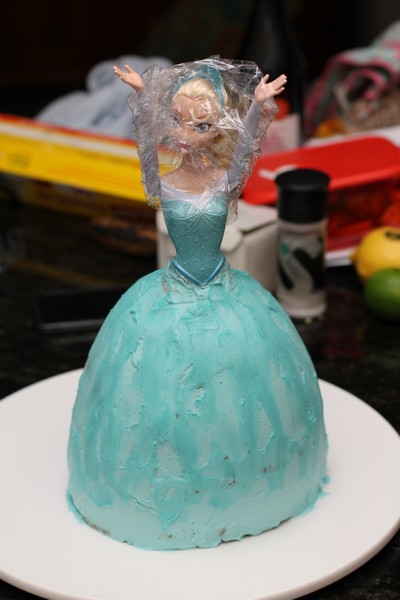
The January 2011 Daring Bakers’ challenge was hosted by Astheroshe of the blog accro. She chose to challenge everyone to make a Biscuit Joconde Imprime to wrap around an Entremets dessert.

What a way to start the new year – with an amazing challenge.

I have seen joconde imprimes, the decorated sponge around beautiful cakes – or entrements and always thought they looked wonderful. I always love that being a part of the Daring Bakers help to motivate me to make some of the sweets I’ve wanted to make for some time.
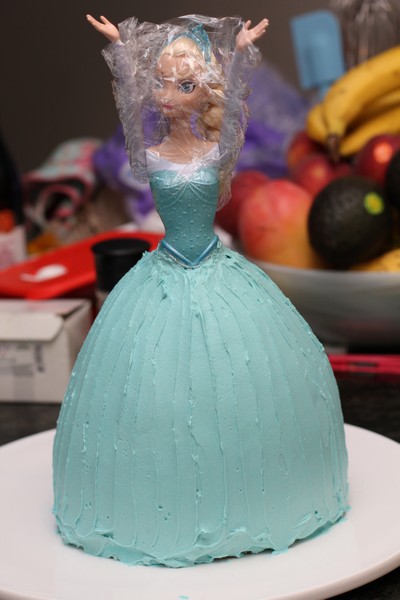
As our host for this month said, this was actually quite an easy recipe. For me, the challenge was figuring out what to fill my entrement with.

I chose to make 4 smaller sized entrements, and decided to try a vanilla marshmallow mousse and chocolate marshmallow mousse filling. Both mousses set quite well.

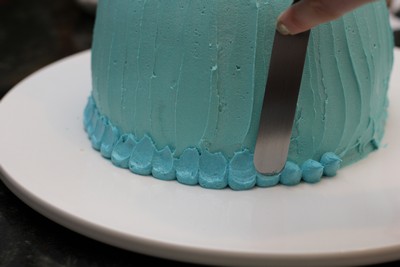
To make my pattern I used some plastic notch trowels (normally used for tiling) from the local hardware store. They are quite cheap compared to the combs you can find in specialty stores.

Thanks to our host this month – I’m glad I made it just in time :)

My notes: I found the joconde paste made more than required for the sponge, so cooked it in a square tin and used it for the base of some of my entrements. I ended up with more sponge than needed for the mousse I made, although it got eaten quite quickly – and was good to have more to choose from.

We shared two of these entrements between 8 people and it was enough for a dessert. It is very sweet and should be enjoyed with some fruit.

Joconde Sponge

Recipe Source: I (Astheroshe) received this recipe from Chef John O. while attending The International Culinary School in Atlanta, Georgia USA.

YIELD: Two ½ size sheet pans or a 13” x 18” (33 x 46 cm) jelly roll pan

¾ cup/ 180 ml/ 3oz/ 85g almond flour/meal – *You can also use hazelnut flour, just omit the butter
½ cup plus 2 tablespoons/ 150 ml/ 2⅔ oz/ 75g confectioners’ (icing) sugar
¼ cup/ 60 ml/ 1 oz/ 25g cake flour *See note below
3 large eggs – about 5⅓ oz/ 150g
3 large egg whites – about 3 oz/ 90g
2½ teaspoons/ 12½ ml/ ⅓ oz/ 10g white granulated sugar or superfine (caster) sugar
2 tablespoons/ 30 ml/ 1oz / 30g unsalted butter, melted

*Note: How to make cake flour: http://www.joythebaker.com/blog/2009/09/how-to-make-cake-flour/

1. In a clean mixing bowl whip the egg whites and white granulated sugar to firm, glossy peeks. Reserve in a separate clean bowl to use later.

2. Sift almond flour, confectioner’s sugar, cake flour. (This can be done into your dirty egg white bowl)
3. On medium speed, add the eggs a little at a time. Mix well after each addition. Mix until smooth and light. (If using a stand mixer use blade attachment. If hand held a whisk attachment is fine, or by hand. )

4. Fold in one third reserved whipped egg whites to almond mixture to lighten the batter. Fold in remaining whipped egg whites. Do not over mix.
5. Fold in melted butter.
6. Reserve batter to be used later.

Patterned Joconde-Décor Paste

YIELD: Two ½ size sheet pans or a 13” x 18” (33 x 46 cm) jelly roll pan

14 tablespoons/ 210ml/ 7oz/ 200g unsalted butter, softened
1½ cups plus1½ tablespoons/ 385ml/ 7oz/ 200g Confectioners’ (icing) sugar
7 large egg whites – about 7 oz / 200g
1¾ cup/ 420ml/ 7¾ oz/ 220g cake flour
Food coloring gel, paste or liquid

COCOA Décor Paste Variation: Reduce cake flour to 6 oz / 170g. Add 2 oz/ 60 g cocoa powder. Sift the flour and cocoa powder together before adding to creamed mixture.

1. Cream butter and sugar until light and fluffy (use stand mixer with blade, hand held mixer, or by hand)

2. Gradually add egg whites. Beat continuously.
3. Fold in sifted flour.

4. Tint batter with coloring to desired color, if not making cocoa variation.

Preparing the Joconde- How to make the pattern:

1. Spread a thin even layer of décor paste approximately 1/4 inch (5 millimeter) thick onto silicone baking mat with a spatula, or flat knife. Place mat on an upside down baking sheet. The upside down sheet makes spreading easier with no lip from the pan.
2. Pattern the décor paste – Here is where you can be creative. Make horizontal /vertical lines (you can use a knife, spatula, cake/pastry comb). Squiggles with your fingers, zig zags, wood grains. Be creative whatever you have at home to make a design can be used. OR use a piping bag. Pipe letters, or polka dots, or a piped design. If you do not have a piping bag. Fill a ziplock bag and snip off corner for a homemade version of one.

3. Slide the baking sheet with paste into the freezer. Freeze hard. Approx 15 minutes.
4. Remove from freezer. Quickly pour the Joconde batter over the design. Spread evenly to completely cover the pattern of the Décor paste.

5. Bake at 475ºF /250ºC until the joconde bounces back when slightly pressed, approx. 15 minutes. You can bake it as is on the upside down pan. Yes, it is a very quick bake, so watch carefully. (I cooked mine at 220ºC and it took 5-10 minutes).
6. Cool. Do not leave too long, or you will have difficulty removing it from mat.
7. Flip cooled cake on to a powdered sugared parchment paper. Remove silpat. Cake should be right side up, and pattern showing! (The powdered sugar helps the cake from sticking when cutting.)

Preparing the MOLD for entremets:

You can use any type of mold. I would suggest:

1. Start with a large piece of parchment paper laid on a very flat baking sheet. Then a large piece of cling wrap over the parchment paper. Place a spring form pan ring, with the base removed, over the cling wrap and pull the cling wrap tightly up on the outside of the mold. Line the inside of the ring with a curled piece of parchment paper overlapping top edge by ½ inch. CUT the parchment paper to the TOP OF THE MOLD. It will be easier to smooth the top of the cake.
2. A biscuit cutter/ cookie cutter- using cling wrap pulled tightly as the base and the cling covering the outside of the mold, placed on a parchment lined very flat baking sheet. Line the inside with a curled piece of parchment paper overlapping.
3. Cut PVC pipe from your local hardware store. Very cheap! These can be cut into any height you wish to make a mold. 2 to 3 inches is good. My store will cut them for me, ask an employee at your store. You can get several for matching individual desserts. Cling wrap and parchment line, as outlined above.
4. Glass Trifle bowl. You will not have a free standing dessert, but you will have a nice pattern to see your joconde for this layered dessert.

My Mould: Cut an A4 piece of projector plastic/acetate in half lengthways. Curve it into a 9cm diameter circle cutter and sticky tape the sides shut.

Preparing the Jaconde for Molding:
Video: MUST WATCH THIS. This is a very good demo of the joconde and filling the entremets:

1. Trim the cake of any dark crispy edges. You should have a nice rectangle shape.
2. Decide how thick you want your “Joconde wrapper”. Traditionally, it is ½ the height of your mold. This is done so more layers of the plated dessert can be shown. However, you can make it the full height.
3. Once your height is measured, then you can cut the cake into equal strips, of height and length. (Use a very sharp paring knife and ruler.)
4. Make sure your strips are cut cleanly and ends are cut perfectly straight. Press the cake strips inside of the mold, decorative side facing out. Once wrapped inside the mold, overlap your ends slightly. You want your Joconde to fit very tightly pressed up to the sides of the mold. Then gently push and press the ends to meet together to make a seamless cake. The cake is very flexible so you can push it into place. You can use more than one piece to “wrap “your mold, if one cut piece is not long enough.
5. The mold is done, and ready to fill.

*Note: If not ready to use. Lay cake kept whole or already cut into strips, on a flat surface, wrap in parchment and several layers of cling wrap and freeze.

Vanilla Marshmallow Mousse

Recipe by Anita @ Leave Room for Dessert

100g white chocolate
150g vanilla marshmallows
300ml thickened cream

Melt the chocolate and marshmallows in a small saucepan over medium/low heat, stirring regularly. Once melted, remove from heat and allow to cool. Whip the cream until thickened and peaks are formed. Fold through the cooled chocolate marshmallow mix. Pour into lined moulds and place in the freezer for a few hours to set around the edges. It can then be stored in the fridge. If desired, the dessert can be eaten frozen.

For Chocolate Mousse - use 200g dark chocolate instead of the 100g white chocolate.

Related Posts with Thumbnails
Print This Post Print This Post