Pink Dessert Table

May 1st, 2013

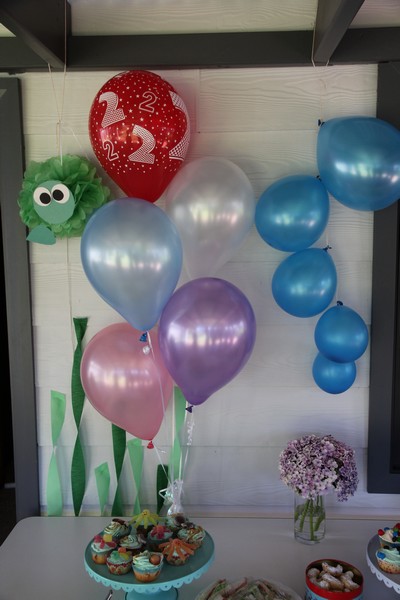
For quite a while now I have wanted to make a dessert table, but that much sweet food is too much for even my family, so I had to wait until we had a party at our place.

I was very fortunate to receive some lovely lolly jars as presents for my birthday last year, as I had pointed out how much I adored them. I also received the very pretty pink pom-poms, which required a bit more work than I had anticipated – and required a few nights to make (only because I got a little bored, and they made a bit too much noise to assemble whilst watching TV).

I could also use my beautiful wedding present crystal cake stand, with matching knife and server.

Due to the number of things I wanted on my table, I planned ahead, firstly making two double batches of ice cream, one strawberry and the other pavlova flavoured.

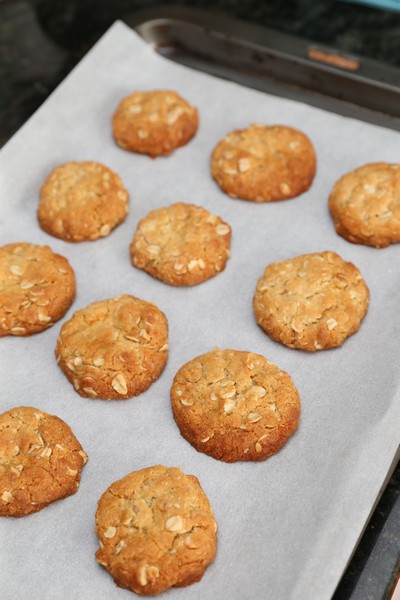
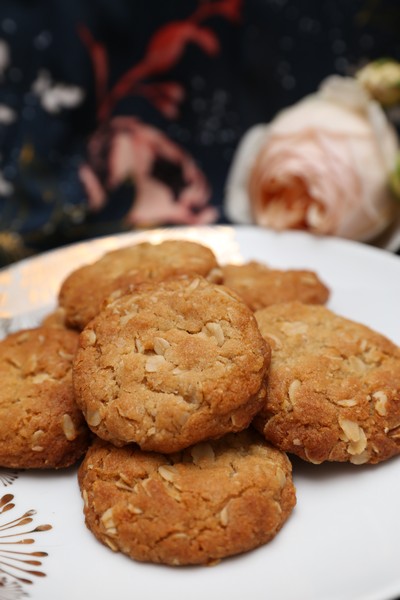
Brownies and Almond Butter biscuits were made the Friday before.

The Carrot Cake was made the day before, and piped on the day with double cream cheese frosting, using some of the piping taught at the recent cake decorating class I attended.

The macarons were also made the day prior and placed in the fridge, as the filling wasn’t setting.

I made the fruit salad in the morning, as I needed to make sure there was something healthy on the table, considering I had filled other containers with marshmallows, musk sticks, jaffas, and any other red, pink or white lolly.

Very happy with how it all turned out, although it seemed I may not have catered enough – I guess I will need to make more for my next one!! :)

Print This Post Print This Post

Savarin – Daring Bakers Challenge April 2013

April 27th, 2013


Natalia of Gatti Fili e Farina challenges us to make a traditional Savarin, complete with soaking syrup and cream filling! We were to follow the Savarin recipe but were allowed to be creative with the soaking syrup and filling, allowing us to come up with some very delicious cakes

I have never tried a Savarin, so it’s hard to tell how close I came to bought one. I was very happy with how the Savarin rose, especially as mine was a little to moist and therefore hard to knead and handle. It came out of the oven and looked like a big doughnut, or perhaps a brioche.

The soaking syrup that was suggested was a peach one, with peach tea and juice. It came off the stove and smelled and tasted lovely. So we soaked the Savarin for whilst we ate dinner, then I served it for dessert. It hadn’t soaked all the way through, so part of the slice was dryish and the other part soaking, which I didn’t really enjoy, and unfortunately neither did anyone else.

The next day the liquid had traveled to the bottom of the savarin, although no one really wanted any more, so we ended up throwing out three quarters of the Savarin. I think the unsoaked Savarin would have been lovely toasted with some honey or jam on it, although no one fancied the soaked one. I didn’t make the accompanying cream filling and fruit, as I was going to make the pastry cream the next day, or serve with fresh cream. This combination may have made the serving more like a trifle, although I find even trifles don’t have sponge which tastes like this.

I haven’t included the recipe as I wouldn’t make this again, noting that I haven’t tried one previously and am not sure what a Savarin should taste like.

Print This Post Print This Post

Cinnamon Scrolls

March 30th, 2013

I love fond memories of food from when you were younger or on holidays. I always remember the “love heart” candies and have looked all over the internet for these lollies. I have found many a love heart candy – none living up to the shape and size of the original ones, and none living up to the flavour.

I also have memories of a yummy and fantastic cinnamon scroll – the thing is, I have no idea where this originates from. I think it must have been bought somewhere – but I am still left wondering – where was this ideal scroll I ate…

I searched the internet for what I thought would make this magical scroll, and I kept finding recipes with an icing over the top – and this didn’t fit my memory, although almost all the recipes have icing, so I figured there must be a reason, it surely tastes great with the icing.

After trying this recipe, I have not looked elsewhere. This recipe is lovely and I have made it several times, and it has almost become a tradition for Easter or Christmas, holiday times, times with family or friends.

I have tried doing everything for this recipe all in one day, and also leaving to prove over night. Both work fine. Sometimes food has to fit around your schedule. I often make the full quantity – so double the recipe below, which makes about 60, as you can bake them at separate times.

Cinnamon Scrolls

ROLLS:
Recipe adapted from: Sugar and Spice (I changed a couple quantities in the frosting recipe and filling)

Makes about 30

DOUGH:
2 cups whole milk
1/2 cup vegetable oil
1/2 cup sugar
1 pkg active dry yeast (2 1/4 teaspoons or approx 1 tablespoon)
4 1/2 cups flour
1/2 teaspoon baking powder
1/2 teaspoon baking soda (bi-carb soda)
1/2 tablespoon salt

FILLING:
50-100g melted butter, plus more as needed
2 tablespoons ground cinnamon for sprinkling (or more or less to taste)
1/2 cup sugar, plus more as needed

Directions:
Mix milk, vegetable oil, and 1/2 cup of sugar in a pan. Scald the mixture (heat until just before the boiling point.) Remove from heat and let it cool 45 minutes to 1 hour.

When the mixture is lukewarm to warm, but NOT hot, sprinkle in package Active Dry Yeast. Let this sit for a minute and then add 4 cups of flour. Stir mixture together. Cover and let rise for at least an hour.

Next, add 1/2 cup flour, the baking powder, baking soda, and salt. Stir mixture together. From here, you could cover the dough and put it in the fridge until you need it—overnight or even a day or two, if necessary. Just keep your eye on it and if it starts to rise out of the pan, just punch it down. Or, of course, you can just go ahead and make the rolls.

Sprinkle surface generously with flour and roll the dough into a thin rectangular shape (approx 0.5cm x 28cm x 60cm). Brush melted butter on top, then sprinkle sugar over the butter, and finish with a generous sprinkling of cinnamon.

Starting with the wide end, roll the dough tightly towards you in a neat line. Next, pinch the seam to the roll to seal it. Spread 1 tbsp of melted butter in each pan/dish. With a sharp knife, begin cutting the dough into 1 inch slices, and laying them in the pans. Let rest for 20-30 minutes. Bake at 180C for 13 – 17 minutes, or until golden.

IF MAKING AHEAD FOR CHRISTMAS or EASTER MORNING: Instead of popping them into the oven, just put them straight into the fridge and let them rise for the 2nd time in the fridge overnight (they’ll rise VERY slowly in the fridge). Then, in the morning let them sit at room temperature for about 30 minutes, and then pop them in the oven as directed.

FROSTING: (you could multiply the frosting by 1.5 or 2x if you like loads of icing)
Ingredients:
100-200g icing sugar or icing mixture
1/2 tsp. maple flavoring (I left this out)
1/8 (30ml) cup milk
1-2 tablespoons (about 10g) melted butter
2 tablespoons brewed coffee (I didn’t use this, as I don’t like coffee – instead I added a dash of vanilla essence)
Pinch of salt

Directions:
Mix together all ingredients, and stir well until smooth. It should be thick but pourable. Taste and adjust as needed. Generously drizzle over the warm rolls.

Print This Post Print This Post

Cashew Kidney Bean Chocolate Brownies – Daring Bakers Challenge March 2013

March 27th, 2013

Ruth from Makey-Cakey was our March 2013 Daring Bakers’ challenge host. She encouraged us all to get experimental in the kitchen and sneak some hidden veggies into our baking, with surprising and delicious results!

I think hiding vegetables in dishes is great idea! I often stretch my spaghetti bolognese out with loads of veggies both grated and chopped – although I’m sure kids wouldn’t think they are particularly well hidden.

So it was easy to choose from the recipes we were given this month, I liked the idea or using red kidney beans in the brownies. I cooked the mix for only about 15minutes and it was properly cooked by that stage. When I tried it after it had cooled I enjoyed the taste and found the brownie quite light – more the consistency of cake.

I tested this on most of my family and none could pick the secret ingredient – some screwing up their face when I said “what’s the secret ingredient” after they had already eaten a piece. I found the top of the cake went a little tacky on top as moisture got to it, so it may have helped having a thin icing perhaps. I wouldn’t substitute this recipe for any of my current brownie recipes, although it has opened my eyes to what can be hidden in food.

Cashew Kidney Bean Chocolate Brownies

Servings:
makes one 8 inch x 13 inch/20cm x 33cm tray

Ruth said:
I tested these on half a dozen people and none could identify kidney beans in the finished taste. Indeed they couldn’t hazard a guess at anything weird at all – they just commented that they were good brownies!

400gm (14 oz) tin of kidney beans (in water, not salted water), drained

1 cup (240 ml) (225 gm) (8 oz) unrefined caster (superfine) sugar (can use regular white granulated sugar)

2 tablespoons (30ml) maple syrup

½ cup (120 ml) (70 gm) (2½ oz) of plain all-purpose flour

1 teaspoon (5 ml) (5 gm) baking powder

½ cup (120 ml) (60 gm) (2 oz) cocoa powder

½ cup (120 ml) flavorless oil like canola or vegetable

4 large eggs

1 teaspoon (5 ml) vanilla extract

½ cup (120 ml) (140 gm) (5 oz) raw cashew nuts (can use roasted cashews, but unsalted is best)

Preheat the oven to 350°F/180°C/gas mark 4 and grease and base line your baking tin.
Drain, rinse and puree the kidney beans until smooth – if in doubt, blend it a bit more – bits of unblended kidney bean in the finished brownie spoil the ‘hidden’ element of surprise!
Combine all the ingredients apart the nuts and beat well until mixed. You could do this in a food processor or mixer if you wanted.
Stir in the nuts.
Pour into the prepared tin, and bake for about 25 minutes until just firm to the touch.
Cool in the tin, then cut, serve, allow people to enjoy, and then surprise them with the secret ingredient!

Print This Post Print This Post

Raincoast Crisps – Daring Bakers Challenge February 2013

February 27th, 2013

Sarah from All Our Fingers in the Pie was our February 2013 Daring Bakers’ host and she challenges us to use our creativity in making our own Crisp Flatbreads and Crackers! :)

It wouldn’t be the end of the month without me rushing to finish and post my Daring Bakers Challenge. This month was focused around crackers, and after the last challenge made such wonderful ones, I was looking forward to it.

I think I may have chosen the easiest recipe given, as the dough came together very quickly. Although when it came to drying all the crackers, this looked like it would take a reasonable amount of time, as my oven only has two shelves (and the bottom shelf never cooks as fast or even). One loaf when sliced as thin as I could manage fit on two trays and after needing to put a pie in the oven, I decided on leaving the second loaf – as we had already eaten some of the thin slices that weren’t cut very well.

We ate the loaf for breakfast, sliced thickly, grilled and with a bit of butter, and it tasted very nice – with the currants (I used instead of raisins), adding a nice addition of sweetness and moisture. I think my parents in law would be quite surprised to see me eating dried fruit in bread or cake as I’ve always had an aversion to it.

I think the loaf was a little nicer than the crisps, as the flavour was more evident. I would definitely consider making the bread component of this challenge again.

Thanks to our host this month! It’s always a pleasure trying new recipes.

Raincoast Crisps

From Dinner with Julie blog with Julie van Rosendahl
Servings: About 8 dozen

Ingredients
2 cups (480 ml) (280 gm) (10 oz) all-purpose (plain) flour
2 teaspoons (10 ml) (10 gm) (1/3 oz) baking soda
1/2 teaspoon (2½ ml) (3 gm) salt
2 cups (480 ml) buttermilk
1/4 cup (60 ml) (50 gm) (1¾ oz) brown sugar, firmly packed
1/4 cup (60 ml) honey
1 cup (240 ml) (180 gm) (6½ oz) raisins (I used half a cup of currants)
1/2 cup (120 ml) (60 gm) (2 oz) chopped pecans
1/2 cup (120 ml) (125 gm) (4½ oz) roasted pumpkin seeds (optional)
1/4 cup (60 ml) (30 gm) (1 oz) sesame seeds
1/4 cup (60 ml) (30 gm) (1 oz) flax seed, ground
1 tablespoon (15 ml) (2 gm) finely chopped fresh rosemary

Directions
Preheat oven to moderate 350°F/180°C/gas mark 4.
In a large bowl, stir together the flour, baking soda and salt. Add the buttermilk, brown sugar and honey and stir a few strokes. Add the raisins, pecans, pumpkin seeds, sesame seeds, flax seed and rosemary and stir just until blended.
Pour the batter into two 8”x4” (20cmx10cm) loaf pans that have been sprayed with nonstick spray. Bake for about 45 minutes, until golden and springy to the touch. Remove from the pans and cool on a wire rack.

The cooler the bread, the easier it is to slice really thin. You can leave it until the next day or pop it in the freezer. Slice the loaves as thin as you can and place the slices in a single layer on an ungreased cookie sheet. Slice so thin that they are almost lacy. Reduce the oven heat to slow 300°F/150°C/gas mark 2 and bake them for about 15 minutes, then flip them over and bake for another 10 minutes, until crisp and deep golden. You can also cut in half before the second baking. This is the way I like them. The size works better. Be careful not to burn.

Storage and Freezing Instructions/Tips: Store in an airtight container at room temperature for up to 1 month. Prolong the freshness by freezing for up to 3 months.

Print This Post Print This Post

Gevulde Speculaas – Daring Bakers Challenge January 2013

January 27th, 2013

Francijn of Koken in de Brouwerij was our January 2013 Daring Bakers’ Hostess and she challenged us to make the traditional Dutch pastry, Gevulde Speculaas from scratch! That includes making our own spice mix, almond paste and dough! Delicious!

I was very glad this was a quick and easy recipe, I have only just taken it out of the oven and taken a bite and some photos. Although not fully cooled in the tin, the warm gevulde speculaas was nice and soft and full of flavour, I can’t wait to have some tomorrow.

After smelling and making the dough, I was a little concerned it may have been too spiced, although once cooked I was happy with the strong and lovely flavour. The addition of the almond paste layer worked very well between the two pastry layers. This is certainly a great “slice” you could make that is a little different and not too sweet.

I used a 20cm square tin and it turned out well in that sized tin. Thanks Francijn for this lovely recipe, I love exploring food from other countries :) .

Speculaas Spices

Speculaas spices can be bought in a store. But it’s more fun to make your own mixture, so that you can adjust the flavor. Here is a representative recipe from the extensive Dutch tradition.

Mandatory:
cinnamon 40 to 60 % of the total amount
ground cloves 1 or 2 parts
mace ½ or 1 part
ginger ½ or 1 part

Optional:
white pepper ½ or 1 part
cardamom ½ or 1 part
coriander ½ or 1 part
anise ½ or 1 part
nutmeg 1 or 2 parts

A convenient way to mix the spices is as follows:

Take at least 1 or 2 teaspoons of ground cloves, ½ or 1 teaspoon of mace and ½ or 1 teaspoon of ginger.

Add to taste ½ or 1 teaspoon of white pepper, ½ or 1 teaspoon of cardamom, ½ or 1 teaspoon of coriander, ½ or 1 teaspoon of anise, and 1 or 2 teaspoons of nutmeg.
Measure or weigh the amount of spices you have now, and add an equal amount of cinnamon.

This method yields at least 4 and at most 18 teaspoons of spices, so if you plan to mix just a few spices, use bigger or more spoons to get a reasonable amount.
Take your time to smell the ingredients individually before you decide how much to add. And remember the proportions, that will make adjustments easier next time.
Store the spices airtight, dry and dark, they will not spoil for a long time.

Recipe Almond Paste
As we are going to make stuffed speculaas, we will need almond paste. You can buy it in a store, but homemade almond paste tastes better.

7/8 cup (210 ml)(125 gm)(4½ oz) raw almonds (or 1-1/3 cups (320 ml)(125 gm) (4½ oz) ground almonds)
5/8 cup (150 ml) (125 grams) (4½ oz) granulated sugar
1 large egg
1 teaspoon (5 ml) (3 gm) lemon zest

If the raw almonds still have their brown skins, remove them as follows. Bring water to a boil, add the almonds, cook them for one minute, drain immediately and let cool for a few minutes. Rub them between your fingers to remove the skins.

Grind the almonds for one or two minutes in a food processor, until you see nothing but very small pieces. (Or skip this step if you use ground almonds.)
Add the sugar, and grind for another one or two minutes. It must be very fine after this step.
Add the egg and let the food processor combine it – if it is powerful enough. Otherwise you will have to combine it with your fingers.

Store the almond paste in an airtight container in the refrigerator. Although the flavor gets better as days pass by, it is not wise to store the paste for too long, as it contains a raw egg. For the same reason you should not eat the paste unbaked.

To be safe, you could choose one of these options:
use egg powder and water to replace the egg (follow instructions with the powder)
use 50 ml of an other liquid, like lemon juice (in that case, leave the zest out)
add the egg just before you are going to bake the pastry

The paste can also be kept in the freezer.

Recipe Speculaas Dough

1¾ cups (250 gm) (9 oz) all purpose (plain) flour
1 teaspoon (5 ml) (5 gm) baking powder
¾ cup (150 grams) (5-1/3 oz) brown sugar, firmly packed
a pinch salt
2 tablespoons (30 ml) (15 gm) (½ oz) speculaas spices
3/4 cup (1½ stick) (175 gm) (6 oz) unsalted butter

Put flour, baking powder, sugar, salt and spices in a bowl.
Cut the butter in dices and add.
Knead until smooth.
Feel free to add a little milk if the dough is too dry.
Wrap in clingfoil and put in the refrigerator for two hours.

You can choose to make the dough a few days in advance, just like the almond paste, that will benefit the flavor. Freezing is no problem.

Assembling and baking the Gevulde Speculaas

speculaas dough
almond paste
whole almonds without skins for decoration
1 large egg

shallow baking pan, 8×10 inch (20×26 cm) or, round with of diameter 10 inch (26 cm)

1. Grease the pan.
2. Preheat the oven to moderate 350°F/180°C/gas 4
3. Divide the dough into two portions.
4. Roll out both portions on a lightly floured surface, until they are exactly as big as the baking pan.

5. Put one of the layers in the pan and press it lightly to fill the bottom.
6. Lightly beat the egg with a teaspoon cold water.
7. Smear 1/3 of the egg over the dough in the pan.
8. Roll out the almond paste between two sheets of clingfoil, until it is exactly as big as the pan, and put it on the dough in the pan. (If you chose to make the paste soft, you can smear the paste instead of rolling it.)
9. Press the paste lightly down to fit in the pan, and smear the next 1/3 of the egg over it.
10. Now put the second layer of dough on top of the paste, press it lightly, and make as smooth as possible.
11. Smear the last 1/3 of the egg over the dough.
12. Decorate the pastry with the almonds.

13. Bake for 40 minutes in the preheated oven.
14. Let cool completely in the pan, then cut it in portions as you like.

15. If you wrap the stuffed speculaas in clingfoil, after it has cooled completely, you can store it a few days at room temperature. Freezing is possible, but fresh speculaas tastes better.

Storage & Freezing Instructions/Tips:
Speculaas spices: store them airtight, dry and dark, and they will not spoil for a long time.
Almond paste: keep it in the refrigerator. Some people keep it there for months, but if it contains raw egg, I recommend not more than a few days. Can easily be frozen.
Speculaas dough: can be kept in the refrigerator for days, or in the freezer for months. But remember: fresh tastes better.
Stuffed speculaas: if you let it cool completely, you can wrap it in clingfoil and keep it a few days at room temperature. And again: freezing is possible, but fresh is better.

Print This Post Print This Post

Panettone – Daring Bakers Challenge December 2012

December 27th, 2012

The December 2012 Daring Bakers’ challenge was hosted by the talented Marcellina of Marcellina in Cucina. Marcellina challenged us to create our own custom Panettone, a traditional Italian holiday bread!

Like most recipes that require dried fruit, I always tend to substitute chocolate. I don’t normally get many complaints either, so no doubt you have already noticed that this isn’t your traditional panettone.

Honestly I have never tried a panettone before, and wasn’t sure what to expect. It was a mix between a cake and bread, and quite interesting – although due to my exclusions of this recipe, I doubt I have done it justice. The addition of the extra flavours would have made it more appealing to most.

A great suggestion I received only a few hours ago included using panettone in place of bread for French toast – it sounds splendid, and I might just give it ago on the weekend.

My panettone didn’t rise as much as I would have expected in the second and final rise, it’s quite possible I added too much flour – as I was trying to get a dough consistency. Due to this it looked more like a bun, causing Nick to name it “‘bun’-ettone”. I didn’t add the lemon or orange essence, and I changed the final ingredients for chocolate chips.

For a more detailed post on making the panettone see Marcellina’s post.

I hope everyone had a wonderful Christmas, and has an exciting New Year.

Panettone

Makes 2 Panettoni

Ingredients

Sponge
1 satchel (2¼ teaspoons) (7 gm) active dry yeast
1/3 cup (80 ml) warm water
½ cup (70 gm) unbleached all purpose flour

First Dough
1 satchel (2¼ teaspoons) (7 gm) active dry yeast
3 tablespoons (45 ml) warm water
2 large eggs, at room temp
1¼ cup (175 gm) unbleached all-purpose (plain) flour
¼ cup (55 gm) (2 oz) sugar
½ cup (1 stick) (115 gm) unsalted butter, at room temp

Second dough
2 large eggs
3 large egg yolks
2/3 cup (150 gm) (5-2/3 oz) sugar
3 tablespoons (45 ml) honey
1 tablespoon (15 ml) vanilla extract
1 teaspoon (5 ml) lemon essence/extract
1 teaspoon (5 ml) orange essence/extract
1 teaspoon (5 ml) (6 gm) salt
1 cup (2 sticks) (225 gm) unsalted butter, at room temp
3 cups (420 gm) (15 oz) unbleached all-purpose (plain) flour; plus up to (2/3 cup) 100 gm for kneading

Filling and final dough
1½ cups (250 gm) (9 oz) golden raisins or golden sultanas
½ cup (75 gm) (2-2/3 oz) candied citron ( I didn’t have this so I made it up with candied orange peel)
½ cup (75 gm) (2-2/3 oz) candied orange peel (try making your own; recipe below)
Grated zest of 1 orange
Grated zest of 1 lemon
2 to 3 tablespoons (30-45 ml) (15-25 gm) unbleached all-purpose (plain) flour

Directions:

Sponge

Mix the yeast and water in a small bowl and allow to stand until creamy. That’s about 10 minutes or so
Mix in the flour.
Cover with plastic wrap and allow to double in size for about 20 to 30 minutes

First Dough

By hand:

Mix the yeast and water in a large bowl and allow to stand until creamy. Again, about 10 minutes or so
Mix in the sponge and beat well with a wooden spoon
Stir in the eggs, flour and sugar.
Mix in the butter well
This should only take about 5 – 6 minutes
Cover with plastic wrap and allow double in size, about 1 – 1 ¼ hours

By Mixer:

In the mixer bowl, mix together the yeast and water and allow to stand until creamy. Again, about 10 minutes or so
With the paddle attached mix in the sponge, eggs, flour, and sugar.
Add in the butter and mix for 3 minutes until the dough is smooth and even.
Cover with plastic wrap and allow double in size, about 1 – 1 ¼ hours

Second dough

By Hand:

Be sure to have your dough in a large bowl as above.
With a wooden spoon mix in eggs, egg yolk, sugar, honey, vanilla, essences/extracts and salt.
Mix in the butter.
Then add the flour. Stir until smooth.
At this stage the dough will seem a little too soft, like cookie dough.
Turn it out and knead it on a well-floured surface until it sort of holds its shape. Don’t knead in too much flour but you may need as much as 2/3 cup (100 gm). Be careful the excess flour will affect the finished product.

By Mixer:

With the paddle mix in thoroughly the eggs, egg yolks, sugar, honey, vanilla, essences/extracts, and salt.
Mix in the butter until smooth.
Add the flour and slowly incorporate.
At this stage the dough will seem a little too soft, like cookie dough.
Replace the paddle with the dough hook and knead for about 2 minutes.
Turn out the dough and knead it on a well-floured surface until it sort of holds its shape.
Don’t knead in too much flour but you may need as much as 2/3 cup (100 gm). Be careful the excess flour will affect the finished product.

First Rise

Oil a large bowl lightly, plop in your dough and cover with plastic wrap
Now we need to let it rise until it has tripled in size. There are two ways to go about this.

Rise in a warm place for 2 – 4 hours
Or find a cool spot (64°F -68°F) (18°C – 20°C) and rise overnight
Or rise for 2 hours on your kitchen bench then slow the rise down and place in the refrigerator overnight. If you do this it will take some time to wake up the next morning but I preferred this method.

Filling and Final Rise:

Soak the raisin/sultanas in water 30 minutes before the end of the first rise. Drain and pat dry with paper towels.
Now take your dough and cut it in half. Remember we are making two panettoni.
Combine all your filling ingredients and mix well
Press out one portion of dough into an oval shape
Sprinkle over one quarter of the filling and roll up the dough into a log
Press out again into an oval shape and sprinkle over another quarter of the filling
Roll into a log shape again.
Repeat with the second portion of dough
Shape each into a ball and slip into your prepared pans, panettone papers or homemade panettone papers.
Cut an X into the top of each panettone and allow to double in size.
Rising time will vary according to method of first rise. If it has been in the refrigerator it could take 4 hours or more. If it has been rising on the kitchen bench in a warm place it should be doubled in about 2 hours.

Baking

When you think your dough has only about 30 minutes left to rise preheat your oven to moderately hot 400°F/200°C/gas mark 6 and adjust your oven racks
Just before baking carefully (don’t deflate it!) cut the X into the dough again and place in a knob (a nut) of butter.
Place your panettoni in the oven and bake for 10 minutes
Reduce the heat to moderate 350°F/180°C/gas mark 4 and bake for another 10 minutes
Reduce the heat again to moderate 325°F/160°C/gas mark 3 and bake for 30 minutes until the tops are well browned and a skewer inserted into the panettone comes out clean.
Cooling your panettone is also important. If you have use papers (commercial or homemade) lie your panettoni on their side cushioned with rolled up towels. Turn gently as they cool. If you have used pans cool in the pans for 30 minutes then remove and cushion with towels as above.
Panettone can also be cooled suspended. How to do this? Firstly you need to use papers (commercial or homemade), insert clean knitting needles into the bottom of the panettone in a X shape. Flip over and support the knitting needles on the edges of a large saucepan with the panettone suspended within the saucepan. Yep, a lot of trouble and I didn’t really find that much difference – maybe I took too long to insert the needles.

Print This Post Print This Post

Dulce Luna Viennoiserie

December 10th, 2012

This post is sponsored by Nuffnang

I was fortunate enough to be asked along to the pre-launch of Dulce Luna, a new Viennoiserie in Sydney, on the corner or York and King Street. On arrival I saw a sign letting people know of the upcoming opening and specials to be had on the opening day Wednesday 5th December, including free dulce lunas. I also saw people already interested in trying out these yummy pastries. If you’d like to read more about the launch, check out this post by Jeroxie.

Dulce Luna means Sweet Moon in Spanish, and it is quite hard to describe these lovely pastries. Gus, the founder of the store, describes it as the combination of a croissant, cornetti and brioche. Having only tried croissants, I would describe it as not as flaky, with a more sweet and slightly softer filling. As it is hard to describe, it’s probably a good idea to try them :)

The cute store was beautifully decorated with white and black features, sayings about pastries, chandeliers and matching wall lights. The entrance featured a two piece band, close to the glass cabinets filled with dulce lunas. Following this was a large coffee machine across from some stools, this then flows straight into the kitchen which had a lovely long bench and some very special machinery – including one large “fridge” which could be set to change from fridge settings to warming settings, depending on what was required for the dough or the rolled pastries.

Nick loved the coffee

You could sense the excitement of everyone involved with the store, and their passion for making quality pastries and coffee was clearly evident. I was told that whilst trying to perfect the recipe for their dulce lunas they didn’t even allow family and friends to try the ones that weren’t quite perfect – something I think my family just wouldn’t have allowed.

Gus and Herve sharing their passion for dulce lunas with us

We chatted with the founder Gus, head Chef Herve and manager Cory, and were delighted by their stories of how the product was perfected and how everyone contributed to overcoming the challenges of opening a new cafe. We discovered that there is certainly a possibility that more Viennoiseries will be opened around Sydney and Melbourne (I have fingers crossed for one in Darlinghurst, as I can imagine eating this for breakfast, morning tea, lunch or afternoon tea at work).

Gus Mendez told us how the idea for this cafe started and the process leading up to the launch. “The whole idea about dulce luna popped into my head about 15 years ago, when I was on honeymoon and having breakfast with my wife and had these amazing pastries in Buenos Aires, Argentina.” He thought they would be perfect for home, Australia, and just wanted to eat more of the pastries.

“After 15 years in finance, I sold my business 2 years ago and thought I would revisit that idea and start discovering a bit about pastries. I was lucky enough to visit Paris, New York, and then go back to Buenos Aires and also to sample a lot of product here in Australia, and thought there is definitely a gap in the market, for something that’s a bit different.” Gus baked for months on end in his kitchen, then showed Herve what he envisaged would be their product, which then resulted in more cooking and trialing of recipes. “We believe it’s an Australian product, because it is quite unique, and brings a lot out of each of those products.”

Head Chef Herve Boutin has been in Australia for more than 20 years and completed the Meilleur Ouvrier de France (MOF), which took 3 years of preparation, before coming to Australia. He met Gus 6 months ago and loved the idea. “We put our passion and knowledge into the product…This product can only be home made.” Herve sums it up nicely: “It’s a great story of passionate people.”

When the food was on its way out, I was glad Nick was there (he was also very happy I brought him along), as this meant I got to try all the dulce lunas available. I tried the traditional one to begin with to try and taste the difference between this and a croissant. It had a beautiful, light texture with a very slight vanilla glaze on top. Next came the raspberry dulce luna which had both an amazing raspberry jam and raspberries on top, and due to my love of raspberries, this would have to be one of my favourites. The pistachio was also a big favourite of mine. The freshly ground pistachio flavour works beautifully with the pasty.

Raspberry Dulce Lunas

The almond dulce luna came out, and it was lovely, especially as it was made fresh and not with day old croissants which is what is usually done at most bakeries. The chocolate dulce luna was also a big hit – the chocolate was of great quality and being so fresh, it melted in your mouth. The quality and amount of chocolate in these is far better than your average chocolate croissant.

Pistachio and Almond Dulce Lunas

Two “dessert” dulce lunas also came out, luckily after some of the less rich ones (as otherwise I might not have managed to try them all). The first was the crème patisserie one, which had a beautiful vanilla custard-like filling, and the dulce de leche – well that can speak for itself, if you love caramel – you will love this

Dulce de leche and Creme Patisserie Dulce Lunas

For those with a less sweet tooth, some savoury options are available and would be great for breakfast or lunch – including the ham, cheese and béchamel sauce, and the spinach and feta.

Ham, Cheese and Bechamel, and Spinach and Feta Dulce Lunas

After trying all the flavours, everyone shared their favourite flavours. Some preferred the ham and cheese, others the raspberry and many the dulce de leche. One of the things I found most enjoyable with all the dulce lunas we tried was their freshness and the natural flavours that came through, nothing tasted artificial – because nothing like that is added. We were told of how every day the product will be made fresh and is best eaten within about 8 hours of baking. If you don’t get a chance though, a quick reheat in the microwave will work a treat, which is what we did with our take-home sample package.

There are also going to be certain featured flavours only available for a week at a time, including lemon curd and Nutella.

Lastly, we got to see the production of the dulce lunas, with dough that had been proving overnight. The proving process helps to develop a lot of the flavour. The dough then gets laminated with butter to form the working dough, which gets cut into triangles and rolled to the traditional moon shape. The filled lunas have to be done a bit more carefully to ensure the filling doesn’t come out.

The professional ones are on the right hand side - with our attempts making the rest...

I would like to thank both Nuffnang and Dulce Luna for this opportunity – attending the pre-launch was lovely, and it was great to meet so many vibrant and passionate people… and of course trying such amazing food. I am sure that customers will have a similar admiration when they try these quality, tasty dulce lunas, and meet the people who work in the store.

The ones we got to take home - and had for breakfast :)

Now… Nick – when will you have a chance to pick me up another box of them?

For updates or offers by Dulce Luna, follow them on Facebook or Twitter.

Facebook members & Twitter followers of Dulce Luna can get these discounts for a limited time:
$12.50 for mixed half dozen box ($2.50 discount or over 15%)
$24.00 for mixed dozen ($5.00 discount or over 15%) till 31st Mar 2013

Dulce Luna
Sydney CBD Shop 2C,
66 King St (corner York St)
http://dulceluna.com.au/index.html

Print This Post Print This Post

Gingerbread House Template

December 5th, 2012

You may remember a few years ago I made this gingerbread house for a Daring Bakers Challenge – based on an image I found on the internet. I had to design the house from scratch, and there were quite a few difficulties.

Over the years I have had many requests for the pattern, although it had been pushed away in a drawer, all cut up. I finally got a chance to trace it out nicely and have attached it to this post for you to use. Apologies to all those who have waited and missed out on making it in previous years.

Please note:
1. when printing – Do not scale to fit. (make sure there is no scaling)
2. Check the measurements with a ruler before cutting (the roof and walls seem to get cut off a bit – although as these are straight lines you can draw this in).
3. Make a demo house and check all the sizes match up and that the house and roof all work together – adjust if necessary.
4. Please see my original post for extra info and any troubles I had with the construction.

Click below link for a copy of the template in pdf.
LRfDGingerbreadHouse
(please note: the above link does not show some of the right hand measurement on the front of the house (which can be seen in the images below) – as it had to be cut off to allow printing margins)


Print This Post Print This Post

Pipers Brown Butter Short Bread – Daring Bakers Challenge November 2012

November 27th, 2012

Blog-checking lines: Holiday season is the time for sharing and Peta of Peta Eats is sharing a dozen cookies, some classics and some of her own, from all over the world with us.

We were given the choice between 12 different cookie/biscuits recipes for this months challenge. I chose the brown butter short bread, as it has been quite a while since I have browned butter for anything. The flavour in these biscuits is beautiful, with the brown butter combined with the brown sugar making these biscuits quite different to any I have made before.

Everyone loved the short bread, it had a lovely flavour and texture (It lasted about 3 days in a container). Making the short bread was quite easy too, although it was a little time consuming waiting for the butter to brown, and then let it cool to a softened butter stage.

I noticed I also needed to set it in the fridge, but didn’t have the time, so I tried to pipe it into biscuits – although only got through 4 biscuits before I called in Nick to pipe it for me. After piping one tray, I rolled the next into balls, both looked great and cooked well, although the later was much easier. (I was using a piping bag – perhaps a special cookie piper would be easier.

I would definitely make these again, I think they would be great in with some other mixed biscuits for a present.

Thanks to our host Peta and all the Daring Bakers.

11 Pipers Brown Butter Short Bread

Preparation Time: 30 minutes
Cooking Time:10 minutes

Makes about 48 cookies or one 20cm – 22cm (8 – 9 inch) shortbread round. Or when piped about 100 depending on how you pipe them. (My piped or rolled biscuits made about 24 biscuits)

Ingredients
1 cup (240 ml) (225 gm) (8 oz) unsalted butter
2/3 cup (130 gm) (4½ oz) dark brown sugar, firmly packed
2 teaspoons (10 ml) pure vanilla bean paste
1-2/3 cups (230 gm) (8 oz) all-purpose (plain) flour
2 teaspoons (10 ml) (12 gm) table salt

Directions:

Step 1
Cut the butter into smallish pieces and place in a saucepan over a low heat. Melt the butter and cook until it starts to brown and gives off a warm, nutty aroma. Stir from time to time to make sure the butter browns evenly. As it gets close to being browned enough it will foam up and you will see little brown bits in the foam. Remove from the heat and pour into a heatproof jug or bowl. Set aside to cool slightly and then refrigerate until it starts to set again but is not too firm. It should be the consistency of softened butter. Don’t strain out the little brown bits they taste great.

Step 2

1. Preheat the oven to moderate 300°F/ 150°C/gas mark 2.
2. Line 2 large baking sheets with silicon baking paper if making the cookies or line a loose-bottomed tart tin if making one large shortbread round.
3. Add the sugar and vanilla to the browned butter and beat until very light and fluffy and the sugar is dissolved.
4. Finally, add the flour and salt and mix for at least 2 – 4 minutes to form a soft dough.
5. If making one large shortbread round, press the dough into the tin and flatten the surface with a fork for a bit of texture. Refrigerate for 30 minutes before baking. Bake the large shortbread round in a preheated moderate oven for about 20 – 30 minutes. If baking the large round, let cool completely in the tart tin and remove when cooled. Store in an airtight container.
6. If making cookies, flatten the dough into a disc, wrap in cling film and refrigerate for 30 minutes to firm up. Roll out the pastry to about 1/6-inch (4-mm) thickness and cut into cookies. Place the cookies on the baking sheets and refrigerate for 30 minutes. This will make sure the cookies keep their shape as they bake. Bake the cookies in a preheated moderate oven for about 10 – 12 minutes. Remove from the oven and leave the cookies to cool on the baking sheet for about 10 minutes before transferring to a wire rack to cool completely. You may need to rotate the sheets half way through baking to ensure even browning. They will be a golden colour when cooked.
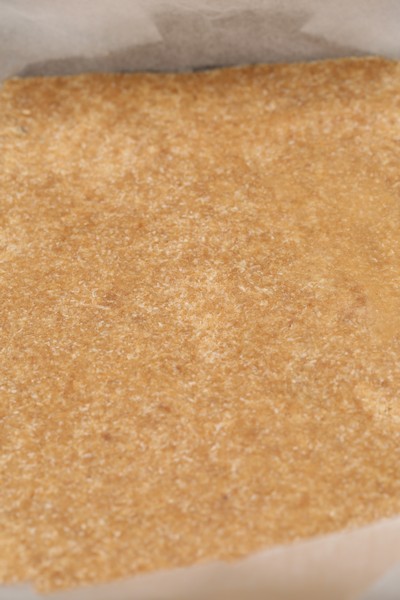
7. You may pipe this recipe – To do so beat the mixture for ten minutes then pipe as in the Piped Shortbread Rings recipe. If you would like to do little stars you will need a star icing tip. I used a Wilton 6b or 8b.


Related Posts with Thumbnails
Print This Post Print This Post