Recipes

Crostata con la Crema – Daring Bakers Challenge November 2010

Saturday, November 27th, 2010

The 2010 November Daring Bakers’ challenge was hosted by Simona of briciole. She chose to challenge Daring Bakers’ to make pasta frolla for a crostata. She used her own experience as a source, as well as information from Pellegrino Artusi’s Science in the Kitchen and the Art of Eating Well.

Spring is almost over, before it even really begun. This year we had two lovely days of Spring weather at the beginning of September, followed by many days of rain, cold days and lots of windy days.

This last week has been beautiful. Quite warm, but not too hot (I say this, even though I work in an air-conditioned building). Our garden is going crazy – plants and weeds alike. Three plants in particular are quite exciting at the moment: our fig, blueberry and raspberry. All three plants are in their second Spring season and are very happy, we have a number of figs forming, quite a few blueberries and many raspberries.

One thing I didn’t understand when I bought the raspberry is the shop assistance’s advice: Watch out, the raspberry can take over… What? Isn’t that a good thing? Surely people aren’t unhappy about loads of raspberries.

What he should have said was: Watch out, the raspberry sends suckers through the lawn and new plants shoot up more than one metre away from the original plant meaning you have no control of where are how far it will travel… Whoops!! Luckily running the mower over them have stopped new plants forming in the middle of our yard – I hope!

Although my baking (and blogging) has been hindered by the lovely weather and constant maintenance of our yard, this recipe chosen for the daring bakers this month was great, as many components can be made the day or night before, and cooked while everyone is eating dinner.

My family are huge fans of Portuguese custard tarts, so I had no trouble picking pastry cream to fill my tart shell.

I must admit I used the food processor for the dough to make the tart shell. It seemed a bit dry and wasn’t coming together, so I added a touch more egg white (ok, accidentally – a bit more than a touch – making it a little too soft).

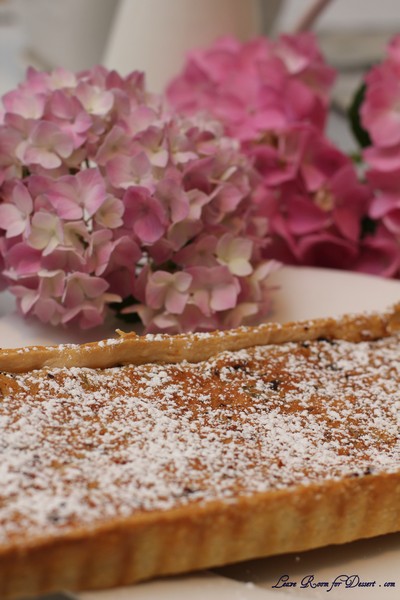
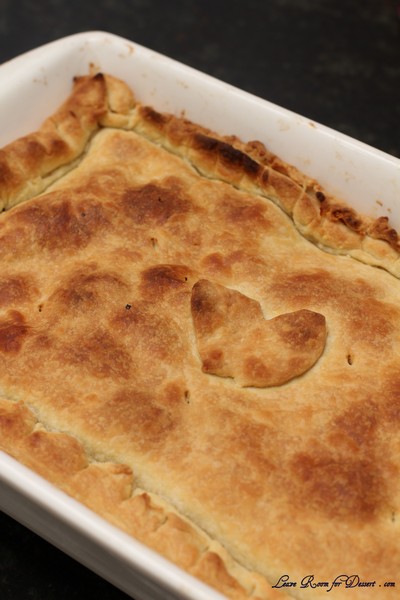
I didn’t blind bake my tart, I just added the pastry cream and cooked it for 40 minutes or more, until the pastry cream was set and the pastry golden. The pastry was lovely in texture and taste – very lovely. I thought I needed more pastry cream for the tart, although perhaps because the pastry was a little soft, it shrunk or fell a little at the sides, making it more level with the pastry cream when cooked.

I was very happy with the length of time required for this challenge and was more than happy to try out another pastry and pastry cream recipe – and my family was more than happy to have it for dessert :)

Thanks to our host for this month, for trialling so many recipes for people to choose from and be inspired from.

Crostata con la Crema (crostata with pastry cream filling)

Recipe Source: There are many recipes for pasta frolla and different ideas about how to make it. I will give you two versions that I have been using for some time. They have been inspired by those in the book La scienza in cucina e l’arte di mangiare bene by Pellegrino Artusi (1820-1911). The book was first published in 1891, and is available in English translation as Science in the Kitchen and the Art of Eating Well (further details are given in the Additional Information section).

Pasta frolla

1/2 c. minus 1 tablespoon [105 ml, 100 g, 3 ½ oz] superfine sugar (see Note 1) or a scant 3/4 cup [180ml, 90g, 3 oz] of powdered sugar
1 and 3/4 cup [420 ml, 235 g, 8 1/4 oz.] unbleached all-purpose flour
a pinch of salt
1 stick [8 tablespoons / 4 oz. / 115 g] cold unsalted butter, cut into small pieces
grated zest of half a lemon (you could also use vanilla sugar as an option, see Note 2) (I didn’t use this)
1 large egg and 1 large egg yolk, lightly beaten in a small bowl

Note 1: Superfine sugar is often also referred to as ultrafine, baker’s sugar or caster sugar. It’s available in most supermarkets. If you cannot find “superfine” sugar, you can make your own by putting some regular granulated sugar in a food processor or blender and letting it run until the sugar is finely ground.

Note 2: There are different ways of making vanilla sugar. I keep vanilla beans in a jar half-filled with sugar until I need to use them, for example, to make vanilla ice cream. After I remove the split bean from the custard that will go into the ice cream maker, I rinse it, dry it and put it back in the jar with sugar.

Making pasta frolla by hand:

Whisk together sugar, flour and salt in a bowl.

Rub or cut the butter into the flour until the mixture has the consistency of coarse crumbs. You can do this in the bowl or on your work surface, using your fingertips or an implement of choice.

Make a well in the center of the mounded flour and butter mixture and pour the beaten eggs into it (reserve about a teaspoon of the egg mixture for glazing purposes later on – place in the refrigerator, covered, until ready to use).

Add the lemon zest to your flour/butter/egg mixture.

Use a fork to incorporate the liquid into the solid ingredients, and then use your fingertips.

Knead lightly just until the dough comes together into a ball.

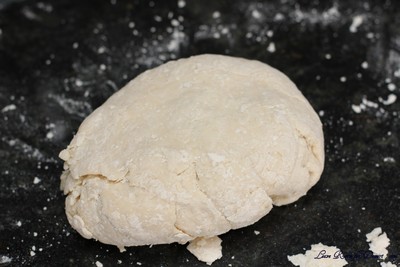
Shape the dough into a flat disk and wrap in plastic wrap. Place the dough in the refrigerator and chill for at least two hours. You can refrigerate the dough overnight.

Making pasta frolla with a food processor:

Put sugar, flour, salt, and lemon zest in the food processor and pulse a few times to mix.

Add butter and pulse a few times, until the mixture has the consistency of coarse meal.

Empty food processor’s bowl onto your work surface

See step 3 above and continue as explained in the following steps (minus the lemon zest, which you have already added).

Pastry Cream

2 eggs
1/2 cup caster sugar
500ml milk
1 teaspoon vanilla essence
3 tablespoons plain flour

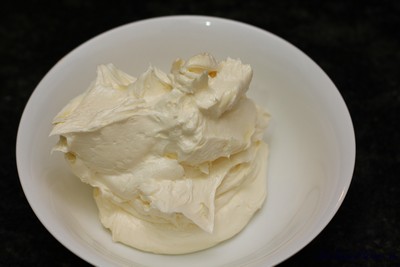
Heat milk in a saucepan until almost bubbling. Whisk eggs with caster sugar, then whisk in plain flour. Slowly pour half the warm milk over the egg sugar mixture, mixing well to stop the eggs cooking. Pass the egg mixture through a sieve back into the saucepan. Place the saucepan back over medium heat and continue stirring the mixture until it bubbles. Pour the pastry cream into a bowl and place the bowl in a sink or bowl with cold or icy water, add the vanilla essence and stir the pastry cream until cooled. Refrigerate until cool.


Assembling and baking the crostata con la crema:

Heat the oven to 350ºF [180ºC/gas mark 4].

Take the pasta frolla out of the fridge, unwrap it and cut away ¼ of the dough. Reserve this dough to make the lattice top of the crostata. Refrigerate this dough while you work on the tart base.

To help roll the crostata dough, keep the dough on top of the plastic wrap that you had it wrapped in. This can help rolling the dough and can also help when transferring the dough to your pan. You can also use parchment paper for this. However, you can also roll the dough directly on a work surface if you prefer.

Lightly dust the top of the dough and your work surface (if you’re rolling directly on a work surface) with flour. Keep some flour handy to dust the dough as you go along.

If the dough is very firm, start by pressing the dough with the rolling pin from the middle to each end, moving the rolling pin by a pin’s width each time; turn the dough 180 degrees and repeat; when it softens, start rolling.

Roll the dough into a circle about 1/8th inch (3 mm) thick.

If you used the plastic wrap or parchment paper as rolling surface, flip dough over the pan, centering it, and delicately press it all around so the corners are well covered. Peel away the plastic wrap.

Trim the excess dough hanging over the edges of the pan. Press the remaining dough around the border into the sides of the pan making sure the border is an even thickness all the way around.

Prick the bottom of the dough with a fork in several places.

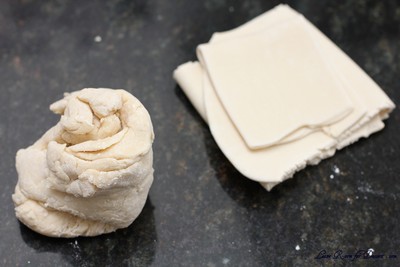
Take out of the fridge the reserved pasta frolla you had cut away earlier. Roll it with your pin and cut into strips or use cookie cutters to make small shapes (this is not traditional, but it looks cute); or roll with your hands into ropes.

Instead of jam or fruit preserves, cover the bottom of the crostata crust evenly with the pastry cream.

Use the prepared strips or rolls of dough to make a lattice over the surface, or decorate with the cut shapes. (Note: You can use dough scraps to make cookies: see the Additional Information section for some pointers)

Brush the border and strips of dough with the reserved beaten eggs. You can add a drop or two of water to the beaten eggs if you don’t have enough liquid.

Put the tart in the oven and bake for 30 minutes.

After 35 minutes, check the tart, and continue baking until the tart is of a nice golden hue. (Note: Every oven is different. In my oven it took 45 minutes to bake the tart until golden.)

When done, remove the tart from the oven and let cool. If you have used a tart pan with a removable bottom, then release the tart base from the fluted tart ring. Make sure the tart is completely cool before slicing and serving.

Chocolate Hazelnut Tart + Win a Ferrero Hamper

Thursday, November 25th, 2010

This post is sponsored by Nuffnang.

As soon as you know it, the end of the year is almost here, with it bringing Christmas holidays and New Years. I loved last year’s holiday season, I had a bit of time off and ate lots of great food with my family. I never got around to posting the huge amounts of food we ate, although you might remember I did post about the chocolate swirl croquembouche.

I have no idea what I could make this year to come close to the croquembouche – except for maybe making a smaller one (as we didn’t get through the large one I made). It is a favourite dish of mine and my families. Although, perhaps I should make something with chocolate…

There aren’t too many things that work quite as well as chocolate and hazelnut, which inspired along with Ferrero products to make this chocolate and hazelnut tart.

Ferrero have just launched a new website, Ferrero Boutique, which showcases their different hampers available in time for Christmas.

Ferrero Gourmet Christmas Hamper by Tobie Puttock - Image from Ferrero

One of interest is the Ferrero Gourmet Christmas Hamper by Tobie Puttock, which includes Ferrero Panettone & Torrone, Ferrero Rondnoir and Rochers. Tobie uses the Panettone in his recipe: Grilled Peaches with Caramelised Panettone recipe from his latest cookbook, Cook Like An Italian and is also available on the Ferrero Boutique site. This hamper along with the others on the website are limited in number though, with 500 originally being available, although this number has already decreased. $5 from each hamper also will be donated to OzHarvest, which exists to rescue excess food which would otherwise be discarded, and distribute it to charities supporting the vulnerable in Australia.

Ferrero Gourmet Christmas Hamper by Tobie Puttock - Image from Ferrero

Ferrero are giving away two Ferrero Gourmet Christmas Hampers by Tobie Puttock Ferrero worth $75 each! Two lucky readers (from my site or these two blogs: The Food Pornographer and Here comes the Food) could win one of these fabulous hampers. All you have to do is answer the following question in a comment below:

What is your favourite Christmas recipe and/or how do you celebrate the holiday season?

Ferrero will choose the most creative responses from all three sites, to give a hamper to. The competition finishes on Friday 10th December 2010 at 5pm. Winners will be notified by email. Please see here for Terms and Conditions.

Chocolate Hazelnut Tart

Recipe by Anita @ Leave Room for Dessert

Serves: 16

Recipe best made the day before (or a few days before serving)

Hazelnut Pastry
200g plain flour
40g hazelnut meal
40g icing sugar
120g butter, chilled and chopped
1/2 teaspoon vanilla essence
1 egg yolk + 1 teaspoon of egg white or water, if required

Toffee layer (optional)
100g caster sugar

Chocolate Hazelnut Filling
250g Nutella
220g milk chocolate, chopped
50g dark chocolate, chopped
300ml thickened cream

80g caster sugar
50g water
8-10 hazelnuts (or more for practicing)
8 Ferrero Rocher chocolates

For the pastry, process the flour, hazelnut meal and icing sugar in a food processor. Add the butter and process until the mixture resembles fine breadcrumbs. Add the egg yolk and process until just combined. If it is not coming together, add a teaspoon of egg white or cold water at a time until it is just combined. Tip out onto a lightly floured surface and shape into a disk. Cover the disk and refrigerate for at least 1 hour.

Roll out the pastry to 3mm, or enough to line a 22-25cm (diameter) round fluted tart tin. Line the tin with the pastry, making sure to press the pastry into the sides. Remove excess by rolling a rolling pin over the top of the tin, or by hand – smoothing any edges if needed. Refrigerate for 1 hour.

Preheat oven at 180C.

For the toffee layer, place the sugar in a small saucepan and place on high (or medium high). Once the sugar starts to caramelise on the outer edges, slowly mix in small amounts of the unmelted sugar, until it is all caramelised. Pour onto a sheet of baking paper. Once cooled, process in a small food processor.

Place a sheet of baking paper over the pastry lined tart and fill with pastry weights or uncooked rice. Place in the oven for 10 minutes, then remove the weights and baking paper and return the tart shell to the oven and cook for approximately 5 minutes until the bottom of the tart has started to brown. Place the processed toffee over the bottom of the tart shell and place back in the oven for 3 minutes or until the toffee has melted into a even layer. Remove from the oven and allow to cool.

For the filling. Place the Nutella and chopped chocolates into a large bowl. Heat the cream in a small saucepan until it just starts to bubble. Pour the cream over the chocolate and Nutella and stir gently until it forms a smooth mixture. Pour the mixture into the tart shell. If there are some bubbles present, you can carefully use a creme brulee torch to remove them. Refrigerate overnight.

The hazelnut corkscrews need to be made as close to serving as possible. To make these, roast the hazelnuts in a 180C oven for 5-10 minutes, until they are roasted and the skins start to come off. Remove from oven and place onto a clean tea towel. Rub the hazelnuts through the towel to remove the brown skins. Place a tooth pick into the base of each hazelnut.

Heat the sugar and water in a very small saucepan over low heat, stirring until the sugar is dissolved. (I used a 10-15cm based saucepan, if you are using a larger one, you may need to increase your toffee ingredients to allow for a higher toffee level to allow easier dipping of the hazelnuts). Once the sugar is dissolved, place the mixture on high and cook, without stirring until the toffee turns a caramel colour. Place the bottom half of the saucepan into a sink filled with cold or tap water – this will stop the toffee from becoming too dark. Mix the toffee with a spoon and test the consistency of the toffee by trying to slowly spin the toffee around a clean knife steel. (Hold the steel in your left hand and rotate the spoon with toffee clockwise around the steel until a corkscrew is made).

Once it is at the right consistency, dip a hazelnut into toffee and make a corkscrew at the end of it. It is easiest if you can get someone to help you with this, as they can remove the corkscrew while you hold the hazelnut (as the toffee on the hazelnut doesn’t solidify as quickly as the thin corkscrew). If you don’t have a second pair of hands, place the hazelnut onto a piece of baking paper and slowly remove the corkscrew from the steel.

Place the Ferrero Rochers and caramel hazelnuts over the tart and serve with vanilla ice cream.

Cinnamon Doughnuts – Daring Bakers Challenge October 2010

Wednesday, October 27th, 2010


The October 2010 Daring Bakers challenge was hosted by Lori of Butter Me Up. Lori chose to challenge DBers to make doughnuts. She used several sources for her recipes including Alton Brown, Nancy Silverton, Kate Neumann and Epicurious.

Will this year get any busier?? I hope not – but I’m pretty sure it will.

October has been an amazing month. Birthdays always have a huge presence in October – with my family and friends accounting for at least 7 birthdays.

I did manage to fit in the Daring Bakers Challenge this month, though I couldn’t cater to all the requests (custard filled doughnuts didn’t make it). I ended up making the common cinnamon sugared doughnuts – which I often crave whilst out at the shops (and no – I don’t buy them even 10% of the time I want them).

I made these doughnuts the day after my first progressive dinner with friends. It was a lovely long evening with good friends, good food, lots of laughs and full tummies. I bet you can guess what course I cooked for the dinner?

Back to the doughnuts – these were lovely and you couldn’t get them any fresher. They were soft and delicious and even tasted ok the next day.

We tried to encase some chocolate inside some of the leftover dough and fry that, but either the cooking time wasn’t long enough or the dough was thicker (due to more handling) and didn’t cook as well. So, the chocolate filled doughnuts were still a bit raw inside…

I also tried the dough in a mini doughnut maker I was given – although it didn’t work, and I expect the recipe for the doughnut maker works a lot better.

For the recipe I used (and have given below), I felt that there was too much oil used in the saucepan. These doughnuts floated, and therefore you only need the oil a little deeper than half the height of the doughnut.

Even though I loved the doughnuts, I don’t tend to fry many things, mainly due to the excess oil that is often wasted. I did enjoy this challenge though. Thanks to our host for providing so many recipes and ideas for this month’s challenge.

Yeast Doughnuts

Preparation time:
Hands on prep time – 25 minutes
Rising time – 1.5 hours total
Cooking time – 12 minutes

Yield: 20 to 25 doughnuts & 20 to 25 doughnut holes, depending on size

Ingredients
Milk 1.5 cup / 360 ml
Vegetable Shortening 1/3 cup / 80 ml / 70 gm / 2.5 oz (can substitute butter, margarine or lard) – I used butter
Active Dry Yeast 4.5 teaspoon (2 pkgs.) / 22.5 ml / 14 gm / ½ oz
Warm Water 1/3 cup / 80 ml (95°F to 105°F / 35°C to 41°C)
Eggs, Large, beaten 2
White Granulated Sugar ¼ cup / 60 ml / 55 gm / 2 oz
Table Salt 1.5 teaspoon / 7.5 ml / 9 gm / 1/3 oz
Nutmeg, grated 1 tsp. / 5 ml / 6 gm / ¼ oz
All Purpose Flour 4 2/3 cup / 1,120 ml / 650 gm / 23 oz + extra for dusting surface
Canola Oil DEPENDS on size of vessel you are frying in – you want THREE (3) inches of oil (can substitute any flavorless oil used for frying)

Place the milk in a medium saucepan and heat over medium heat just until warm enough to melt the shortening. (Make sure the shortening is melted so that it incorporates well into the batter.)

Place the shortening in a bowl and pour warmed milk over. Set aside.

In a small bowl, sprinkle the yeast over the warm water and let dissolve for 5 minutes. It should get foamy. After 5 minutes, pour the yeast mixture into the large bowl of a stand mixer and add the milk and shortening mixture, first making sure the milk and shortening mixture has cooled to lukewarm.

Add the eggs, sugar, salt, nutmeg, and half of the flour. Using the paddle attachment of your mixer (if you have one), combine the ingredients on low speed until flour is incorporated and then turn the speed up to medium and beat until well combined.

Add the remaining flour, combining on low speed at first, and then increase the speed to medium and beat well.

Change to the dough hook attachment of the mixer and beat on medium speed until the dough pulls away from the bowl and becomes smooth, approximately 3 to 4 minutes (for me this only took about two minutes). If you do not have a dough hook/stand mixer – knead until the dough is smooth and not sticky.

Transfer to a well-oiled bowl, cover, and let rise for 1 hour or until doubled in size.

On a well-floured surface, roll out dough to 3/8-inch (9 mm)thick. (Make sure the surface really is well-floured otherwise your doughnuts will stick to the counter).

Cut out dough using a 2 1/2-inch (65 mm) doughnut cutter or pastry ring or drinking glass and using a 7/8-inch (22 mm) ring for the center whole. Set on floured baking sheet, cover lightly with a tea towel, and let rise for 30 minutes.

Preheat the oil in a deep fryer or Dutch oven to 365 °F/185°C.

Gently place the doughnuts into the oil, 3 to 4 at a time. Cook for 1 minute per side or until golden brown (my doughnuts only took about 30 seconds on each side at this temperature).

Transfer to a cooling rack placed in baking pan. Allow to cool for 15 to 20 minutes prior to glazing, if desired. Allow to cool slightly before coating in cinnamon sugar.

Cinnamon Sugar:
Mix together ¾ cup caster sugar with ½ teaspoon cinnamon for coating the doughnuts.

Asparagus, Broad Bean and Poached Egg Tart

Sunday, October 24th, 2010

Asparagus is on a great special at the moment in the shops and is tasting fantastic too. I always like using fresh, seasonal ingredients, because not only do they have an amazing taste, they are likely to have traveled less distance to reach the shops, and are also a good price – which is important to most people.

I have only just started getting into eating asparagus. This year in particular has been one where my whole family is eating asparagus – and broad beans too. I now have broad beans with a lot of meals, although we are lucky if they make it to the plate – as I tend to eat them whilst shelling them.

This is a quick and easy meal with fresh ingredients. I wish I was growing asparagus and broad beans as that would make it even more enjoyable and fresh. I haven’t left you with a recipe of how to poach eggs, as I haven’t come across a fool-proof way of making them yet so they look good. For my ones (which still tasted great), I boiled up water in a medium saucepan, added a splash of vinegar, stirred
the water, then added the egg. The eggs came apart a bit whilst cooking, although stayed together enough – they cooked for 2-4 minutes and were then drained.

Asparagus, Broad Bean and Poached Egg Tart

Recipe by Anita @ Leave Room for Dessert

Serves: 4

1 tablespoon olive oil
5 large onions, sliced
1/2 teaspoon salt
2 bunches of asparagus
2 cups broad beans
4-8 poached eggs
2 sheets puff pastry, thawed and halved
Caramelised balsamic vinegar to serve
Shaved Parmesan cheese, to serve

Preheat oven to 180C.

Heat oil in a medium saucepan on high. Add the onion and salt, stir and turn the heat down to medium/low (alternating if need be to make sure the onions don’t burn). Cook for 10-20 minutes until the onions are caramelised.

Place pastry halves on two lined baking trays. Divide the onion mix across the pastry halves, leaving a 2cm gap around the outside edges. Cook in the oven for 10-20 minutes until the pastry on the outside is puffed and golden brown.

Whilst the tarts are cooking, poach the eggs (with the method I used above, or according to your preferred method), and cook the asparagus and broad beans.

To cook the asparagus and broad beans, boil water in a medium saucepan. Place the broad beans in the water and cook for 2 minutes, or a little longer if they haven’t come to the surface of the water. Place in cold water straight away, to stop the cooking. Remove skins from the broad beans. Place the asparagus into the boiling water and cook for 2 minutes. Place in the cold water.

Rinse the broad beans and asparagus under a small amount of hot water, before draining and placing on top of the cooked onion tart. Top with 1-2 poached eggs per tart and drizzle caramelised balsamic vinegar around the edges.

Ciabatta Bread

Wednesday, October 6th, 2010

I’ve always had problems making bread at home. They nearly never end up with the same fluffy lovely texture the bought ones do. So I couldn’t be more excited to share with you all, the great ciabatta bread method Nick found. I know I have told so many people about it – and they have been very patient waiting for the recipe – so here it is (finally).

I had heard a while back about the no-knead bread. It sounds delicious and I still intend to make it one or two days when I have the time. This is a quick no-knead ciabatta bread and I don’t know why it’s called that, as there is quite a lot of kneading done by the KitchenAid. I wouldn’t want to do it by hand – as the mixture is just way too sticky.

Another plus it that you don’t need any special flour for it. Plain flour works beautifully.

I hope more people try it – as there’s almost nothing better than dunking some fresh gorgeous ciabatta bread into olive oil, caramelised balsamic vinegar and dukkah.

Ciabatta Bread

Recipe by Nick based on Jason’s Quick Coccodrillo Ciabatta Bread and Food Wishes Video

**Note: Takes 3-8 hours or overnight with proving. (Nick has made it in 3 hours at the shortest time, although it works in 6 hours and even overnight!)

Makes: one loaf, and can easily be doubled to make two loaves

250g plain flour
1 teaspoon dry yeast
1 teaspoon salt
1 teaspoon sugar
250ml warm water

plain flour and polenta for dusting plastic wrap and baking paper lined tray

Place all dry ingredients into a bowl for a KitchenAid or mix master, with a dough hook attached. Whisk or mix the dry ingredients, then add the warm water and mix with the dough hook for 10 minutes. You may want to stop the mixer and scrape the bottom and sides of the bowl to ensure that all of the dry ingredients have come away from the sides. You should really notice the texture and consitency of the dough change after 10 minutes of mixing, going from gluggy to stretchy and bandy.

Pour the mixture into a large lightly oiled bowl. Cover with a lid, tea towel or plastic wrap and leave in a warm place for 3-6 hours or overnight.

Sprinkle some water onto a clean counter surface and lay out a piece of plastic wrap onto the wet surface. This stops the plastic wrap from moving around. Sift some plain flour onto the plastic wrap to give an even coating (slightly smaller than the size of a baking tray). Cover your baking tray with a piece of baking paper, then sift a similar sized patch of flour onto the baking paper. Then sprinkle some polenta onto the flour on top of the baking paper. The flour on the plastic wrap will stop the dough sticking to the plastic, and the flour and polenta on the baking paper will end up on the underside of the bread, giving it a good texture and flavour.

The mixture should have tripled in size after proving, and will be sticky and full of air bubbles. Pour the mixture onto the flour covered plastic wrap and shape the dough into a loaf roughly 30cm x 15cm. It’s best to pop any really large air-bubbles in the dough. Carefully lift the plastic wrap with the dough on top and flip the loaf on the flour and polenta covered baking paper, then remove the plastic wrap. Re-shape the dough into a loaf shape again on the tray if required.

Leave the dough to sit in a warm spot for 15 minutes to 1 hour.

Cook at 250C for approximately 20 minutes, until the outside has formed a nice crust and makes a hollow sound when tapped.

Allow to cool to a temperature you’re able to handle, then slice up and serve with a meal – or for a lovely starter serve with a good olive oil and caramelised balsamic vinegar, and perhaps dukkah too.

If you make two loaves, you can easily store one in a tea towel overnight. Place on a baking tray and reheat in the oven at 180C for 5-10 minutes, before serving. It’s almost as good as freshly baked.

Decorated Sugar Cookies – Daring Bakers Challenge September 2010

Monday, September 27th, 2010

The September 2010 Daring Bakers’ challenge was hosted by Mandy of “What the Fruitcake?!” Mandy challenged everyone to make Decorated Sugar Cookies based on recipes from Peggy Porschen and The Joy of Baking.

This challenge came at the perfect time, right before a High Tea that was being held at work. And just before my two week holiday – during which I would certainly not get these made. So I made these cookies right at the beginning of the month (and left it to the last minute to post it).

I tried to do a few different designs on my cookies, although not many turned out as pretty as I would have liked.

One of the mandatory elements for this month’s challenge was that it had to be the theme of September, whatever it means to each of us. For me, September is the start of Spring – my favourite season of the year. We have just had gorgeous flowers appearing in our garden. I recently bought three orchids, and after buying these, we found one in our garden which we had never noticed before. Then I was given oodles of them from both my Grandma and my Mum’s neighbour.

My sweet peas have flowered themselves silly. Last year I found my favourite one and once the seeds dried, I threw them around the garden, without Nick knowing and they have formed a jungle – and I love it.

I also discovered that previous owners have planted daffodils and although they didn’t flower last year, I’m so glad they did this year.

With such fantastic inspiration for this challenge, I tried to make flower inspired cookies. Most of which didn’t turn out as well as planned. Although the love heart ones will just have to symbolise my love of Spring.

The biscuits themselves were quite plain, as expected. For the time, effort and taste I probably won’t make these again, although I always enjoy trying something new.

Thanks again to our host for this month and the daring kitchen team!

Basic Sugar Cookies

Makes Approximately 36x 10cm / 4″ Cookies

200g / 7oz / ½ cup + 6 Tbsp Unsalted Butter, at room temperature
400g / 14oz / 3 cups + 3 Tbsp All Purpose / Plain Flour
200g / 7oz / 1 cup Caster Sugar / Superfine Sugar
1 Large Egg, lightly beaten
5ml / 1 tsp Vanilla Extract / Or seeds from 1 vanilla bean

Cream together the butter, sugar and any flavourings you’re using. Beat until just becoming creamy in texture.
• Tip: Don’t over mix otherwise you’ll incorporate too much air and the cookies will spread during baking, losing their shape.

Beat in the egg until well combined, make sure to scrape down the sides of the bowl. Add the sifted flour and mix on low until a non sticky dough forms.
• Tip: I don’t have a stand mixer so I find it easier to switch to dough hooks at this stage to avoid flour flying everywhere.

Knead into a ball and divide into 2 or 3 pieces.

Roll out each portion between parchment paper to a thickness of about 5mm/1/5 inch (0.2 inch)

Refrigerate for a minimum of 30mins.
• Tip: Recipes commonly just wrap the whole ball of dough in clingwrap and then refrigerate it for an hour or overnight, but by rolling the dough between parchment, this shortens the chilling time and then it’s also been rolled out while still soft making it easier and quicker.

Once chilled, peel off parchment and place dough on a lightly floured surface.

Cut out shapes with cookie cutters or a sharp knife.

Arrange shapes on parchment lined baking sheets and refrigerate for another 30mins to an hour.
• Tip: It’s very important you chill them again otherwise they’ll spread while baking.

Re-roll scraps and follow the above process until all scraps are used up.

Preheat oven to 180°C (160°C Fan Assisted) / 350°F / Gas Mark 4.

Bake until golden around the edges, about 8-15mins depending on the size of the cookies.
• Tip: Bake same sized cookies together otherwise mixing smaller with larger cookies could result in
some cookies being baked before others are done.
• Tip: Rotate baking sheets half way through baking if your oven bakes unevenly.

Leave to cool on cooling racks.

Once completely cooled, decorate as desired.
• Tip: If wrapped in tinfoil/cling wrap or kept in airtight containers in a cool place, un-decorated cookies can last up to a month.

Royal Icing

315g – 375g / 11oz – 13oz / 2½ – 3 cups Icing / Confectioner’s / Powdered Sugar, unsifted
2 Large Egg Whites
10ml / 2 tsp Lemon Juice
5ml / 1 tsp Almond Extract, optional

Beat egg whites with lemon juice until combined.
• Tip: It’s important that the bowls/spoons/spatulas and beaters you use are thoroughly cleaned and grease free.

Sift the icing sugar to remove lumps and add it to the egg whites.
• Tip: I’ve listed 2 amounts of icing sugar, the lesser amount is good for a flooding consistency, and the larger amount is for outlining, but you can add even more for a much thicker consistency good for writing. If you add too much icing sugar or would like to make a thinner consistency, add very small amounts of water, a few drops at a time, until you reach the consistency you need.

Beat on low until combined and smooth.

Use immediately or keep in an airtight container.
• Tip: Royal Icing starts to harden as soon as it’s in contact with air so make sure to cover containers with plastic wrap while not in use.

Decorating Your Cookies: Flooding
“Flooding” a cookie is a technique used when covering a cookie with Royal Icing.
1. You outline the area you want to flood which helps create a dam
2. Then fill or flood inside the area you’ve outlined

Decorating Your Cookies: Royal Icing
The most important thing when it comes to decorating with Royal Icing is the consistency.

There are two ways of flooding your cookies. Some like to do the outline with a thicker icing and then flood with a thinner icing. Some like to use the same icing to do both which saves time and you don’t have to have two different piping bags for each colour you’re using.

The Same Consistency Method
Consistency:

Mix your royal icing according to the recipe/instructions

Drag a knife through the surface of the Royal Icing and count to 10

If the surface becomes smooth between 5 & 10 seconds, the icing is at the correct consistency
• Tip: If your icing is too thick, thin it by adding a few drops of water. Mix, do the 10 second test, then if it’s still too thick, add a few more drops of water, repeat, etc.
• Tip: To thicken your icing, add small amounts of icing sugar until thick enough for the 10 second test


Two Different Consistencies Method

Consistency:

Mix your royal icing according to the recipe/instructions.

Separate into 2 different bowls, one lot of icing for outlining, the other for flooding.

For the outlining icing, drag a knife through the surface of the Royal Icing.

If the surface becomes smooth at around 10 seconds, the icing is at the correct consistency.
• Tip: If your icing is too thick, thin it by adding a few drops of water. Mix, count to 10 seconds, then if it’s still too thick, add a few more drops of water, repeat, etc.
• Tip: To thicken your icing, add small amounts of icing sugar until thick enough for the 10 second test.
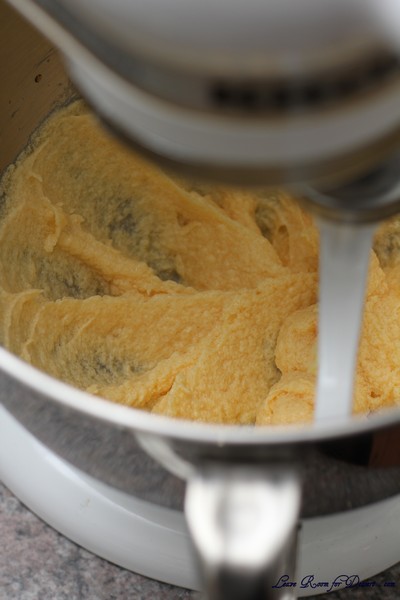
For the flooding/filling icing, drag a knife through the surface of the Royal Icing.

If the surface becomes smooth at around 3-4 seconds, the icing is at the correct consistency.
• Tip: If your icing is too thick, thin it by adding a few drops of water. Mix, count to 3-4 seconds, then if it’s still too thick, add a few more drops of water, repeat, etc.
• Tip: To thicken your icing, add small amounts of icing sugar until thick enough for the 3-4 second test.

Colouring
Separate Royal Icing into separate bowls for each colour you plan on using.
• Tip: Make sure to cover the bowls with cling film or a damp cloth to prevent the top from setting and then making lumps

Using a toothpick, add gel or paste colouring to each bowl and mix thoroughly until desired colour is reached
• Tip: You can use liquid food colouring but you might not be able to get the desired strength of colour, liquid colouring will also thin out the icing so you’ll need to add more icing sugar to thicken it again.

Prepping and Filling Your Bag
Attach your icing tips to the piping bags using couplers
• Tip: You don’t need to use a coupler but it makes it easier if you want to change tip sizes
• Tip: A size 1 tip is best for doing intricate details. A size 2 tip is good for some details and outlining. Fill or flood with sizes 2 – 5.
• Tip: You don’t need a piping bag, you can use a parchment cone or ziplock bag with a tiny bit snipped off the corner. I would however recommend getting a piping set if you don’t have one as it will be much easier and more precise.

Stand the piping bags in glasses with the tops of the bags folded over the top of the glass.

Fill your icing bags with each coloured icing.

Tie the ends of the piping bags with elastic bands.

Decorating: Outlining

Fit the piping bag with a size 2 or 3 tip.
• Tip: Or snip a very small bit of the corner off of a parchment cone or Ziploc bag

Hold the piping bag at a 45 degree angle above the cookie where you want to start the outline.

Gently squeeze the piping bag and start moving in the direction you want to outline the cookie.

Start lifting the piping bag away from the cookie so that the flow of icing falls onto the cookie, making it an even and neater outline.

As you start to reach the beginning of the outline, bring the piping tip closer to the surface of the cookie to meet the start of the icing outline.
• Tip: If you’re doing an intricate cookie, like a snow flake, you won’t be able to lift the tip as far away from the cookie.

If you’re doing a different colour border, eg a black border, let the outline dry before flooding. If using the same colour for the outline as you’re flooding with, begin flooding after doing the outline.

Decorating: Flooding
Fit the piping bag with a size 2-5 tip, the bigger the area being filled, the bigger the tip.
• Tip: Or cut slightly more off the corner of a Ziploc bag to create a slightly larger opening.

Quickly zigzag back and forth over the area you want to fill.
• Tip: You need to be quick when flooding the cookie so don’t worry too much if it’s not filled in neatly.

Using a toothpick or clean paintbrush, push the icing around into the gaps that are still remaining.

Either pick up the cookie and tip it from side to side to even out the filling, or lightly bang the cookie down on your kitchen counter.

Decorating: Melding Colours

If you would like to add lines or dots to the base colour that you flooded the cookie with so that they meld and dry as a smooth surface, you need to add the lines/dots/patterns as quickly as possible after flooding and smoothing the surface of the cookie.
• Tip: Make sure to have all the colours you’re planning on using ready and close by so that you can switch between colours quickly

Simply pipe other colours onto the flooded surface in patterns or lines which you can either leave as that or then drag a toothpick through to make marbling patterns.

Decorating: On top of flooding

If you’d like to do other patterns/outlines or writing on top of the flooded surface so that they are raised above the flooded background, simply allow the icing to dry, preferably over night.

Fit the piping bag with tip sizes 1-3.

Pipe patterns or write on top of the dry icing
• Tip: For writing, the consistency of your icing should be thicker rather than thinner, drag a knife through your icing and when the surface smoothes around 12-15 seconds, the consistency is correct.

Packaging and Storing
Once fully decorated, allow cookies to dry for 24 hours in a cool and dry area.

Stack cookies in an airtight container, from largest cookies at the bottom, to smallest and more intricate at the top, with parchment or wax free paper in between the layers.

Store in a cool and dry area with the container’s lid firmly sealed.

Will last for about a month if stored this way.

General Baking Tips
When measuring by volume (cup) always shift/aerate your flour/icing sugar in the container/bag before measuring because it settles as it sits and so you end up with more flour/icing sugar in your cup. I do this by moving the ingredient around with a spoon, whisk or fork.

When measuring flour or icing sugar by volume (cup) never scoop the flour/icing sugar up with the cup otherwise you compress the contents and this can make a big difference in the amount you’re using. Rather, spoon the ingredient into the cup until level with the top.

When measuring baking powder or baking soda, always level off the top of the measuring spoon with something flat (like the back of a knife) as these ingredients need to be accurately measured.

When mixing your ingredients, always follow the recipe instructions, especially when it comes to beating in eggs and flour, so if it specifies to mix until just combined or to beat for 4 minutes, follow the instructions to get best results.

Unless otherwise specified, always have your ingredients at room temperature.

It’s always best to invest in an oven thermometer so that you know exactly the temperature you’re baking at then you can also find out if you have cold or hot spots in your oven.

If you need to rotate your trays midst baking, always allow at least half the baking time to lapse before opening your oven to move baking trays around, this allows time for your baked goods to form a good structure so that they won’t flop.

General Royal Icing Tips
Keep a damp cloth handy while decorating your cookies so that if you’re switching between different icing bags, you can keep the tips covered with the damp cloth so that the icing doesn’t dry and clog them.

If your icing tips do clog, use a toothpick or pin to unclog them.

Always pipe a little bit of royal icing onto a board/paper towel before you begin to make sure there are no air bubbles.

Remember to always cover bowls containing royal icing wither cling wrap, a damp cloth or sealable lid so that the surface doesn’t dry.

Don’t store anything decorated with royal icing in the fridge otherwise the royal icing will become tacky.

Caramelised Balsamic Vinegar

Thursday, September 23rd, 2010

I used to love eating bread with olive oil and dukkah, although after going to the Hunter Valley last year, I have a new appreciation for caramelised balsamic vinegar – with dukkah and olive oil. It’s too good to go past. I could just eat bread with oil, caramelised balsamic and dukkah as a meal.

Caramelised balsamic vinegar is often slapped with quite a high price tag, although I’ll prove to you how easy it is to make – using the balsamic vinegar in your cupboard. I’m sure nicer balsamic vinegars make nicer caramelised balsamic vinegar, although I’ve used whatever’s lying around – which is normally whatever is a good price.

And the best bread to eat with it has to be my favourite – ciabatta. I promise to post the lovely (and easy) ciabatta bread Nick has made very soon.

See my recipe for dukkah here.

Caramelised Balsamic Vinegar

Recipe by Anita @ Leave Room for Dessert
Depending on the brand of balsamic vinegar, you may need to add more sugar.

Makes 125-150ml

250ml balsamic vinegar
3-6 tablespoons caster sugar
2-4 tablespoons brown sugar

The smell of the cooking balsamic vinegar can be quite strong, so don’t breathe in the vapours too deeply. You may want a window open in your kitchen.

Place all ingredients in a small saucepan and heat on low/medium heat, until the sugar has dissolved. Turn the heat up to high until boiling and cook for 5-10minutes until the mixture has thickened slightly (it should reduce by about half). Test it by placing a small amount on a cold spoon and see how the mixture thickens with cooking. It should start to become darker as it thickens and run on the spoon less easily. This is a good opportunity to test it for your desired sweetness. It will thicken further upon cooling – although it will still taste lovely.

Enjoy by dunking a nice piece of ciabatta bread into olive oil then the caramelised balsamic vinegar. If you have dukkah, dip the coated bread into the dukkah. Use instead of balsamic vinegar as part of salad dressings.

Baked Alaska and Ice Cream Petit Fours – Daring Bakers Challenge August 2010

Friday, August 27th, 2010

The August 2010 Daring Bakers’ challenge was hosted by Elissa of 17 and Baking. For the first time, The Daring Bakers partnered with Sugar High Fridays for a co-event and Elissa was the gracious hostess of both. Using the theme of beurre noisette, or browned butter, Elissa chose to challenge Daring Bakers to make a pound cake to be used in either a Baked Alaska or in Ice Cream Petit Fours. The sources for Elissa’s challenge were Gourmet magazine and David Lebovitz’s “The Perfect Scoop”.

Two sweets I have never made were chosen for this month’s Daring Bakers challenge. We could do both or just one, and as I had done neither previously and wanted to try them both. I went with both, especially considering that there were two common components between these desserts, meaning I just had to increase the cake and ice cream quantity, and not make too many extra components.

I was surprised by how many people one Baked Alaska from a reasonably small tea cup actually served. You could easily serve 2-4 people with one Baked Alaska, and with the petit fours being served up with them, I was cutting it into eight. This meant one of them stayed in the freezer (covered in plastic) for a week before my family got around to eating it. And it was still good.
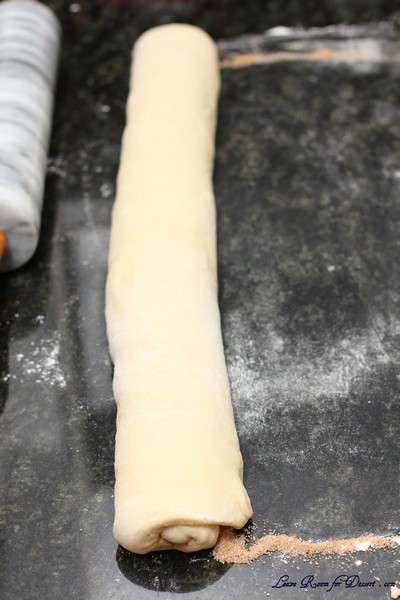
I tried both torching the meringue using a blow torch and placing it in a hot oven for 4 minutes. The torching was a heap of fun, although the oven actually made the meringue beautifully crispy on the outside. I’m not a huge fan of not-fully cooked meringue and this was a little off-putting for me, although others couldn’t get enough of it.

The cake was lovely the day it came out of the oven, the burnt butter flavour worked so well. I found as the days went on and refrigeration and freezing were required, it became a little staler than I would have preferred.

Although I was extremely looking forward to the petit fours, they didn’t turn out how I had hoped. They were too large, the cake kept coming away from the ice cream and they were too difficult to coat. Taste-wise they were great – but I wouldn’t bother doing them individually again…

Thanks again to our host this month – I always enjoy the challenges.

Baked Alaska and Ice Cream Petit Fours

Recipe Source: The brown butter pound cake recipe is adapted from the October 2009 edition of Gourmet. The vanilla ice cream is from ice cream genius David Lebovitz, adapted from The Perfect Scoop. The chocolate glaze for the petit fours is a larger adapted version of this ganache from Godiva Chocolate and the meringue for the Baked Alaska is a larger version of this meringue from Gourmet, May 1995.

Vanilla Ice Cream

1 cup (250ml) whole milk
A pinch of salt
3/4 cup (165g) sugar
1 vanilla bean, split lengthwise OR 2 teaspoons (10ml) pure vanilla extract
2 cups (500ml) heavy (approx 35% butterfat) cream
5 large egg yolks
1 teaspoon (5ml) pure vanilla extract

Heat the milk, salt, and sugar in a medium saucepan until the liquid steams. Scrape out the seeds of the vanilla bean with a paring knife and add to the milk, along with the bean pod. Cover, remove from heat, and let infuse for an hour. (If you do not have a vanilla bean, simply heat the milk, salt, and sugar in a medium saucepan until the liquid steams, then let cool to room temperature.)

Set up an ice bath by placing a 2-quart (2 litre) bowl inside a large bowl partially filled with water and ice. Put a strainer on top of the smaller bowl and pour in the cream.

In another bowl, lightly beat the egg yolks together. Reheat the milk in the medium saucepan until warmed, and then gradually pour ¼ cup warmed milk into the yolks, constantly whisking to keep the eggs from scrambling. Once the yolks are warmed, scrape the yolk and milk mixture back into the saucepan of warmed milk and cook over low heat. Stir constantly and scrape the bottom with a spatula until the mixture thickens into a custard which thinly coats the back of the spatula.

Strain the custard into the heavy cream and stir the mixture until cooled. Add the vanilla extract (1 teaspoon [5ml] if you are using a vanilla bean; 3 teaspoons [15ml] if you are not using a vanilla bean) and refrigerate until thoroughly chilled, preferably overnight.

Remove the vanilla bean and freeze in an ice cream maker. If you don’t have an ice cream maker, you can make it without a machine. See instructions from David Lebovitz: http://www.davidlebovitz.com/archives/2007/07/making_ice_crea_1.html

Brown Butter Pound Cake
The pound cake calls for cake flour. You can make 1 cup of cake flour by placing 2 tablespoons of corn starch in a 1 cup measure, and filling to the top with all purpose flour.

19 tablespoons (9.5 oz) (275g) unsalted (sweet) butter
2 cups (200g) sifted cake flour (not self-rising; sift before measuring) (See “Note” section for cake flour substitution)
1 teaspoon (5g) baking powder
1/2 teaspoon (3g) salt
1/2 cup (110g) packed light brown sugar
1/3 (75g) cup granulated sugar
4 large eggs
1/2 teaspoon pure vanilla extract

Preheat the oven to 325°F/160°C and put a rack in the center. Butter and flour a 9”x9” (23cmx23cm) square pan.

Place the butter in a 10” (25cm) skillet over medium heat. Brown the butter until the milk solids are a dark chocolate brown and the butter smells nutty. (Don’t take your eyes off the butter in case it burns.) Pour into a shallow bowl and chill in the freezer until just congealed, 15-30 minutes.

Whisk together cake flour, baking powder, and salt.

Beat the brown butter, light brown sugar, and granulated sugar in an electric mixer until light and fluffy, about 2 minutes. Beat in the eggs one at a time, mixing well, and then the vanilla extract.

Stir in the flour mixture at low speed until just combined.

Scrape the batter into the greased and floured 9”x9” (23cmx23cm) square pan. Smooth the top with a rubber spatula and rap the pan on the counter. Bake until golden brown on top and when a toothpick inserted into the center comes out clean, about 25 minutes.

Cool in the pan 10 minutes. Run a knife along the edge and invert right-side-up onto a cooling rack to cool completely.

Chocolate Glaze (For the Ice Cream Petit Fours)

9 ounces (250g) dark chocolate, finely chopped
1 cup (250 ml) heavy (approx 35% butterfat) cream
1 1/2 tablespoons (32g) light corn syrup, Golden syrup, or agave nectar
2 teaspoons (10ml) vanilla extract

Stir the heavy cream and light corn syrup in a small saucepan over medium heat until it comes to a boil. Remove from heat and add the dark chocolate. Let sit 30 seconds, then stir to completely melt the chocolate. Stir in the vanilla and let cool until tepid before glazing the petit fours.

Meringue (For the Baked Alaska)

8 large egg whites
½ teaspoon (3g) cream of tartar
½ teaspoon (3g) salt
1 cup (220g) sugar

Beat the egg whites, cream of tartar, and salt on high speed in an electric mixer until soft peaks form. Beat in the sugar gradually in a slow stream until stiff peaks form.

Assembly Instructions – Ice Cream Petit Fours

Line a 9”x9” (23cmx23cm) pan with plastic wrap, so that no sides of the pan are exposed and so there is some extra plastic wrap hanging off the sides. Spread 1 ¾ to 2 cups (450ml to 500ml) ice cream into the pan. Cover with more plastic wrap and freeze several hours.

Once the brown butter pound cake has completely cooled, level the top with a cake leveler or a serrated knife. Then split the cake in half horizontally to form two thin layers.

Unwrap the frozen ice cream. Flip out onto one of the layers of cake and top with the second layer of cake. Wrap well in plastic wrap and return to the freezer overnight.

Make the chocolate glaze (see above.)

While the glaze cools, trim ¾” (2cm) off each side of the ice cream cake to leave a perfectly square 7.5” (19cm) ice cream cake. Cut the cake into twenty five petit fours, each 1.5”x1.5” (4cmx4cm).

Glaze the petit fours one at a time: place a petit four on a fork and spoon chocolate glaze over it.

Place the petit fours on a parchment-lined baking sheet and return to the freezer for one hour.

Assembly Instructions – Baked Alaska

Line four 4” (10cm) diameter tea cups with plastic wrap, so that plastic wrap covers all the sides and hangs over the edge. Fill to the top with ice cream. Cover the top with the overhanging plastic wrap and freeze for several hours, or until solid.

Level the top of the brown butter pound cake with a serrated knife or with a cake leveler. Cut out four 4” (10cm) diameter circles from the cake. Discard the scraps or use for another purpose.

Make the meringue (see above.)

Unwrap the ice cream “cups” and invert on top of a cake round. Trim any extra cake if necessary.

Pipe the meringue over the ice cream and cake, or smooth it over with a spatula, so that none of the ice cream or cake is exposed. Freeze for one hour or up to a day.

Burn the tips of the meringue with a cooking blow torch. Or, bake the meringue-topped Baked Alaskas on a rimmed baking sheet in a 500°F/260°C oven for 5 minutes until lightly golden. Serve immediately.

Tropical Snow Egg

Tuesday, August 3rd, 2010

After our trip to Quay last year, I have wanted to replicate Peter Gilmore’s Snow egg. It never occurred to me again, until I saw Peter Gilmore in a Gourmet Traveller video, where he showed roughly how his two signature desserts (the eight-textured chocolate cake and the snow egg) were made, along with his inspiration behind them. I went searching for recipes for poached meringues, crispy tuilles and with terrible luck (and terrible search terms) it took me quite a few hours before I had found the actual recipe on the internet…

And then I saw it everywhere, even little searches brought me to his recipe, either posted by someone who went to Peter’s cooking class or even on a lifestyle website. Then it was the final dish to be prepared by MasterChef contestants in series 2.

The best part of this dessert being on MasterChef were the comments by people below the recipe, as everyone was discussing where to buy maltose. Beforehand I tried looking in the shops and found rice malt – a brownish liquid maltose (+ carbohydrates and a little glucose). I decided to try it out, without trying any other parts of the recipe, to see if this would work. It didn’t. The tuilles melted into a terrible mess. After checking out the MasterChef website I found people suggesting going to Asian grocery stores. And with much luck, my local Asian grocery store had it. I had to ask for it though as it was too difficult to find, although the lovely staff member there found me some – it was labelled: Wheat Sprout Sugar, Ingredients: Rice, malt…

These tuilles were perfect! They worked very well on baking paper and hardly any broke. It also didn’t matter if they stayed on the paper a while.

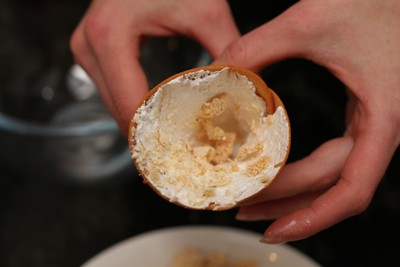
The other piece of equipment I was missing were the hemisphere moulds. Although my Mum came up with the brillant idea of using an egg poacher for the meringue moulds. Lucky my mum’s one had smooth hemispheres compared to mine with a flat base. These worked perfectly, with the only problem being that there were only 4 moulds, so I had to clean them between cooking each batch of 4 halves. I made a total of 8 snow eggs, so this part got tedious after the 2nd batch.

The flavours Peter uses are gorgeous, although trying to make this using seasonal fruits or frozen fruits I had on hand, made me change the recipe to suit the timing of the year. I decided on a passionfruit ice cream for the “yolk” of the egg, with a tropical, strawberry, pineapple and passion fruit granita along with a strawberry cream. I think most flavours worked wonderfully – although the strawberry cream was maybe a little overpowering in flavour.

I have learnt so much from this challenge – the maltose experience was extremely interesting, as were making the poached meringue and granita. I am so glad I have made this, and even more glad the extremely talented and incredibly gifted Peter Gilmore shared such a beautiful recipe of his. I would much like to go back to Quay at some point as the experience was just amazing. I am also greatly anticipating the launch of his book on 1st November this year!!! I tried to make my own version of Peter Gilmore’s eight textured chocolate cake as I could not find his recipe anywhere – although it didn’t turn out particularly well in the presentation department (and obviously didn’t compare to the flavours of Peter’s, but was still delicious). I’m not sure whether I should post it due to the bad photos… – although I have heard his actual recipe may be in his book – making me super excited!!

And to answer your questions, I think this dessert is worth making. Many components can be made the night or a few nights beforehand, the presentation is lovely, the flavours are beautiful, the concept is amazing. (Although, this is on the condition of getting some hemisphere moulds – as cleaning the egg poachers was too tedious. Please let me know if you find any in Sydney or on the internet?) {now that’s not a hint for a birthday present, if I ever did give one :) }

Tropical Snow Egg

Recipe adapted from Peter Gilmore from Quay‘s Guava and Custard Apple Snow Egg

Passion fruit ice cream
100ml milk
3 egg yolks
100g caster sugar
100g passion fruit pulp
50ml pouring cream

Vanilla custard base
400ml pouring cream
2 vanilla beans, split and seeds scraped
1 whole egg
3 egg yolks
80g caster sugar

Tropical granita
100g caster sugar
500ml water
150g pineapple, diced
100g passion fruit pulp
100g fresh strawberries, hulled and halved

Poached meringue (I used all the left over egg whites from the ice cream and custard – making a meringue of ~200g egg whites and ~200g caster sugar)
Canola oil spray or vegetable oil
150g egg white
150g caster sugar

Maltose tuiles
200g liquid maltose
100g caster sugar
20g flaked almonds

Vanilla cream

100g vanilla custard base
100g double cream

Strawberry Cream
100g of strawberries, pureed and sieved
200g vanilla cream

1 cup icing sugar, to serve

Preheat oven to 150ºC and turn on ice cream machine to chill.

For the passion fruit ice cream, bring milk to the boil in a small saucepan. Whisk egg yolks and sugar together by hand, then pour boiling milk onto the egg yolk mixture while whisking. Pour into a stainless steel bowl and cook while whisking over a pot of simmering water for about 10 minutes or until it is thickened. Whisk sabayon until cool over ice, then whisk in the passion fruit pulp and the cream. Strain and then place the mixture into an ice cream machine and churn for about 40 minutes. Place in the freezer until set.

For the vanilla custard base, heat cream and vanilla seeds together in a small saucepan until it just begins to boil, and then remove from the heat. Whisk by hand the eggs, egg yolks and sugar together in a stainless steel bowl until combined. While whisking the eggs, slowly pour on the hot vanilla cream. Mix well and remove the vanilla pods. Pour this mixture into 4 dariole moulds to a depth of 5 cm, place the dariole moulds into a small baking dish with boiling water around the dariole moulds up to halfway to form a water bath. Place the water bath into a 150ºC oven and cook the custard 25 minutes or until the custard is just set. If the centre is still runny place in the freezer until set then place in refrigerator until needed.

For the granita, combine sugar and water in a large saucepan; bring to the boil then lower heat. Add diced fruit and gently simmer for 10 minutes. Take off the heat and allow to infuse at room temperature for 30 minutes. Pass the liquid through a muslin cloth and discard the solids. Pour the syrup into a lamington or slice tin to a depth of 5cm. Place in the freezer until solid. Scrape with a fork into crystals and then transfer to the freezer until required.

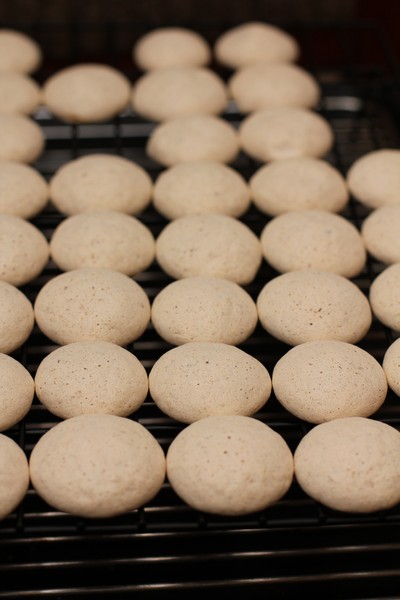
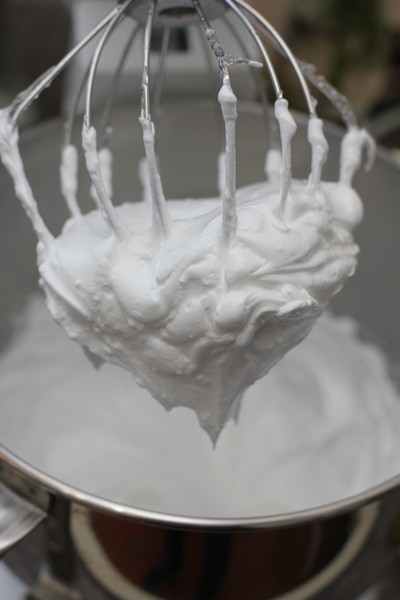
For the poached meringue, whisk the egg whites in an electric mixer until they form soft peaks and then slowly add the sugar bit by bit. Keep whisking until the meringue forms firm peaks and the sugar has dissolved. Spray hemisphere moulds lightly with canola oil spray. Spoon mixture into a piping bag fitted with a 1cm nozzle. Pipe mixture into moulds so it sits above the surface. Place the filled moulds into a large baking dish and pour boiling water into the baking dish to a depth of about 3cm. Bake at 150ºC for 15 minutes until just. Allow to cool for 2 minutes, then trim off tops so they are perfect hemispheres. Gently un-mould and place cut side up on a baking paper lined tray in the fridge until needed. Increase oven temperature to 180ºC.

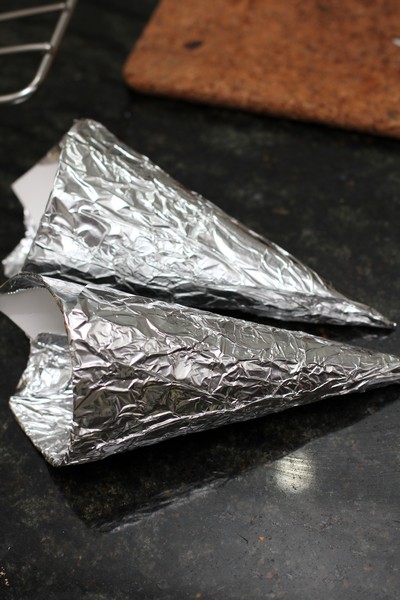
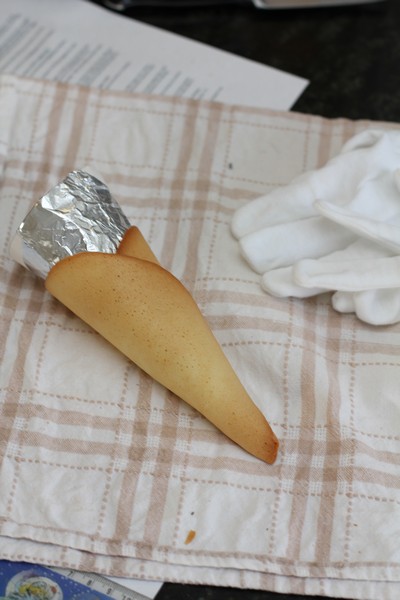
To make the maltose tuiles, stir maltose and sugar together in a small saucepan then bring to the boil until it reaches hard crack stage (until it caramelises) (this will occur at 160ºC or a little higher). Take care to brush down the sides with a pastry brush dipped in water so it doesn’t crystallise. Once golden add the flaked almonds and immediately pour the mixture onto a silicon mat, allow to cool completely. Process the cooled praline in the bowl of a hand blender to form a fine powder. Next sift a fine layer of the praline mixture through a drum sieve, over an acetate stencil with 11cm circles cut out of it onto a silicon mat on a baking sheet. Melt this mixture in a 180ºC oven for a few minutes until it forms a clear liquid paste. Cool tuiles slightly and peel off silicon sheet while still flexible. Store flat between sheets of baking paper until ready to use.

For the vanilla cream, whisk the cream and custard together to form soft peaks. Store in the fridge until ready to use.

For the strawberry cream, place the strawberry puree in a small bowl and fold through the vanilla cream gently to form a rippled effect. Do this just before you are ready to assemble the dessert.

To assemble, take 8 of the half hemisphere poached meringues. Using a teaspoon or half teaspoon measure remove a small scoop from the centre of each half hemisphere being careful not to break through the outer edge. Then place a teaspoon or half teaspoon measure scoop of passion fruit ice cream in four of the hemispheres. Invert the other four hemispheres over the ice cream filled meringues to form a complete sphere. Use wet fingers to stick the two halves together. Place a tuile on top of each sphere and using a blow torch and an even motion, melt it over the sphere, patting it down if necessary. Dust spheres liberally with icing sugar. Next add a generous spoonful of the strawberry cream in the bottom of each serving glass. Top the cream with the tropical granita. Use two teaspoons to place the snow egg on top of the granita and serve.

Swiss Swirl Ice Cream Cake – Daring Bakers Challenge July 2010

Tuesday, July 27th, 2010

The July 2010 Daring Bakers’ challenge was hosted by Sunita of Sunita’s world – life and food. Sunita challenged everyone to make an ice-cream filled Swiss roll that’s then used to make a bombe with hot fudge. Her recipe is based on an ice cream cake recipe from Taste of Home.

A crowd pleaser – on all accounts. Everyone loved this dessert – probably because it was composed of chocolate and vanilla components. Chocolate cake and a whole lot of cream sums up this dessert – as do the words ‘yum’ ‘that was great’ and ‘can I have some more’. And yes, people did go back for seconds.

I was a little concerned at the beginning as the ice cream recipes had no egg yolks, and the chocolate ice cream only had cocoa for flavouring, which I thought would impact greatly on flavour and texture – but I think it all worked wonderfully together and would happily make this again.

I had a little trouble with the chocolate swiss roll breaking a touch when I rolled the cream up in it, so I would probably use a different recipe if I were to serve the swiss roll by itself. My food processor couldn’t grind up the vanilla bean fine enough for my likings, so I used the seeds only. And I have learnt my lesson (for the final time). Don’t try and freeze two things in the ice cream machine on the same day! I left my chocolate ice cream too late and it didn’t freeze in the ice cream machine, so we had an ice cream cake with chocolate cream sauce for dessert and it was all too good.

I had leftovers from my 2.4L bowl, so I also made a loaf tin of the swiss roll ice cream cake – and eyes lit up when I said a week after the first one – “would anyone like ice cream cake for dessert?”

Thanks to our Daring Baker host this month, Sunita. I never would have thought or got around to making this if it weren’t on the Daring Bakers – and a big Thank you to all those who maintain and manage the website.

Swiss Swirl Ice Cream Cake

Recipe source- Inspired by the Swiss swirl ice cream cake from the Taste of Home website. The recipes for the cake, filling, eggless ice creams and the fudge topping have been developed by Sunita.

The Swiss rolls

6 medium sized eggs
1 C / 225 gms caster sugar /8 oz+ extra for rolling
6 tblsp / 45gms/ a pinch over 1.5 oz of all purpose (plain) flour + 5 tblsp/40gm /a pinch under 1.5 oz of natural unsweetened cocoa powder, sifted together
2 tblsp /30ml / 1 fl oz of boiling water
a little oil for brushing the pans

For the filling

2C / 500 mls/ 16 fl oz of whipping cream
1 vanilla pod, cut into small pieces of about ½ cm (or 1 tsp vanilla extract)
5 tblsp / 70gms/2.5oz of caster sugar

Pre heat the oven at 200 deg C /400 deg F approximately. Brush the baking pans ( 11 inches by 9 inches ) with a little oil and line with greaseproof baking paper. If you have just one pan, bake one cake and then let the pan cool completely before using it for the next cake.

In a large mixing bowl, add the eggs and sugar and beat till very thick; when the beaters are lifted, it should leave a trail on the surface for at least 10 seconds.

Add the flour mixture, in three batches and fold in gently with a spatula. Fold in the water.

Divide the mixture among the two baking pans and spread it out evenly, into the corners of the pans.
Place a pan in the centre of the pre heated oven and bake for about 10-12 minutes or till the centre is springy to the touch.

Spread a kitchen towel on the counter and sprinkle a little caster sugar over it.
Turn the cake on to the towel and peel away the baking paper. Trim any crisp edges.

Starting from one of the shorter sides, start to make a roll with the towel going inside. Cool the wrapped roll on a rack, seam side down.

Repeat the same for the next cake as well.
Grind together the vanilla pieces and sugar in a food processer till nicely mixed together. If you are using vanilla extract, just grind the sugar on its own and then add the sugar and extract to the cream.

In a large bowl, add the cream and vanilla-sugar mixture and beat till very thick.
Divide the cream mixture between the completely cooled cakes.
Open the rolls and spread the cream mixture, making sure it does not go right to the edges (a border of ½ an inch should be fine).

Roll the cakes up again, this time without the towel. Wrap in plastic wrap and chill in the fridge till needed, seam side down.

The vanilla ice cream

2 and ½ C / 625 ml / 20 fl oz of whipping cream
1 vanilla bean, minced or 1 tsp/ 5 ml/ .15 fl oz vanilla extract
½ C / 115gms/ 4 oz of granulated sugar

Grind together the sugar and vanilla in a food processor. In a mixing bowl, add the cream and vanilla –sugar mixture and whisk lightly till everything is mixed together. If you are using the vanilla extract, grind the sugar on its own and then and the sugar along with the vanilla extract to the cream.

Pour into a freezer friendly container and freeze till firm around the edges. Remove from the freezer, beat till smooth and return to the freezer. Do this 3-4 times and then set completely.

The Hot fudge sauce- I made this just after adding the layer of vanilla ice cream to the cake.

1 C / 230gms/ 8 oz of caster sugar
3 tblsp / 24gms/1.5 oz of natural unsweetened cocoa powder
2 tblsp /15gms/ 1 oz of cornflour/cornstarch
1 and ½ C /355ml /12 fl oz of water
1 tblsp /14gms/ 1 oz butter
1 tsp/5 ml / .15 fl oz vanilla extract

In a small saucepan, whisk together the sugar, cocoa powder, cornflour and water.

Place the pan over heat, and stir constantly, till it begins to thicken and is smooth (for about 2 minutes).
Remove from heat and mix in the butter and vanilla. Keep aside to cool .

The chocolate ice cream

2C/ 500 ml whipping cream
1 C/230gms/8 oz caster sugar
3 tblsp/ 24 gms/1.5 oz of natural unsweetened cocoa powder

Grind together the sugar and the cocoa powder in a food processor .
In a saucepan, add all the ingredients and whisk lightly.
Place the pan over heat and keep stirring till it begins to bubble around the edges.

Remove from heat and cool completely before transferring to a freezer friendly container till firm around the edges. If you are using an ice cream maker, churn the ice cream according to the manufacturer’s instruction, after the mixture has cooled completely.
Remove from the freezer, beat till smooth and return to the freezer. Do this 3-4 times and then set completely.

Assembly-

Cut the Swiss rolls into 20 equal slices ( approximately 2 cms each ).

Cover the bottom and sides of the bowl in which you are going to set the dessert with cling film/plastic wrap.

Arrange two slices at the bottom of the pan, with their seam sides facing each other. Arrange the Swiss roll slices up the bowl, with the seam sides facing away from the bottom, to cover the sides of the bowl. Cover the bowl with plastic wrap and freeze till the slices are firm (at least 30 minutes).

Soften the vanilla ice cream. Take the bowl out of the freezer, remove the cling film cover and add the ice cream on top of the cake slices. Spread it out to cover the bottom and sides of the bowl. Cover the bowl with plastic wrap and freeze till firm ( at least 1 hour)

Add the fudge sauce over the vanilla ice cream, cover and freeze till firm . ( at least an hour)

Soften the chocolate ice cream and spread it over the fudge sauce. Cover with plastic wrap and freeze for at least 4-5 hours till completely set .

Remove the plastic cover, and place the serving plate on top of the bowl. Turn it upside down and remove the bowl and the plastic lining. If the bowl does not come away easily, wipe the outsides of the bowl with a kitchen towel dampened with hot water. The bowl will come away easily.

Keep the cake out of the freezer for at least 10 minutes before slicing, depending on how hot your region is. Slice with a sharp knife, dipped in hot water.

Related Posts with Thumbnails