Cakes, Slices and Biscuits

Cinnamon Doughnuts – Daring Bakers Challenge October 2010

Wednesday, October 27th, 2010


The October 2010 Daring Bakers challenge was hosted by Lori of Butter Me Up. Lori chose to challenge DBers to make doughnuts. She used several sources for her recipes including Alton Brown, Nancy Silverton, Kate Neumann and Epicurious.

Will this year get any busier?? I hope not – but I’m pretty sure it will.

October has been an amazing month. Birthdays always have a huge presence in October – with my family and friends accounting for at least 7 birthdays.

I did manage to fit in the Daring Bakers Challenge this month, though I couldn’t cater to all the requests (custard filled doughnuts didn’t make it). I ended up making the common cinnamon sugared doughnuts – which I often crave whilst out at the shops (and no – I don’t buy them even 10% of the time I want them).

I made these doughnuts the day after my first progressive dinner with friends. It was a lovely long evening with good friends, good food, lots of laughs and full tummies. I bet you can guess what course I cooked for the dinner?

Back to the doughnuts – these were lovely and you couldn’t get them any fresher. They were soft and delicious and even tasted ok the next day.

We tried to encase some chocolate inside some of the leftover dough and fry that, but either the cooking time wasn’t long enough or the dough was thicker (due to more handling) and didn’t cook as well. So, the chocolate filled doughnuts were still a bit raw inside…

I also tried the dough in a mini doughnut maker I was given – although it didn’t work, and I expect the recipe for the doughnut maker works a lot better.

For the recipe I used (and have given below), I felt that there was too much oil used in the saucepan. These doughnuts floated, and therefore you only need the oil a little deeper than half the height of the doughnut.

Even though I loved the doughnuts, I don’t tend to fry many things, mainly due to the excess oil that is often wasted. I did enjoy this challenge though. Thanks to our host for providing so many recipes and ideas for this month’s challenge.

Yeast Doughnuts

Preparation time:
Hands on prep time – 25 minutes
Rising time – 1.5 hours total
Cooking time – 12 minutes

Yield: 20 to 25 doughnuts & 20 to 25 doughnut holes, depending on size

Ingredients
Milk 1.5 cup / 360 ml
Vegetable Shortening 1/3 cup / 80 ml / 70 gm / 2.5 oz (can substitute butter, margarine or lard) – I used butter
Active Dry Yeast 4.5 teaspoon (2 pkgs.) / 22.5 ml / 14 gm / ½ oz
Warm Water 1/3 cup / 80 ml (95°F to 105°F / 35°C to 41°C)
Eggs, Large, beaten 2
White Granulated Sugar ¼ cup / 60 ml / 55 gm / 2 oz
Table Salt 1.5 teaspoon / 7.5 ml / 9 gm / 1/3 oz
Nutmeg, grated 1 tsp. / 5 ml / 6 gm / ¼ oz
All Purpose Flour 4 2/3 cup / 1,120 ml / 650 gm / 23 oz + extra for dusting surface
Canola Oil DEPENDS on size of vessel you are frying in – you want THREE (3) inches of oil (can substitute any flavorless oil used for frying)

Place the milk in a medium saucepan and heat over medium heat just until warm enough to melt the shortening. (Make sure the shortening is melted so that it incorporates well into the batter.)

Place the shortening in a bowl and pour warmed milk over. Set aside.

In a small bowl, sprinkle the yeast over the warm water and let dissolve for 5 minutes. It should get foamy. After 5 minutes, pour the yeast mixture into the large bowl of a stand mixer and add the milk and shortening mixture, first making sure the milk and shortening mixture has cooled to lukewarm.

Add the eggs, sugar, salt, nutmeg, and half of the flour. Using the paddle attachment of your mixer (if you have one), combine the ingredients on low speed until flour is incorporated and then turn the speed up to medium and beat until well combined.

Add the remaining flour, combining on low speed at first, and then increase the speed to medium and beat well.

Change to the dough hook attachment of the mixer and beat on medium speed until the dough pulls away from the bowl and becomes smooth, approximately 3 to 4 minutes (for me this only took about two minutes). If you do not have a dough hook/stand mixer – knead until the dough is smooth and not sticky.

Transfer to a well-oiled bowl, cover, and let rise for 1 hour or until doubled in size.

On a well-floured surface, roll out dough to 3/8-inch (9 mm)thick. (Make sure the surface really is well-floured otherwise your doughnuts will stick to the counter).

Cut out dough using a 2 1/2-inch (65 mm) doughnut cutter or pastry ring or drinking glass and using a 7/8-inch (22 mm) ring for the center whole. Set on floured baking sheet, cover lightly with a tea towel, and let rise for 30 minutes.

Preheat the oil in a deep fryer or Dutch oven to 365 °F/185°C.

Gently place the doughnuts into the oil, 3 to 4 at a time. Cook for 1 minute per side or until golden brown (my doughnuts only took about 30 seconds on each side at this temperature).

Transfer to a cooling rack placed in baking pan. Allow to cool for 15 to 20 minutes prior to glazing, if desired. Allow to cool slightly before coating in cinnamon sugar.

Cinnamon Sugar:
Mix together ¾ cup caster sugar with ½ teaspoon cinnamon for coating the doughnuts.

Decorated Sugar Cookies – Daring Bakers Challenge September 2010

Monday, September 27th, 2010

The September 2010 Daring Bakers’ challenge was hosted by Mandy of “What the Fruitcake?!” Mandy challenged everyone to make Decorated Sugar Cookies based on recipes from Peggy Porschen and The Joy of Baking.

This challenge came at the perfect time, right before a High Tea that was being held at work. And just before my two week holiday – during which I would certainly not get these made. So I made these cookies right at the beginning of the month (and left it to the last minute to post it).

I tried to do a few different designs on my cookies, although not many turned out as pretty as I would have liked.

One of the mandatory elements for this month’s challenge was that it had to be the theme of September, whatever it means to each of us. For me, September is the start of Spring – my favourite season of the year. We have just had gorgeous flowers appearing in our garden. I recently bought three orchids, and after buying these, we found one in our garden which we had never noticed before. Then I was given oodles of them from both my Grandma and my Mum’s neighbour.

My sweet peas have flowered themselves silly. Last year I found my favourite one and once the seeds dried, I threw them around the garden, without Nick knowing and they have formed a jungle – and I love it.

I also discovered that previous owners have planted daffodils and although they didn’t flower last year, I’m so glad they did this year.

With such fantastic inspiration for this challenge, I tried to make flower inspired cookies. Most of which didn’t turn out as well as planned. Although the love heart ones will just have to symbolise my love of Spring.

The biscuits themselves were quite plain, as expected. For the time, effort and taste I probably won’t make these again, although I always enjoy trying something new.

Thanks again to our host for this month and the daring kitchen team!

Basic Sugar Cookies

Makes Approximately 36x 10cm / 4″ Cookies

200g / 7oz / ½ cup + 6 Tbsp Unsalted Butter, at room temperature
400g / 14oz / 3 cups + 3 Tbsp All Purpose / Plain Flour
200g / 7oz / 1 cup Caster Sugar / Superfine Sugar
1 Large Egg, lightly beaten
5ml / 1 tsp Vanilla Extract / Or seeds from 1 vanilla bean

Cream together the butter, sugar and any flavourings you’re using. Beat until just becoming creamy in texture.
• Tip: Don’t over mix otherwise you’ll incorporate too much air and the cookies will spread during baking, losing their shape.

Beat in the egg until well combined, make sure to scrape down the sides of the bowl. Add the sifted flour and mix on low until a non sticky dough forms.
• Tip: I don’t have a stand mixer so I find it easier to switch to dough hooks at this stage to avoid flour flying everywhere.

Knead into a ball and divide into 2 or 3 pieces.

Roll out each portion between parchment paper to a thickness of about 5mm/1/5 inch (0.2 inch)

Refrigerate for a minimum of 30mins.
• Tip: Recipes commonly just wrap the whole ball of dough in clingwrap and then refrigerate it for an hour or overnight, but by rolling the dough between parchment, this shortens the chilling time and then it’s also been rolled out while still soft making it easier and quicker.

Once chilled, peel off parchment and place dough on a lightly floured surface.

Cut out shapes with cookie cutters or a sharp knife.

Arrange shapes on parchment lined baking sheets and refrigerate for another 30mins to an hour.
• Tip: It’s very important you chill them again otherwise they’ll spread while baking.

Re-roll scraps and follow the above process until all scraps are used up.

Preheat oven to 180°C (160°C Fan Assisted) / 350°F / Gas Mark 4.

Bake until golden around the edges, about 8-15mins depending on the size of the cookies.
• Tip: Bake same sized cookies together otherwise mixing smaller with larger cookies could result in
some cookies being baked before others are done.
• Tip: Rotate baking sheets half way through baking if your oven bakes unevenly.

Leave to cool on cooling racks.

Once completely cooled, decorate as desired.
• Tip: If wrapped in tinfoil/cling wrap or kept in airtight containers in a cool place, un-decorated cookies can last up to a month.

Royal Icing

315g – 375g / 11oz – 13oz / 2½ – 3 cups Icing / Confectioner’s / Powdered Sugar, unsifted
2 Large Egg Whites
10ml / 2 tsp Lemon Juice
5ml / 1 tsp Almond Extract, optional

Beat egg whites with lemon juice until combined.
• Tip: It’s important that the bowls/spoons/spatulas and beaters you use are thoroughly cleaned and grease free.

Sift the icing sugar to remove lumps and add it to the egg whites.
• Tip: I’ve listed 2 amounts of icing sugar, the lesser amount is good for a flooding consistency, and the larger amount is for outlining, but you can add even more for a much thicker consistency good for writing. If you add too much icing sugar or would like to make a thinner consistency, add very small amounts of water, a few drops at a time, until you reach the consistency you need.

Beat on low until combined and smooth.

Use immediately or keep in an airtight container.
• Tip: Royal Icing starts to harden as soon as it’s in contact with air so make sure to cover containers with plastic wrap while not in use.

Decorating Your Cookies: Flooding
“Flooding” a cookie is a technique used when covering a cookie with Royal Icing.
1. You outline the area you want to flood which helps create a dam
2. Then fill or flood inside the area you’ve outlined

Decorating Your Cookies: Royal Icing
The most important thing when it comes to decorating with Royal Icing is the consistency.

There are two ways of flooding your cookies. Some like to do the outline with a thicker icing and then flood with a thinner icing. Some like to use the same icing to do both which saves time and you don’t have to have two different piping bags for each colour you’re using.

The Same Consistency Method
Consistency:

Mix your royal icing according to the recipe/instructions

Drag a knife through the surface of the Royal Icing and count to 10

If the surface becomes smooth between 5 & 10 seconds, the icing is at the correct consistency
• Tip: If your icing is too thick, thin it by adding a few drops of water. Mix, do the 10 second test, then if it’s still too thick, add a few more drops of water, repeat, etc.
• Tip: To thicken your icing, add small amounts of icing sugar until thick enough for the 10 second test


Two Different Consistencies Method

Consistency:

Mix your royal icing according to the recipe/instructions.

Separate into 2 different bowls, one lot of icing for outlining, the other for flooding.

For the outlining icing, drag a knife through the surface of the Royal Icing.

If the surface becomes smooth at around 10 seconds, the icing is at the correct consistency.
• Tip: If your icing is too thick, thin it by adding a few drops of water. Mix, count to 10 seconds, then if it’s still too thick, add a few more drops of water, repeat, etc.
• Tip: To thicken your icing, add small amounts of icing sugar until thick enough for the 10 second test.

For the flooding/filling icing, drag a knife through the surface of the Royal Icing.

If the surface becomes smooth at around 3-4 seconds, the icing is at the correct consistency.
• Tip: If your icing is too thick, thin it by adding a few drops of water. Mix, count to 3-4 seconds, then if it’s still too thick, add a few more drops of water, repeat, etc.
• Tip: To thicken your icing, add small amounts of icing sugar until thick enough for the 3-4 second test.

Colouring
Separate Royal Icing into separate bowls for each colour you plan on using.
• Tip: Make sure to cover the bowls with cling film or a damp cloth to prevent the top from setting and then making lumps

Using a toothpick, add gel or paste colouring to each bowl and mix thoroughly until desired colour is reached
• Tip: You can use liquid food colouring but you might not be able to get the desired strength of colour, liquid colouring will also thin out the icing so you’ll need to add more icing sugar to thicken it again.

Prepping and Filling Your Bag
Attach your icing tips to the piping bags using couplers
• Tip: You don’t need to use a coupler but it makes it easier if you want to change tip sizes
• Tip: A size 1 tip is best for doing intricate details. A size 2 tip is good for some details and outlining. Fill or flood with sizes 2 – 5.
• Tip: You don’t need a piping bag, you can use a parchment cone or ziplock bag with a tiny bit snipped off the corner. I would however recommend getting a piping set if you don’t have one as it will be much easier and more precise.

Stand the piping bags in glasses with the tops of the bags folded over the top of the glass.

Fill your icing bags with each coloured icing.

Tie the ends of the piping bags with elastic bands.

Decorating: Outlining

Fit the piping bag with a size 2 or 3 tip.
• Tip: Or snip a very small bit of the corner off of a parchment cone or Ziploc bag

Hold the piping bag at a 45 degree angle above the cookie where you want to start the outline.

Gently squeeze the piping bag and start moving in the direction you want to outline the cookie.

Start lifting the piping bag away from the cookie so that the flow of icing falls onto the cookie, making it an even and neater outline.

As you start to reach the beginning of the outline, bring the piping tip closer to the surface of the cookie to meet the start of the icing outline.
• Tip: If you’re doing an intricate cookie, like a snow flake, you won’t be able to lift the tip as far away from the cookie.

If you’re doing a different colour border, eg a black border, let the outline dry before flooding. If using the same colour for the outline as you’re flooding with, begin flooding after doing the outline.

Decorating: Flooding
Fit the piping bag with a size 2-5 tip, the bigger the area being filled, the bigger the tip.
• Tip: Or cut slightly more off the corner of a Ziploc bag to create a slightly larger opening.

Quickly zigzag back and forth over the area you want to fill.
• Tip: You need to be quick when flooding the cookie so don’t worry too much if it’s not filled in neatly.

Using a toothpick or clean paintbrush, push the icing around into the gaps that are still remaining.

Either pick up the cookie and tip it from side to side to even out the filling, or lightly bang the cookie down on your kitchen counter.

Decorating: Melding Colours

If you would like to add lines or dots to the base colour that you flooded the cookie with so that they meld and dry as a smooth surface, you need to add the lines/dots/patterns as quickly as possible after flooding and smoothing the surface of the cookie.
• Tip: Make sure to have all the colours you’re planning on using ready and close by so that you can switch between colours quickly

Simply pipe other colours onto the flooded surface in patterns or lines which you can either leave as that or then drag a toothpick through to make marbling patterns.

Decorating: On top of flooding

If you’d like to do other patterns/outlines or writing on top of the flooded surface so that they are raised above the flooded background, simply allow the icing to dry, preferably over night.

Fit the piping bag with tip sizes 1-3.

Pipe patterns or write on top of the dry icing
• Tip: For writing, the consistency of your icing should be thicker rather than thinner, drag a knife through your icing and when the surface smoothes around 12-15 seconds, the consistency is correct.

Packaging and Storing
Once fully decorated, allow cookies to dry for 24 hours in a cool and dry area.

Stack cookies in an airtight container, from largest cookies at the bottom, to smallest and more intricate at the top, with parchment or wax free paper in between the layers.

Store in a cool and dry area with the container’s lid firmly sealed.

Will last for about a month if stored this way.

General Baking Tips
When measuring by volume (cup) always shift/aerate your flour/icing sugar in the container/bag before measuring because it settles as it sits and so you end up with more flour/icing sugar in your cup. I do this by moving the ingredient around with a spoon, whisk or fork.

When measuring flour or icing sugar by volume (cup) never scoop the flour/icing sugar up with the cup otherwise you compress the contents and this can make a big difference in the amount you’re using. Rather, spoon the ingredient into the cup until level with the top.

When measuring baking powder or baking soda, always level off the top of the measuring spoon with something flat (like the back of a knife) as these ingredients need to be accurately measured.

When mixing your ingredients, always follow the recipe instructions, especially when it comes to beating in eggs and flour, so if it specifies to mix until just combined or to beat for 4 minutes, follow the instructions to get best results.

Unless otherwise specified, always have your ingredients at room temperature.

It’s always best to invest in an oven thermometer so that you know exactly the temperature you’re baking at then you can also find out if you have cold or hot spots in your oven.

If you need to rotate your trays midst baking, always allow at least half the baking time to lapse before opening your oven to move baking trays around, this allows time for your baked goods to form a good structure so that they won’t flop.

General Royal Icing Tips
Keep a damp cloth handy while decorating your cookies so that if you’re switching between different icing bags, you can keep the tips covered with the damp cloth so that the icing doesn’t dry and clog them.

If your icing tips do clog, use a toothpick or pin to unclog them.

Always pipe a little bit of royal icing onto a board/paper towel before you begin to make sure there are no air bubbles.

Remember to always cover bowls containing royal icing wither cling wrap, a damp cloth or sealable lid so that the surface doesn’t dry.

Don’t store anything decorated with royal icing in the fridge otherwise the royal icing will become tacky.

Baked Alaska and Ice Cream Petit Fours – Daring Bakers Challenge August 2010

Friday, August 27th, 2010

The August 2010 Daring Bakers’ challenge was hosted by Elissa of 17 and Baking. For the first time, The Daring Bakers partnered with Sugar High Fridays for a co-event and Elissa was the gracious hostess of both. Using the theme of beurre noisette, or browned butter, Elissa chose to challenge Daring Bakers to make a pound cake to be used in either a Baked Alaska or in Ice Cream Petit Fours. The sources for Elissa’s challenge were Gourmet magazine and David Lebovitz’s “The Perfect Scoop”.

Two sweets I have never made were chosen for this month’s Daring Bakers challenge. We could do both or just one, and as I had done neither previously and wanted to try them both. I went with both, especially considering that there were two common components between these desserts, meaning I just had to increase the cake and ice cream quantity, and not make too many extra components.

I was surprised by how many people one Baked Alaska from a reasonably small tea cup actually served. You could easily serve 2-4 people with one Baked Alaska, and with the petit fours being served up with them, I was cutting it into eight. This meant one of them stayed in the freezer (covered in plastic) for a week before my family got around to eating it. And it was still good.

I tried both torching the meringue using a blow torch and placing it in a hot oven for 4 minutes. The torching was a heap of fun, although the oven actually made the meringue beautifully crispy on the outside. I’m not a huge fan of not-fully cooked meringue and this was a little off-putting for me, although others couldn’t get enough of it.

The cake was lovely the day it came out of the oven, the burnt butter flavour worked so well. I found as the days went on and refrigeration and freezing were required, it became a little staler than I would have preferred.

Although I was extremely looking forward to the petit fours, they didn’t turn out how I had hoped. They were too large, the cake kept coming away from the ice cream and they were too difficult to coat. Taste-wise they were great – but I wouldn’t bother doing them individually again…

Thanks again to our host this month – I always enjoy the challenges.

Baked Alaska and Ice Cream Petit Fours

Recipe Source: The brown butter pound cake recipe is adapted from the October 2009 edition of Gourmet. The vanilla ice cream is from ice cream genius David Lebovitz, adapted from The Perfect Scoop. The chocolate glaze for the petit fours is a larger adapted version of this ganache from Godiva Chocolate and the meringue for the Baked Alaska is a larger version of this meringue from Gourmet, May 1995.

Vanilla Ice Cream

1 cup (250ml) whole milk
A pinch of salt
3/4 cup (165g) sugar
1 vanilla bean, split lengthwise OR 2 teaspoons (10ml) pure vanilla extract
2 cups (500ml) heavy (approx 35% butterfat) cream
5 large egg yolks
1 teaspoon (5ml) pure vanilla extract

Heat the milk, salt, and sugar in a medium saucepan until the liquid steams. Scrape out the seeds of the vanilla bean with a paring knife and add to the milk, along with the bean pod. Cover, remove from heat, and let infuse for an hour. (If you do not have a vanilla bean, simply heat the milk, salt, and sugar in a medium saucepan until the liquid steams, then let cool to room temperature.)

Set up an ice bath by placing a 2-quart (2 litre) bowl inside a large bowl partially filled with water and ice. Put a strainer on top of the smaller bowl and pour in the cream.

In another bowl, lightly beat the egg yolks together. Reheat the milk in the medium saucepan until warmed, and then gradually pour ¼ cup warmed milk into the yolks, constantly whisking to keep the eggs from scrambling. Once the yolks are warmed, scrape the yolk and milk mixture back into the saucepan of warmed milk and cook over low heat. Stir constantly and scrape the bottom with a spatula until the mixture thickens into a custard which thinly coats the back of the spatula.

Strain the custard into the heavy cream and stir the mixture until cooled. Add the vanilla extract (1 teaspoon [5ml] if you are using a vanilla bean; 3 teaspoons [15ml] if you are not using a vanilla bean) and refrigerate until thoroughly chilled, preferably overnight.

Remove the vanilla bean and freeze in an ice cream maker. If you don’t have an ice cream maker, you can make it without a machine. See instructions from David Lebovitz: http://www.davidlebovitz.com/archives/2007/07/making_ice_crea_1.html

Brown Butter Pound Cake
The pound cake calls for cake flour. You can make 1 cup of cake flour by placing 2 tablespoons of corn starch in a 1 cup measure, and filling to the top with all purpose flour.

19 tablespoons (9.5 oz) (275g) unsalted (sweet) butter
2 cups (200g) sifted cake flour (not self-rising; sift before measuring) (See “Note” section for cake flour substitution)
1 teaspoon (5g) baking powder
1/2 teaspoon (3g) salt
1/2 cup (110g) packed light brown sugar
1/3 (75g) cup granulated sugar
4 large eggs
1/2 teaspoon pure vanilla extract

Preheat the oven to 325°F/160°C and put a rack in the center. Butter and flour a 9”x9” (23cmx23cm) square pan.

Place the butter in a 10” (25cm) skillet over medium heat. Brown the butter until the milk solids are a dark chocolate brown and the butter smells nutty. (Don’t take your eyes off the butter in case it burns.) Pour into a shallow bowl and chill in the freezer until just congealed, 15-30 minutes.

Whisk together cake flour, baking powder, and salt.

Beat the brown butter, light brown sugar, and granulated sugar in an electric mixer until light and fluffy, about 2 minutes. Beat in the eggs one at a time, mixing well, and then the vanilla extract.

Stir in the flour mixture at low speed until just combined.

Scrape the batter into the greased and floured 9”x9” (23cmx23cm) square pan. Smooth the top with a rubber spatula and rap the pan on the counter. Bake until golden brown on top and when a toothpick inserted into the center comes out clean, about 25 minutes.

Cool in the pan 10 minutes. Run a knife along the edge and invert right-side-up onto a cooling rack to cool completely.

Chocolate Glaze (For the Ice Cream Petit Fours)

9 ounces (250g) dark chocolate, finely chopped
1 cup (250 ml) heavy (approx 35% butterfat) cream
1 1/2 tablespoons (32g) light corn syrup, Golden syrup, or agave nectar
2 teaspoons (10ml) vanilla extract

Stir the heavy cream and light corn syrup in a small saucepan over medium heat until it comes to a boil. Remove from heat and add the dark chocolate. Let sit 30 seconds, then stir to completely melt the chocolate. Stir in the vanilla and let cool until tepid before glazing the petit fours.

Meringue (For the Baked Alaska)

8 large egg whites
½ teaspoon (3g) cream of tartar
½ teaspoon (3g) salt
1 cup (220g) sugar

Beat the egg whites, cream of tartar, and salt on high speed in an electric mixer until soft peaks form. Beat in the sugar gradually in a slow stream until stiff peaks form.

Assembly Instructions – Ice Cream Petit Fours

Line a 9”x9” (23cmx23cm) pan with plastic wrap, so that no sides of the pan are exposed and so there is some extra plastic wrap hanging off the sides. Spread 1 ¾ to 2 cups (450ml to 500ml) ice cream into the pan. Cover with more plastic wrap and freeze several hours.

Once the brown butter pound cake has completely cooled, level the top with a cake leveler or a serrated knife. Then split the cake in half horizontally to form two thin layers.

Unwrap the frozen ice cream. Flip out onto one of the layers of cake and top with the second layer of cake. Wrap well in plastic wrap and return to the freezer overnight.

Make the chocolate glaze (see above.)

While the glaze cools, trim ¾” (2cm) off each side of the ice cream cake to leave a perfectly square 7.5” (19cm) ice cream cake. Cut the cake into twenty five petit fours, each 1.5”x1.5” (4cmx4cm).

Glaze the petit fours one at a time: place a petit four on a fork and spoon chocolate glaze over it.

Place the petit fours on a parchment-lined baking sheet and return to the freezer for one hour.

Assembly Instructions – Baked Alaska

Line four 4” (10cm) diameter tea cups with plastic wrap, so that plastic wrap covers all the sides and hangs over the edge. Fill to the top with ice cream. Cover the top with the overhanging plastic wrap and freeze for several hours, or until solid.

Level the top of the brown butter pound cake with a serrated knife or with a cake leveler. Cut out four 4” (10cm) diameter circles from the cake. Discard the scraps or use for another purpose.

Make the meringue (see above.)

Unwrap the ice cream “cups” and invert on top of a cake round. Trim any extra cake if necessary.

Pipe the meringue over the ice cream and cake, or smooth it over with a spatula, so that none of the ice cream or cake is exposed. Freeze for one hour or up to a day.

Burn the tips of the meringue with a cooking blow torch. Or, bake the meringue-topped Baked Alaskas on a rimmed baking sheet in a 500°F/260°C oven for 5 minutes until lightly golden. Serve immediately.

V8 Cake

Sunday, July 25th, 2010

Yes, that’s right. I decided to make Adriano Zumbo’s V8 cake. Not a car cake as might be thought by the name, but a gorgeous cake composed of eight different layers of vanilla. Vanilla crème chantilly, toasted vanilla brulee, vanilla water gel, vanilla glaze, vanilla ganache, vanilla macaron, vanilla dacquoise, vanilla chiffon cake, vanilla almond crunch… hmmm.. that’s 9 layers… oh well.

After the pressure test episode on MasterChef, I had loads of people coming up and asking whether I would be making the cake – with all of them hoping to get a chance to try it.

I haven’t made anything from this series of MasterChef, even though there was one other dish that looked very gorgeous and tasty. So, I decided to make this cake (unfortunately not using all the beans used here, and substituting vanilla essence for some – as they are quite expensive). I also didn’t use any of the titanium dioxide in the glaze or chocolate. I know this would have made a gorgeous colour, but it would have been difficult to get a hold of, and I thought that 12.5g was a little large for the cake. The cake still looked gorgeous, without the brilliant white look.

I am glad tonight’s episode is the last MasterChef, as hopefully I can get a bit of my time back – I haven’t been visiting people blogs, getting enough sleep, blogging as much as I’d like and experimenting with some of my own creations.

My notes on making this cake:
I didn’t use all the vanilla beans, due to expense. I used half the number here + vanilla essence.
I made my own almond praline paste – not sure if it’s what it’s supposed to be like, the recipe is at the bottom of this page.
I made my own miroir glaze – this recipe is also at the end – it makes more than required (about 1/3 extra).
I didn’t use Titanium dioxide – the cake still looked gorgeous.
I made my own 20cm acetate box – cutting out a 20cm x 20cm square + 4 20cm x 9cm recatangles (although these were too large and could have been 20cm x 7cm). Sticky tape the rectangles to each side of the square, then sticky tape together. Use cardboard for supports on the bottom and each end.)
You can use projector sheets or sheets that cover the front of a book for acetate in this recipe.
I thought the ganache was a bit more difficult to get smooth than more traditional ganaches (pouring hot cream over the chocolate). Although with lots of pressure from the food processor – it came together in the end. I would suggest cutting it up finely to begin with, otherwise cream goes everywhere. This also made around 1/3 too much I think.
In place of the 1.5g gellanin the vanilla water gel, I used 2 sheets gold gelatine (4-5g) to get a jelly layer.
I used All Bran wheat flakes instead of the pailette feuillitine, but only 20g of it.
There was way too much vanilla syrup. I would suggest doing 1/4 of the recipe or less.
There was too much brown sugar crumble – this could have been cut by half.
There could have been a bit more vanilla creme chantilly made, as this was a little short for me… Make 1/4-1/2 more.

Enjoy!! If you decide to make it :)

V8 Cake

Recipe by Adriano Zumbo on MasterChef Australia 2010 (series 2)
see my notes above

2 vanilla beans
100g blanched almonds
Sugar spheres, to serve

Vanilla crème chantilly
4g gold strength gelatine leaves
590g thickened cream
1 vanilla bean, seeds scraped
175g caster sugar
24g cold water

Toasted vanilla brulee

3 egg yolks
50g dark brown sugar
250g thickened cream
1 vanilla bean
1 tsp vanilla extract

Vanilla water gel
250g water
38g caster sugar
1.5g gellan
1 vanilla bean, split, seeds scraped

Vanilla glaze
9.5g gelatine leaves
60g cold water
40g glucose liquid
35g water
250g caster sugar
400g thickened cream
1 vanilla bean, split, seeds scraped
150g miroir glaze (specialty cold-application patisserie glaze)
7.5g titanium dioxide (white colourant, powdered)

Vanilla ganache
300g white couverture chocolate
185g thickened cream
2 tsp vanilla extract
1/2 vanilla bean, split, seeds scraped
95g unsalted butter, softened

Brown sugar crumble
50g unsalted butter
50g plain flour
50g dark brown sugar
50g almond meal
¼ scraped vanilla bean

Vanilla macaron
53g egg whites
50g pure icing sugar
150g TPT (equal parts sifted almond meal and sifted pure icing sugar)
½ scraped vanilla bean

Vanilla dacquoise
60g egg whites
43g caster sugar
65g almond meal
40g pure icing sugar, sifted
1 vanilla bean, split, seeds scraped
½ tsp vanilla extract

Vanilla chiffon cake

17.5g plain flour
1 roasted and finely ground vanilla bean
1.25 (21g) egg yolks
5g dark brown sugar
17.5g water
15g canola oil
45g egg whites
22.5g caster sugar
2.5g rice flour

Vanilla almond crunch

45g milk couverture chocolate
90g almond praline paste
90g pure almond paste
18g unsalted butter
45g brown sugar crumble
45g pailette feuillitine (crunchy wheat flakes)
18g toasted diced almonds
1 roasted and finely ground vanilla bean
2g sea salt
¼ scraped vanilla bean

Vanilla syrup
125g caster sugar
250g water
½ vanilla bean, split
1 tsp vanilla extract

White chocolate flower and tiles
500g white couverture chocolate, grated or finely chopped
5g titanium dioxide

Please note – you will need precision scales. The vanilla crème chantilly, vanilla glaze, brown sugar crumble, and vanilla syrup can all be made ahead of time.

1. Preheat oven to 160°C.

2. To make the roasted vanilla beans, place 2 vanilla beans in oven until burnt and charcoal in texture. Grind to a fine powder in a mortar and pestle or spice grinder. Cover and set aside.

3. To make the pure almond paste, place 100g blanched almonds on a baking tray and bake for 10 minutes or until deep golden. Grind to a coarse paste. Cover and set aside.

4. To make the vanilla crème chantilly, cut gelatine into small squares, soak in the cold water. Place cream, vanilla and sugar in a saucepan and bring to the boil. Remove from the heat and allow to cool to 70-80°C, and then stir through the gelatine and water mixture until dissolved. Place in a container, cover the surface with cling wrap and place in the fridge.

5. For the toasted vanilla brulee, mix yolks and sugar in a bowl by hand with a whisk until just combined. Add cream and vanilla bean to a small saucepan and bring to the boil, pour a little over the eggs while stirring, then add the remaining liquid including vanilla bean. Puree with a hand blender until smooth and pour into a shallow baking tray about 25 x 38cm. Place into the oven and cook until just set, about 10 minutes, then increase oven to 200°C and bake until it forms a golden brown crust, about 5 minutes. It should look slightly split when removed from the oven. Scrape mixture into a thermomix, blender, or small food processor and blend to a smooth paste. Set aside in a small bowl, covering the surface of the brulee with cling wrap so it doesn’t form a skin. Reduce oven temperature to 160°C.

6. To make the vanilla water gel, place a lined 18cm square cake tin in the fridge to chill. Boil all ingredients in saucepan whilst whisking until dissolved and mixture starts to thicken. To test if set, drop about a teaspoon of liquid into a metal bowl, it should thicken slightly. It will thicken on cooling. To speed up cooling, pour into a metal bowl and set aside for 5 minutes. Pour into chilled cake tin and place in the freezer until solid, about 30 minutes. Remove from mould and keep gel in freezer.

7. For the vanilla glaze, soak the gelatine leaves in cold water until softened. Drain, squeezing out any excess water. Boil glucose, water and sugar until 165°C, brushing around the sides of the saucepan with a pastry brush dipped in cold water as you go. Do not allow caramel to take on any colour. In another saucepan, bring cream and vanilla seeds to boil and then add to the sugar syrup. Mix through, then allow to cool to 70°C and add softened gelatine, stirring well. Add miroir glaze and titanium dioxide and blend well. Strain, then freeze until set. Reheat to 35°C when glazing the cake.

8. For the vanilla ganache, place all ingredients in a blender and mix until smooth and creamy. Cover closely with cling wrap and set aside until needed.

9. To make the brown sugar crumble, place all ingredients in an electric mixer and beat mix until dough forms. ‘Grate’ through a cooling rack with a lined baking tray sitting underneath to catch the crumble then bake in the oven for about 10 minutes until golden.

10. To make the vanilla macaron, draw an 18cm square on a piece of baking paper placed on a baking tray. Using an electric mixer or hand beaters, whisk egg whites on high speed until soft peaks form then slowly add pure icing sugar, checking it has dissolved in between additions until you have stiff glossy peaks. Stir through TPT with vanilla seeds. Spoon mixture into a piping bag fitted with a 5mm nozzle. Pipe into the pencilled frame using a continuous snaking motion to fill the entire square. Let a skin form and then bake for 10 minutes at 160°C until golden. Remove from oven, slide baking paper off tray and place on kitchen bench. Increase oven temperature to 180°C.

11. To make the vanilla dacquoise, draw an 18cm square on a piece of baking paper placed on a baking tray. In an electric mixer fitted with whisk attachment, whisk egg whites on high speed until soft peaks form then slowly add caster sugar, beating until you have stiff glossy peaks. Mix almond meal with icing sugar, vanilla seeds and extract, gently fold through egg whites. Spoon into a piping bag fitted with a 5mm nozzle. Pipe into the pencilled frame using a continuous snaking motion to fill the entire square. Dust with icing sugar, let sit 2 minutes then dust again. Bake at 180°C 10-12 minutes or until golden. Remove from oven, slide baking paper off tray and place on kitchen bench. Reduce oven temperature to 160°C.

12. To make the vanilla chiffon cake, draw an 18cm square on a piece of baking paper placed on a baking tray. Mix flour, roasted vanilla bean powder, egg yolks, brown sugar, water and oil in a bowl until combined. Whisk egg whites in an electric mixer on high speed until soft peaks form then slowly add the sugar and rice flour, beating until you have stiff, glossy peaks. Fold the meringue through the batter gently. Spoon into a piping bag fitted with a 5mm nozzle. Pipe into the pencilled frame using a continuous snaking motion to fill the entire square. Bake in the oven set at 160°C until golden, about 15 minutes.
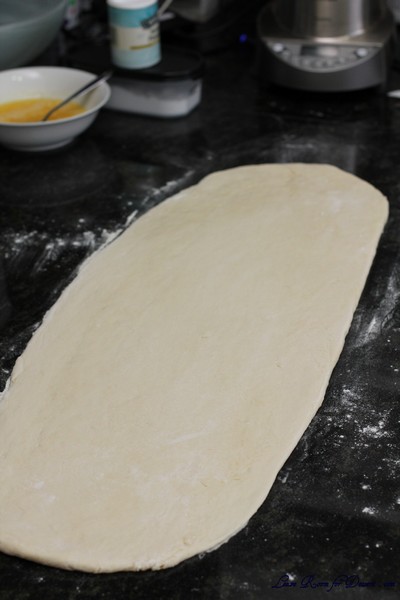
13. To make the vanilla almond crunch, melt milk chocolate, add almond praline and the pure almond paste and mix well. Melt butter and take to nut brown (noissette) stage. Add crumble and fueilletine flakes and mix through praline mixture, then fold through burnt butter, followed by toasted almonds, crushed vanilla beans, sea salt and scraped vanilla seeds. Smooth a 5mm layer over vanilla dacquoise and set aside.

14. To make the vanilla syrup, bring all ingredients to the boil, then allow to cool.

15. To make the white chocolate tiles and flower, bring 5cm of water in a medium saucepan to the boil, turn off the heat and sit a metal bowl with 300g of the chocolate over the water. Stir until just melted then remove bowl to the bench and add about 100g more chocolate to bring the temperature down. Stir vigorously until the chocolate has melted, if the chocolate does not feel cold to the touch, add the remaining 100g chocolate to bring down the temperature. Add titanium dioxide and mix well. Keep stirring well to remove all lumps. If the chocolate mixture feels cold to the touch, spread a small, thin layer onto a small piece of baking paper. Set aside for about 3-4 minutes, it will start to harden if it is tempered correctly. If the chocolate becomes too thick and the temperature is too low, gently reheat the mixture in the bowl set over the saucepan of steaming water, but it still needs to be cold.

16. When the chocolate is tempered, to make the flower, spread a thin layer, about 2-3mm thick on 2 pieces of acetate (30 x 40cm) using a large palette knife. Once the chocolate has almost set, on one sheet of acetate carefully mark 3 strips lengthways on the strips, about 7-9cm-wide. Mark thin triangles in each strip. These form the flower petals. Place a piece of baking paper over the top, and wrap around a rolling pin or similar cylinder and allow to completely harden.

17. On the other sheet use a ruler to mark out 4 ½ cm squares. Place a piece of baking paper over the top and invert onto a board or clean work surface to completely harden.

18. To assemble the cake, in a 20cm acetate-lined straight-sided cake tin spread a 5-10mm layer of Chantilly crème around base and sides of tin. Chill in freezer until firm. Lay vanilla gel at the base of the tin and smear with a tiny amount of brulee so that macaron layer will stick to the gel. Lay macaron layer over brulee smear. Cover macaron layer with an even 5mm of brulee. Place chiffon cake over brulee layer. Brush chiffon cake with a little vanilla syrup. Spread a 5mm layer of ganache over chiffon cake. Invert the dacquoise/crunch layers so the vanilla almond crunch layer is sandwiched next to the ganache and the dacquoise is facing up. The dacquoise will become the base of the cake.

19. Fill in any gaps with Chantilly cream, then place in the freezer for 30-60 minutes until firm. Place a large piece of cling wrap on the bench and place a cooling rack on top. Remove the cake from the chiller and invert onto the cooling rack. Heat sides of cake tin gently with a blow torch to help release the mould from the cake. Remove any acetate. Smooth top and sides if necessary with a palette knife. Pouring generously and using a palette knife, spread the vanilla glaze evenly over the top and sides, completely covering the surface. Using a large palette knife transfer the cake to a cake stand and place the chocolate tiles around the cake.

20. To assemble the flower spread a small amount of melted tempered chocolate onto a small piece of baking paper and use this as a base to stick the petals, starting in the centre, working outwards to create a flower. Using choco-cool will help ‘fix’ the petals in place and firm up the chocolate base. Place chocolate flower on top of the cake and decorate the top of the cake with a few sugar spheres.

Almond Praline
Recipe by Anita @ Leave Room for Dessert

50g caster sugar
60g blanched slivered almonds

Roast the almonds for 5-10mins at 160°C. Heat the sugar on high, until the sugar starts browning around the outside. Gently stir in the un-melted sugar, until it is all caramelised in colour. Pour over the roasted almonds. Allow to cool, then blend in a food processor. (It won’t go into the same paste texture as the almond paste above).

Miroir Glaze
Recipe by Anita @ Leave Room for Dessert

2 gold gelatine leaves (4g)
220g water
60g caster sugar
30g glucose

Place the gelatine leaves into cold water to soak for 5 minutes. Heat the water, caster sugar and glucose in a small saucepan until it starts to boil. Remove from heat and let it cool to 70°C. Squeeze excess water from gelatine leaves, place in saucepan and stir until dissolved. Transfer to a bowl and allow to cool slightly before storing in the fridge.
Gluten Free Carrot, Zucchini and Apple Cake

Wednesday, June 23rd, 2010

When I was asked by Haystac whether I wanted to try out some of the gluten free products by Vitarium, I was excited to work with gluten free flour.

The texture was a lot finer, and to me resembled a something similar to the texture of cornflour. I was given both self raising flour and a packet mix of Chocolate Ripple biscuits to try. I’d like to pass on the Chocolate Ripple biscuit packet mix to someone who would like it (and live in Australia) – so please leave a comment and let me know if you’d like it and why.

Photo from Vitarium website

I decided to make something in-between a carrot cake and zucchini cake, even though I’ve never tried a zucchini cake, plus I wanted to add some grated apple too. And what is a carrot cake without the gorgeous icing? (Still a lovely carrot cake :) ) But I decided to add the icing – just because it works so well and everyone loves it :P

I have just submitted this recipe to the The Great Vitarium Gluten Free Bake Off which has just started and has some amazing prizes – check it out and wish me luck :) I also want to wish all the other contestants luck for this competition, and think it is fantastic there will be such a great new range of recipes for those requiring gluten free diets.

Now, I’d love to have a try with the plain flour…

Gluten Free Carrot, Zucchini and Apple Cake

Recipe by Anita @ Leave Room for Dessert

1 1/2 cups brown sugar
1 cup vegetable oil
4 eggs
2 cups Vitarium gluten free self-raising flour
1 1/2 teaspoons ground cinnamon
1/2 teaspoon ground ginger
230g grated carrot
100g grated zucchini, excess liquid removed
50g grated apple, after excess liquid is removed
2/3 cup walnuts (optional, I didn’t use these)

250g cream cheese, at room temperature
1 cup pure icing sugar, sifted
1 teaspoon vanilla essence

Preheat oven to 160C.

In a large mixer, beat together the oil and brown sugar for 2-3 minutes. Add the eggs one at a time, beating well in between additions. Sift in the flour, cinnamon and ginger and mix for one minute. Mix in the grated carrot, zucchini, apple and walnuts (if using). Pour into a greased and lined 22cm round tin. Cook in preheated oven for 1 hour 20 minutes or until a skewer inserted in the centre comes out clean.
Allow to cool for 10 minutes in the tin, then transfer to a wire rack and allow to cool completely before icing.

For the icing, beat the cream cheese until light and fluffy. Add the icing sugar in two lots, beating well between additions. Add the vanilla essence and mix to combine. Spread over cooled cake and serve.

Mum’s Trifle

Saturday, June 5th, 2010

MumsTrifle4

For my Mum’s birthday a couple of months ago, I designed a trifle just for her.

MumsTrifle7

Although I don’t normally make trifles, I’ll make anything that my Mum wants for her birthday. So a trifle once or twice a year is not much to ask or give.

MumsTrifle8

I decided to make the trifle layered and served in a cylindrical shape – making an individual portion and a cuter chic-styled trifle. And what would make a trifle more modern than pretty pistachio macarons!

MumsTrifle1

The individual portion was frozen, and without enough time to allow it to thaw after removal of the acetate, it was eaten frozen – I hear it was lovely frozen. I ate a scoop from the bowl and thought all the flavours worked extremely well together.

Mum’s Trifle

Recipe by Anita @ Leave Room for Dessert

Serves: 10

Vanilla Sponge
4 eggs
150g (1 cup) self raising flour
150g (3/4 cup) caster sugar
40g (1/4 cup) cornflour
1 teaspoon vanilla essence

Custard
4 egg yolks
125g caster sugar
20g cornflour
250ml cream
350ml milk
1 vanilla bean, scraped

2 punnets strawberries, cored and sliced in half

Vienna almond and nougat cream
100g nougat, chopped
150g Vienna almonds, chopped
1 teaspoon vanilla essence
600ml thickened cream
1/4 cup icing sugar mixture

Pistachio macarons, for serving – see my recipe here

Chocolate Sauce
100g dark chocolate
80ml cream
1 tablespoon Kahlua, optional

For the sponge, preheat oven to 180°C. Beat together the eggs and caster sugar for 4 minutes or until light, fluffy and increased in size. Beat in the vanilla essence. Fold in the sifted flour and cornflour. Pour into a baking paper lined tray. Cook for 20-25 minutes or until cooked through. Allow to cool for 10 minutes in the tin and then remove and allow to cool fully on a cooling rack.

For the custard, whisk the yolks, cornflour and caster sugar in a saucepan. Once smooth, whisk in the cream slowly, then the milk. Place mixture on medium heat and cook until the mixture has thickened or starts to boil. Remove from heat and pour into a bowl and let cool slightly. Place cling film over the custard – touching the custard so it prevents a skin forming.

For the Vienna almond and nougat cream, whip the cream with the vanilla and icing sugar mixture until thick peaks are formed. Fold through the chopped Vienna almond and nougat.

For the Chocolate Sauce, heat the cream in saucepan, until it just starts to bubble. Pour the cream over the chopped chocolate. Add the Kahlua or other alcohol at this point, if using. Whisk or stir until smooth. This is best made just before serving.

To assemble:
Cut the sponge base to fit the serving bowl. Alternatively, cut 5cm diameter rounds from the cake (it may need to be cut in half depending on how tall the sponge is). Cut some acetate or projector film into 8-10cm high and approx 17cm wide (or enough to fit around the sponge/5cm cutting circles). Make the acetate into cylinders around the sponge or 5cm rounds and hold in place with sticky tape, with the sponge at the bottom of the cylinder.

If desired, you can brush the sponge with any liqueur you like.

Next, pour the custard on top of the sponge, smooth the top and place in the fridge for 30 minutes. Place any individual portions in the freezer and set until the top of the custard is firm.
Place the cut strawberries around the edge of the glass dish or acetate strips and the remaining ones in the middle.

Cover with Vienna almond, nougat cream. Smooth the top and place in the fridge to set for a few hours before serving. For individual portions, place back in the freezer (otherwise the acetate won’t come off easily).

To serve: Remove acetate from any individual trifles. Place pistachio macarons on top of the trifle and serve with the chocolate sauce in a pourer.

MumsTrifle6

Croquembouche (Piece Montée) – Daring Bakers Challenge May 2010

Thursday, May 27th, 2010

The May 2010 Daring Bakers’ challenge was hosted by Cat of Little Miss Cupcake. Cat challenged everyone to make a piece montée, or croquembouche, based on recipes from Peter Kump’s Baking School in Manhattan and Nick Malgieri.

I’ve made two croquembouches’ so far, the original one from Masterchef and the chocolate swirl one, also from MasterChef. So, when I found out this month’s challenge was also a croquembouche I was both a bit indifferent, and also excited.

First of all, the slight disappointment was due to it not being something new. Although the excitement came from knowing how gorgeous the custard filled profiteroles with lovely crunchy toffee are. My family and I cannot resist croquembouche, although the next Christmas or event I make it for, I’ll just be pouring the caramel over the top and not building a cone shaped tower.

The other excitement came from trying the different recipes, I was hoping for a harder choux pastry, one which was a bit crunchy and kept its shape quite well. I think this choux pastry recipe may have succeeded in this, although I still need to learn my oven better, as they were cooked in 10-15 minutes, almost burning, so I couldn’t leave them in the oven to dry out longer, for fear of losing them.

For my own challenge, I decided to try making cute little caramel corkscrews. Using a spoon, I spun the caramel around a clean knife (sharpening) steel. And they worked! I had to keep heating and cooling the caramel though to make it the right consistency – which was quite difficult to figure out.

Unfortunately for the presentation, the lovely caramel strands around the outside started beading within 20 minutes and by the time we ate the croquembouche, a few hours afterwards, there were no strands to be seen. I’m not sure whether this was due to the humidity we had here, or whether the glucose added to caramel contributes to the stability of the caramel.

Overall, I was very excited making this again, and I think it made the perfect quantity (even though people asked – where’s the rest of it?). The different components themselves are relatively easy, and I will consider making it more often, now that I won’t be making trays and trays worth of profiteroles, and a large lasagna dish filled with custard.

Croquembouche (Piece Montée)

Recipe Source: Peter Kump’s Baking School in Manhattan and were originally created by famed pastry chef, Nick Malgieri.

Vanilla Crème Patissiere (Half Batch) [I made a full batch - double this - although I think I could have made 1.5 batches - three times this]
1 cup (225 ml.) whole milk
2 Tbsp. cornstarch / cornflour
6 Tbsp. (100 g.) sugar - I used caster sugar
1 large egg
2 large egg yolks
2 Tbsp. (30 g.) unsalted butter
1 Tsp. Vanilla

Dissolve cornstarch in ¼ cup of milk. Combine the remaining milk with the sugar in a saucepan; bring to boil; remove from heat.

Beat the whole egg, then the yolks into the cornstarch mixture. Pour 1/3 of boiling milk into the egg mixture, whisking constantly so that the eggs do not begin to cook.

Return the remaining milk to boil. Pour in the hot egg mixture in a stream, continuing whisking.

Continue whisking (this is important – you do not want the eggs to solidify/cook) until the cream thickens and comes to a boil. Remove from heat and beat in the butter and vanilla.

Pour cream [Crème Patissiere] into a stainless steel/ceramic bowl. Press plastic wrap firmly against the surface. Chill immediately and until ready to use.

Pate a Choux (Yield: About 28) [Mine made more than 50]
¾ cup (175 ml.) water
6 Tbsp. (85 g.) unsalted butter
¼ Tsp. salt
1 Tbsp. sugar
1 cup (125 g.) all-purpose flour
4 large eggs

For Egg Wash: 1 egg and pinch of salt

Pre-heat oven to 425◦F/220◦C degrees. Line two baking sheets with parchment paper.

Preparing batter:
Combine water, butter, salt and sugar in a saucepan over medium heat. Bring to a boil and stir occasionally. At boil, remove from heat and sift in the flour, stirring to combine completely.

Return to heat and cook, stirring constantly until the batter dries slightly and begins to pull away from the sides of the pan.

Transfer to a bowl and stir with a wooden spoon 1 minute to cool slightly. [A KitchenAid works so well for this]

Add 1 egg. The batter will appear loose and shiny.

After mixing in the first egg

As you stir, the batter will become dry-looking like lightly buttered mashed potatoes.

It is at this point that you will add in the next egg. Repeat until you have incorporated all the eggs.

After mixing in the second egg

After mixing in the third egg

After the fourth and final egg

Piping:
Transfer batter to a pastry bag fitted with a large open tip (I piped directly from the bag opening without a tip). Pipe choux about 1 inch-part in the baking sheets. Choux should be about 1 inch high about 1 inch wide.

Using a clean finger dipped in hot water, gently press down on any tips that have formed on the top of choux when piping. You want them to retain their ball shape, but be smoothly curved on top.

Brush tops with egg wash (1 egg lightly beaten with pinch of salt).

Baking:
Bake the choux at 425◦F/220◦C degrees until well-puffed and turning lightly golden in color, about 10 minutes. [mine cooked in 15 minutes total]
Lower the temperature to 350◦F/180◦C degrees and continue baking until well-colored and dry, about 20 minutes more. Remove to a rack and cool.

Can be stored in a airtight box overnight.

Filling:
When you are ready to assemble your piece montée, using a plain pastry tip, pierce the bottom of each choux. Fill the choux with pastry cream using either the same tip or a star tip, and place on a paper-lined sheet. Choux can be refrigerated briefly at this point while you make your glaze.

Use one of these to top your choux and assemble your piece montée.

Hard Caramel Glaze: [I needed 1.5 - 2 times this recipe, as I stirred it too early]
1 cup (225 g.) sugar
½ teaspoon lemon juice

Combine sugar and lemon juice in a saucepan with a metal kitchen spoon stirring until the sugar resembles wet sand. Place on medium heat; heat without stirring until sugar starts to melt around the sides of the pan and the center begins to smoke. Begin to stir sugar. Continue heating, stirring occasionally until the sugar is a clear, amber color. Remove from heat immediately; place bottom of pan in ice water to stop the cooking. Use immediately.

Assembly of your Piece Montée:
You may want to lay out your unfilled, unglazed choux in a practice design to get a feel for how to assemble the final dessert. For example, if making a conical shape, trace a circle (no bigger than 8 inches) on a piece of parchment to use as a pattern. Then take some of the larger choux and assemble them in the circle for the bottom layer. Practice seeing which pieces fit together best.

Once you are ready to assemble your piece montée, dip the top of each choux in your glaze (careful it may be still hot!), and start assembling on your cake board/plate/sheet. Continue dipping and adding choux in levels using the glaze to hold them together as you build up.

When you have finished the design of your piece montée, you may drizzle with remaining glaze or use ribbons, sugar cookie cut-outs, almonds, flowers, etc. to decorate. Have fun and enjoy! Bon appétit!

Pistachio Macarons

Sunday, May 9th, 2010

PistachioMacaron03

Happy Mother’s Day!

PistachioMacaron07

Even though these lovely pistachio macarons weren’t made for Mother’s Day – they were made for my Mum – on her birthday. They were the decorations for the dessert I made for her (a while ago now), I hope to post it soon. For the main meal on her birthday, we made the most awesome beef bourguignon pie – using Julia Child’s recipe (here is the recipe, if you don’t have the book). It was AMAZING! It took a while to prepare, but was worth it – it doesn’t get any better.

PistachioMacaron01

These home made pistachio macarons turned out just how I wanted. Cute little feet (the frill at the base of the macaron), slightly crisp on the outside, a lovely chewy centre and a wonderfully tasty pistachio flavour.

PistachioMacaron05

These would be perfect for a kitchen tea, high tea, baby shower or petit fours after a meal.

PistachioMacaron06

Pistachio Macarons

Recipe by Anita @ Leave Room for Dessert

Makes 46 sandwiched macarons

120g egg whites (aged for a day or two – covered in the fridge then brought to room temperature, or left at room temperature if the weather’s cool)
90g caster sugar
220g pure icing sugar
80g almond meal
80g pistachios

Pistachio butter cream
80g butter, at room temperature
160g icing sugar
50g pistachio

Process the icing sugar, pistachios and almond meal in a food processor until very finely ground, like dust. Sift and set aside.

Beat egg whites until frothy, add the caster sugar whilst continuing to beat the egg whites on high until it forms a glossy thick meringue. Beat and fold the icing sugar and nut mixture into the meringue until the mixture flows and when the mixture is piped, any peaks sink back after a few minutes. Pipe 3-4cm circles on lined baking trays. Leave at room temperature for 30 minutes or more to form a skin.
PistachioMacaron02

Preheat oven to 150°C and cook macarons for 10 minutes or until slightly coloured, crisp on the outside and chewy on the inside. Allow to cool and then fill with the pistachio butter cream or another filling.

For the pistachio butter cream, cream the butter until light and fluffy. Process the pistachios with the icing sugar until finely ground. Beat the pistachio sugar into the butter in batches. When all the pistachio sugar is incorporated it is ready to fill the macarons. If it isn’t spreadable, add a touch of milk and mix until smooth.

PistachioMacaron04

Butterscotch Steamed Pudding – Daring Bakers Challenge April 2010

Tuesday, April 27th, 2010

SteamedPudding01

The April 2010 Daring Bakers’ challenge was hosted by Esther of The Lilac Kitchen. She challenged everyone to make a traditional British pudding using, if possible, a very traditional British ingredient: suet.

SteamedPudding17

In this month’s challenge we were asked to go a step further in the ingredients we use and use suet in the steamed pudding we were making. After deciding to make a steamed sweet sponge pudding, I decided on using a substitute for the suet – although after having trouble in the cold isle of the supermarket trying to find what I could use as a substitute, I gave in to using butter as my base.

A lot of people know I am a huge fan of self saucing puddings, so I was extremely excited to find out how this differed in taste or texture to the ones I normally make. Personally I enjoy the cake-like fluffy texture of a self-saucing pudding to the more chewy textured steamed pudding. I also find it’s a lot easier to see whether a self-saucing pudding is ready to be eaten – as the steamed pudding has a cover to take off before you can test it.

SteamedPudding07

I thought many recipes I looked through needed some photos on the covering and tying of the handle for top of the pudding, as I found some descriptions a bit confusing. Although my mum found this helpful video tutorial (a How-To) for pudding assembly.

SteamedPudding03

A big thanks to Esther for hosting this challenge and taking me outside my comfort zone (even if I didn’t get around to using suet…).

Butterscotch Steamed Pudding

Recipe adapted from Steamed Treacle Sponge Pudding by Delia Smith

Serves: 6-8

175g butter
175g brown sugar
1 teaspoon vanilla essence
3 eggs
175g self-raising flour
1 teaspoon baking powder

Sauce
1/2 cup brown sugar
2 tablespoons custard powder
1/2 cup milk
1/2 cup cream (you could use more milk here if you don’t have cream)

Grease a 1.2L pudding dish. Place a steamer, bowl, or egg rings in a large saucepan (large enough to fit your pudding dish, with gaps at the side) and fill with enough water to come half-way up the sides of the pudding dish. Place on low/medium heat.

Cream the butter and the brown sugar until light and fluffy. Beat in the vanilla essence. Add the eggs one at a time, beating in between additions. Beat in the sifted flour and baking powder.

SteamedPudding10

Pour mixture into greased pudding dish, smooth the top. Place a sheet of aluminum foil over a piece of grease-proof paper (approx 40cm x 30cm). Make one pleat (approx 2 cm) in the centre. Place the pleated paper and foil on top of the pudding (grease-proof paper side on the inside near the pudding, the foil on the outside). Turn the edges over, making a tight seal on the dish. Tie a piece of string around the dish – under the lip, keeping the foil tightly against the dish. Tie another piece of string (from the string under the lip) over the top to create a handle. (Watch this video).

SteamedPudding11

SteamedPudding12

SteamedPudding13

Place the pudding on top of the steamer in the saucepan. Heat on low for 2 hours, checking the water comes halfway up the dish. Once cooked remove from saucepan, sit for 5 minutes, then turn out.

SteamedPudding14

SteamedPudding15

Nothing a bit of sauce won't cover up :)

Nothing a bit of sauce won't cover up :)

For the sauce, combine all ingredients in a saucepan over medium/high heat and continue to stir until the sauce thickens. Pour over the steamed pudding and serve.

SteamedPudding04

Vanilla Mousse Tart with Strawberries and Macaron

Tuesday, April 13th, 2010

VanillaMousseTart11
In an effort to make sure I am fully prepared for my trip to Melbourne for a cooking class this weekend, I decided to make my own pâte sablée, mousse and macarons. The other things I was planning to make, like Italian meringue and glazes, were left behind due to time restrictions, so I hope I have enough experience to help and not hinder the others attending the class. I only mention this, as it is a level 2 class – and I haven’t done level 1. I look forward to telling everyone about the course when I get back and have some lovely photos.

VanillaMousseTart09

I was ecstatic with the results for my macarons. They had cute little “feet” (the little raised area on the bottom), they had a nice smooth top of the shell, there was no hole under the shell, and they came off the baking paper easily. (Well this is after I made the stupid mistake of trying to cook them in the oven with something else – I won’t tell you what it was [as it caused a very humid oven], but I would suggest cooking a tray at a time, with nothing else in the oven).

VanillaMousseTart07

The vanilla mousse tart was lovely and paired very well with the fresh strawberries and mixed berry sauce.

VanillaMousseTart10

Vanilla Mousse Tart with Strawberries and Macaron

Recipe by Anita @ Leave Room for Dessert

Pâte Sablée:
1/4 cup plain flour
1/4 cup icing sugar
1/8 cup almond meal
62g butter, chilled and chopped
pinch salt
1 tablespoon milk (less or more may be required) (an egg is often used to bind the pastry, although with such a small amount, I thought it might be too sticky)

Vanilla Mousse:
1 egg yolk
1 1/2 tablespoons caster sugar
1/4 cup milk
1/3 teaspoon vanilla essence
1/2 teaspoon gelatin
2 tablespoons water
2/3 cup cream

Macarons:
1 egg white (30g) (I normally “age” my egg whites, covered at room temperature or in the fridge overnight)
2 tablespoons (22g) caster sugar
1/4 cup + 1 tablespoon (55g) pure icing sugar
1/4 cup + 1 teaspoon (40g) almond meal

Macaron filling:

a few tablespoons vanilla mousse mixed with a few teaspoons of mixed berry jus

Mixed Berry Sauce:
60g mixed berries (fresh or frozen, thawed)
1/3 cup caster sugar
1/2 cup water

Strawberries to serve

Pâte Sablée:
Process the flour, icing sugar, almonds and salt in a food processor. Place the butter in with the flour and process until it resembles fine breadcrumbs. Add enough milk for the mixture to just come together into a dough that just holds together. Form the dough into a disc and place in the fridge for 30 minutes. Remove from fridge and roll out to a few millimetres thickness (enough to fit two small round tart tins – around 12cm diameter). Place the dough in the tart tins, pressing lightly to fill the tin. Cut off excess dough. Place in the fridge for 30 minutes. Preheat oven to 180C. Cook pâte sablée for 10 minutes or until golden. Allow to cool before filling.
Vanilla Mousse:

Add gelatine to water. Bring the milk almost to the boil in a small saucepan. Whisk together the egg yolks, sugar and vanilla essence until lighter in colour. Pour the milk into the egg yolk mixture, whisking continuously. Pour the mixture back into the saucepan and cook on low/medium heat until the mixture coats the back of a spoon. Remove from heat and stir in gelatine. Allow to cool.

Whip the cream until light peaks form. Fold half of the cream into the cooled custard mixture. Fold lightly into the remaining cream. Spoon the mousse into the cooled tart shells and allow to set in the fridge for a few hours. (Leave some of the mousse for the macaron filling).
VanillaMousseTart05

Macarons:
Whisk the egg whites in a clean bowl with electric beaters on medium. Once the egg whites become frothy, slowly add the caster sugar, while continuously beating. Continue beating the egg whites until the mixture becomes a thick, glossy meringue, which holds it’s shape. Sift in the icing sugar combined with the almond meal on top of the meringue. Fold and beat the almond meal mixture into the meringue, just until any peaks you create in the mixture sink back. Don’t overbeat the mixture once it is flowing nicely (underbeating can also cause the biscuits to be too meringue like or have a peak on them).

Spoon mixture into a piping bag and pipe circles (3-4 cm diameter) onto a baking paper lined baking tray (make sure this is flat or the mixture will run). Let the macarons sit at room temperature for 30 min or more to allow the top to form a skin (this will help the macaron to rise from the bottom and not split the lovely shell).

Preheat oven to 150C (my oven is fan-forced, although you’ll need to check what temperature works for your oven). Place baking trays in the oven (one at a time, depending on your oven – if mine has two trays in there, the macarons do not colour evenly). Cook for approximately 10 minutes, or until lightly coloured, with a lightly crisp shell and soft on the inside.

Once cooled, you can fill them with the berry mousse filling.

Mixed Berry Sauce:
Puree the berries with some of the water. Strain through a sieve and add to a small saucepan with sugar and remaining water. Cook on medium or high heat until the mixture has become thicker and reduced to 1/2 or 1/3 cup. This may take 10 minutes (more or less depending on the size of your saucepan).

VanillaMousseTart04

Related Posts with Thumbnails